StartseiteMCPWorkbenchSkills
StartseiteWorkbenchBenachrichtigungenMein Bereich
llms.txt · MCP-AnleitungDatenschutz · Nutzungsbedingungen · Supportv1.8.3
  1. Startseite
  2. /Reaktion

Potassium Phosphate, Tribasic → 3-Chloro-2-cyclopropylpyridine

HRID 1620349
Drucken

Reaktionsgleichung

Reaktionsgleichung von HRID 1620349
[Cl:1][C:2]1[C:3](Br)=[N:4][CH:5]=[CH:6][CH:7]=1.[O-]P([O-])([O-])=O.[K+].[K+].[K+].[CH:17]1(B(O)O)[CH2:19][CH2:18]1.C1(P(C2CCCCC2)C2CCCCC2)CCCCC1>C1(C)C=CC=CC=1.O.CCOC(C)=O.C([O-])(=O)C.C([O-])(=O)C.[Pd+2]>[Cl:1][C:2]1[C:3]([CH:17]2[CH2:19][CH2:18]2)=[N:4][CH:5]=[CH:6][CH:7]=1
KomponentenReaktionsbedingungenVersuchsvorschriftAufarbeitungQuellen und NachweiseNotizen zur Reaktion

Komponenten

9

Edukt 4

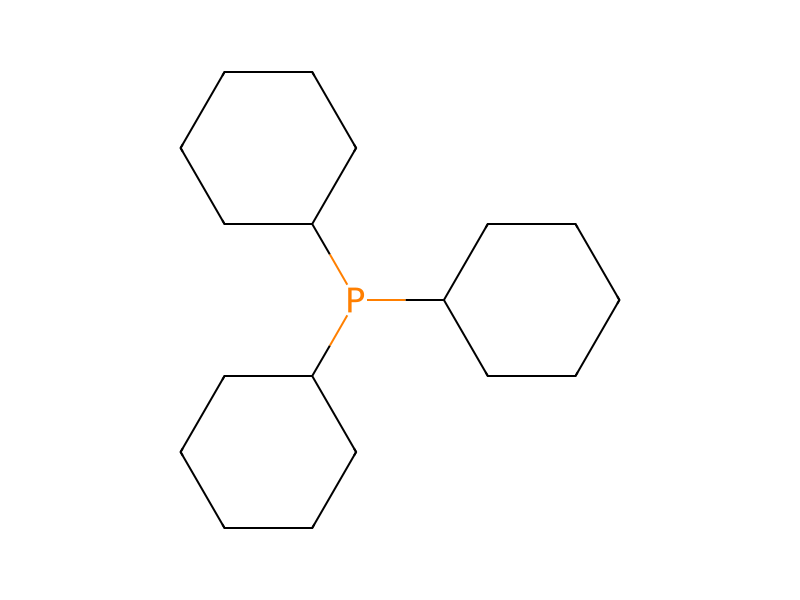
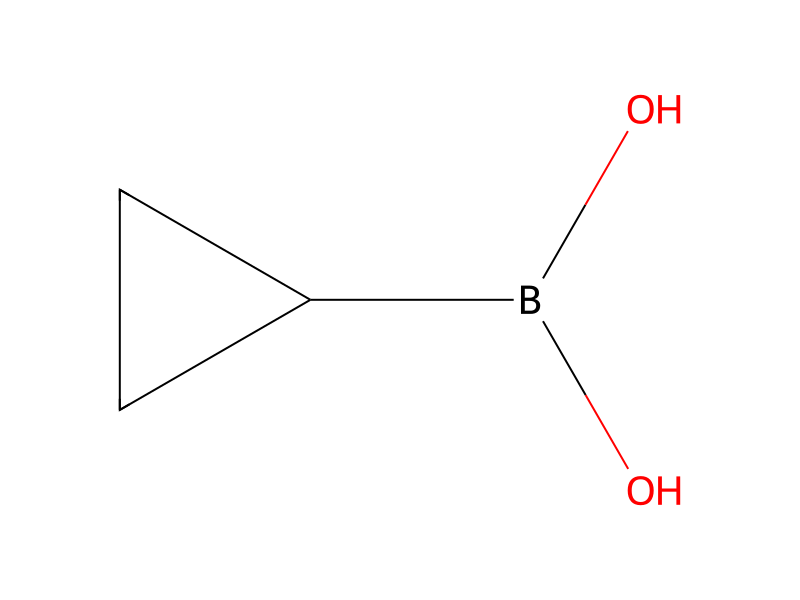
HCID 62657Potassium Phosphate, TribasicHCID 75806Tricyclohexylphosphine3×HCID 2760897Cyclopropylboronic acid3×HCID 70163262-Bromo-3-chloropyridine

Produkt 1

HCID 580424113-Chloro-2-cyclopropylpyridineAusbeute 122,7 %

Reagenzien, Katalysatoren, Lösungsmittel 4

HCID 167845
palladium(II) acetate
Katalysator
3×
HCID 962WaterLösungsmittel2×
HCID 1140TolueneLösungsmittel
HCID 8857Ethyl AcetateLösungsmittel

Reaktionsbedingungen

Temperatur
100 °C

Versuchsvorschrift

3-Chloro-2-bromopyridine (5.0 g, 26 mmol) and potassium phosphate tribasic (19.3 g, 90.9 mol) were suspended in toluene (40.0 mL) and water (2.0 mL). The mixture was sonicated for 10 minutes, then cyclopropylboronic acid (1.12 g, 13.0 mmol), palladium diacetate (0.093 g, 0.414 mol) and tricyclohexylphosphine (0.243 g, 0.867 mol) were added to the reaction mixture, which was heated into a pre heated DrySyn® at 100° C., under a nitrogen atmosphere for 2 hours. Then cyclopropylboronic acid (1.12 g, 13.0 mmol), palladium diacetate (0.093 g, 0.41 mol) and tricyclohexylphosphine (0.243 g, 0.87 mol) were added to the reaction mixture and the mixture was stirred for 2 hours. Then cyclopropylboronic acid (1.12 g, 13.0 mmol), palladium diacetate (0.093 g, 0.41 mol) and tricyclohexylphosphine (0.243 g, 0.87 mol) were added to the reaction mixture and the mixture was stirred for 2 hours more. The reaction mixture was then left to stir at room temperature for 16 hours. The reaction mixture was diluted with EtOAc (40.0 mL) and water (40.0 mL) and was filtered on a pad of Arbocel® under a stream of nitrogen. The organic layer was separated and washed with a 10% solution of aqueous citric acid (3×25.0 mL), followed by an aqueous hydrochloric acid solution (3×1.0 M, 20.0 mL). The organic layer was discarded and the aqueous layer basified again with careful addition of a saturated aqueous solution of sodium hydrogen carbonate (100.0 mL). The product was extracted with tert-butyl methyl ether (3×20.0 mL). The combined organics were washed once more with a 10% solution of aqueous citric acid (25.0 mL). The organic layer was then dried over sodium sulfate, filtered, and concentrated in vacuo to yield the title compound as a pale brown oil (2.45 g, 62%).


Aufarbeitung

  1. customThe mixture was sonicated for 10 minutes
  2. temperaturewas heated into a pre
  3. stirringthe mixture was stirred for 2 hours more
  4. waitThe reaction mixture was then left
  5. stirringto stir at room temperature for 16 hours
  6. filtrationwas filtered on a pad of Arbocel® under a stream of nitrogen
  7. customThe organic layer was separated
  8. washwashed with a 10% solution of aqueous citric acid (3×25.0 mL)
  9. additionthe aqueous layer basified again with careful addition of a saturated aqueous solution of sodium hydrogen carbonate (100.0 mL)
  10. extractionThe product was extracted with tert-butyl methyl ether (3×20.0 mL)
  11. washThe combined organics were washed once more with a 10% solution of aqueous citric acid (25.0 mL)
  12. dry with materialThe organic layer was then dried over sodium sulfate
  13. filtrationfiltered
  14. concentrationconcentrated in vacuo

Quellen und Nachweise

ORD-Eintrag
ord-3b01a360dfff4e039442a0d50b1baa07
Quelldatensatz
uspto-grants-2014_07
DOI
10.6084/m9.figshare.5104873.v1
Patentnummer
US08772343B2

Notizen zur Reaktion

Auf dieser SeiteKomponentenReaktionsbedingungenVersuchsvorschriftAufarbeitungQuellen und NachweiseNotizen zur Reaktion