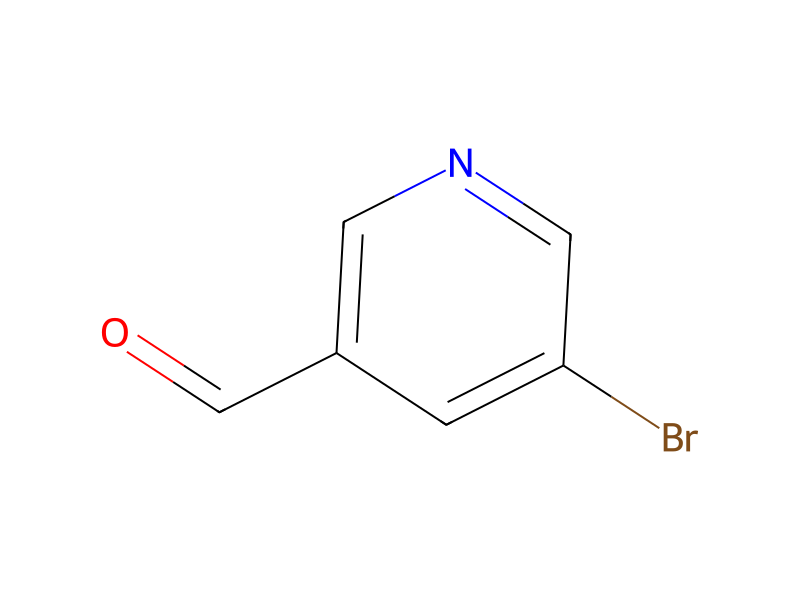
To a solution of 5-bromo-3-pyridine-carboxaldehyde (1.5 g, 7.9 mmol), methanesulfonamide (0.5 g, 5.3 mmol), acetic acid (0.637 g, 10.6 mmol), triethylamine (1.07 g, 10.6 mmol) in DCE (50 mL) at ambient temperature is added NaBH(OAc)3 (3.14 g, 14.84 mmol). The reaction mixture is stirred overnight. Aqueous NaHCO3 (20 mL) is added and the organic phase is separated. The aqueous phase is extracted with dichloromethane and the combined organic phase is dried over Na2SO4. Concentration affords a residue which is purified by silica gel flash chromatography with a methanol in dichloromethane gradient to afford N-(5-bromo-pyridin-3-ylmethyl)-methanesulfonamide as a solid. MS (ESI) m/z 266.9 (M+H)+.