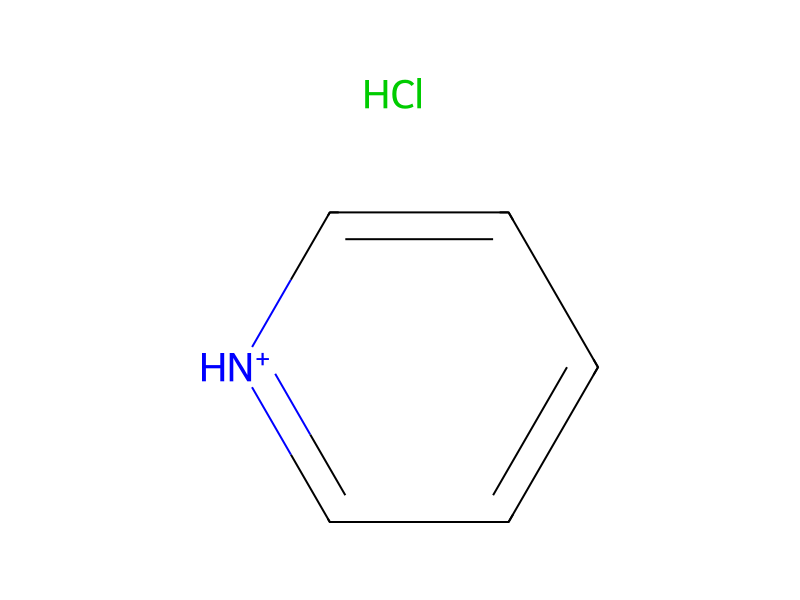
A 250 ml three-neck flask fitted with KPG stirrer, dry-ice condenser and dropping funnel was charged with 23.11 g (0.2 mole) of pyridinium hydrochloride and 20.0 g (0.2 mole) of 2,2,2-trifluoroethanol. Subsequently, at an internal reaction temperature from 52° to 55° C., 42.01 g (0.2 mole) of trifluoroacetic anhydride were added dropwise over a period 3 hours. The yield of trifluoroethyl trifluoroacetate was 98% (GC). The resulting reaction solution was either used as catalyst mixture for experiments as described in Example 1, or 2,2,2-trifluoroethanol was distilled off. During the course of the distillation the trifluoroacetic acid, which initially formed in the reaction, reacted in the distillation flask with the pyridinium hydrochloride to form pyridinium trifluoroacetate and HCl.