StartseiteMCPSkillsWorkbenchOpenChem
StartseiteWorkbenchBenachrichtigungenMein Bereich
llms.txt · skill.md · MCP-AnleitungDatenschutz · Nutzungsbedingungen · Supportv1.8.4
  1. Startseite
  2. /Reaktion

4-Bromoaniline → N-(4-bromophenyl)-1-(2-chlorophenyl)-3-(trifluoromethyl)-1H-pyrazole-5-carboxamide

HRID 1672999
Drucken

Reaktionsgleichung

[Cl:1][C:2]1[CH:7]=[CH:6][CH:5]=[CH:4][C:3]=1[N:8]1[C:12]([C:13](Cl)=[O:14])=[CH:11][C:10]([C:16]([F:19])([F:18])[F:17])=[N:9]1.[Br:20][C:21]1[CH:27]=[CH:26][C:24]([NH2:25])=[CH:23][CH:22]=1.C(N(CC)C(C)C)(C)C>C(Cl)Cl.CN(C)C1C=CN=CC=1>[Br:20][C:21]1[CH:27]=[CH:26][C:24]([NH:25][C:13]([C:12]2[N:8]([C:3]3[CH:4]=[CH:5][CH:6]=[CH:7][C:2]=3[Cl:1])[N:9]=[C:10]([C:16]([F:19])([F:18])[F:17])[CH:11]=2)=[O:14])=[CH:23][CH:22]=1
KomponentenVersuchsvorschriftAufarbeitungQuellen und NachweiseNotizen zur Reaktion

Komponenten

6

Edukt 3

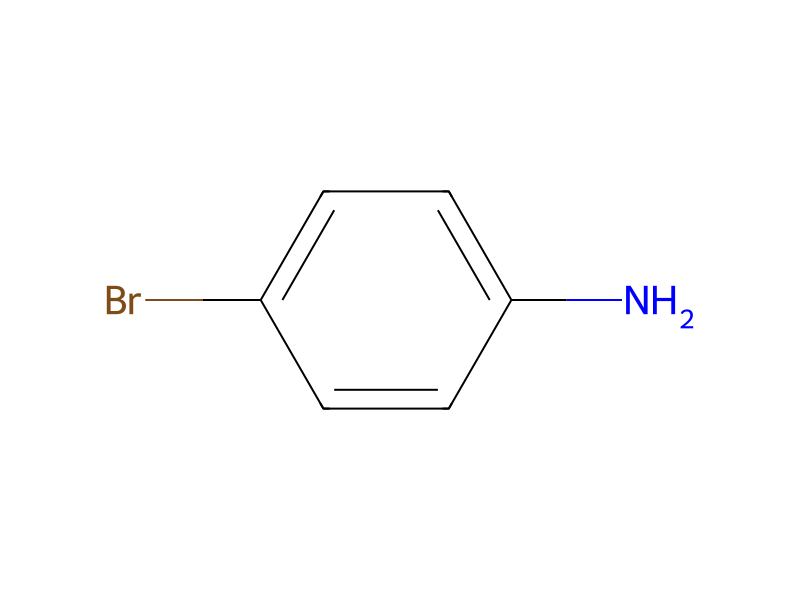
HCID 78074-BromoanilineHCID 81531DiisopropylethylamineHCID 574582382-(2-Chloro-phenyl)-5-trifluoromethyl-2H-pyrazole-3-carbonyl chloride

Produkt 1

HCID 59240027N-(4-bromophenyl)-1-(2-chlorophenyl)-3-(trifluoromethyl)-1H-pyrazole-5-carboxamideAusbeute 12 %

Reagenzien, Katalysatoren, Lösungsmittel 2

HCID 14284
4-(Dimethylamino)pyridine
Katalysator
HCID 6344DichloromethaneLösungsmittel

Versuchsvorschrift

In a 500 mL round bottom flask crude 1-(2-chlorophenyl)-3-(trifluoromethyl)-1H-pyrazole-5-carbonyl chloride (47 mmol) was dissolved in 200 mL CH2Cl2 to afford a dark solution. To this solution was added 8.2 g of 4-bromoaniline (47 mmol) and a few pellets of 4-(dimethylamino)pyridine. The resulting slurry was treated with 20 mL of N,N-diisopropylethylamine (115 mmol) to afford a dark solution. After stirring for 2 hours at room temperature the reaction was quenched by the addition of H2O and diluted with additional CH2Cl2. The organic layer was washed with 1N HCl, saturated NaHCO3 solution, dried (Na2SO4), filtered, and concentrated in vacuo to afford crude N-(4-bromophenyl)-1-(2-chlorophenyl)-3-(trifluoromethyl)-1H-pyrazole-5-carboxamide as a dark brown syrup. The crude product was purified by silica gel flash chromatography on a 300 g column using gradient elution from 0% to 30% EtOAc/hexane. Most of the product-containing fractions were impure. All product-containing fractions were combined and concentrated in vacuo to afford a sticky orange foam. This material was further purified by silica gel flash chromatography on a 160 g column using gradient elution from 0% to 20% EtOAc/hexane. Appropriate fractions were combined and concentrated in vacuo to afford N-(4-bromophenyl)-1-(2-chlorophenyl)-3-(trifluoromethyl)-1H-pyrazole-5-carboxamide as a pale orange foam that was broken up to a powder. The material is not completely pure. Yield: 2.61 g (12% yield); 1H NMR (400 MHz, CDCl3): δ 7.64 (br s, 1H), 7.56-7.55 (impurity), 7.54-7.53 (m, 1H), 7.52-7.51 (m, 1H), 7.50-7.49 (impurity), 7.48-7.44 (m, 3H), 7.43-7.41 (m, 1H), 7.38-7.36 (m, 1H), 7.36-7.34 (m, 1H), 7.11 (s, 1H); GC/MS (EI, 70 eV) 445, 443.

Aufarbeitung

  1. customto afford a dark solution
  2. customto afford a dark solution
  3. customwas quenched by the addition of H2O
  4. additiondiluted with additional CH2Cl2
  5. washThe organic layer was washed with 1N HCl, saturated NaHCO3 solution
  6. dry with materialdried (Na2SO4)
  7. filtrationfiltered
  8. concentrationconcentrated in vacuo
  9. customto afford crude N-(4-bromophenyl)-1-(2-chlorophenyl)-3-(trifluoromethyl)-1H-pyrazole-5-carboxamide as a dark brown syrup
  10. customThe crude product was purified by silica gel flash chromatography on a 300 g column
  11. washelution from 0% to 30% EtOAc/hexane
  12. concentrationconcentrated in vacuo
  13. customto afford a sticky orange foam
  14. customThis material was further purified by silica gel flash chromatography on a 160 g column
  15. washelution from 0% to 20% EtOAc/hexane
  16. concentrationconcentrated in vacuo

Quellen und Nachweise

ORD-Eintrag
ord-c42286a05cd4452a80fe9b0b7d344b39
Quelldatensatz
uspto-grants-2011_08
DOI
10.6084/m9.figshare.5104873.v1
Patentnummer
US07998995B2

Notizen zur Reaktion

Auf dieser SeiteKomponentenVersuchsvorschriftAufarbeitungQuellen und NachweiseNotizen zur Reaktion


