StartseiteMCPSkillsWorkbenchOpenChem
StartseiteWorkbenchBenachrichtigungenMein Bereich
llms.txt · skill.md · MCP-AnleitungDatenschutz · Nutzungsbedingungen · Supportv1.8.5
  1. Startseite
  2. /Reaktion

Acetic Acid → 2-Chloro-4-fluoro-N-(3-(1-methylpiperidin-4-ylamino)phenyl)benzamide dihydrochloride

HRID 1716908
Drucken

Reaktionsgleichung

[Cl:1][C:2]1[CH:17]=[C:16]([F:18])[CH:15]=[CH:14][C:3]=1[C:4]([NH:6][C:7]1[CH:12]=[CH:11][CH:10]=[C:9]([NH2:13])[CH:8]=1)=[O:5].[CH3:19][N:20]1[CH2:25][CH2:24][C:23](=O)[CH2:22][CH2:21]1.C(O[BH-](OC(=O)C)OC(=O)C)(=O)C.[Na+].C(O)(=O)C>ClCCl>[ClH:1].[ClH:1].[Cl:1][C:2]1[CH:17]=[C:16]([F:18])[CH:15]=[CH:14][C:3]=1[C:4]([NH:6][C:7]1[CH:12]=[CH:11][CH:10]=[C:9]([NH:13][CH:23]2[CH2:24][CH2:25][N:20]([CH3:19])[CH2:21][CH2:22]2)[CH:8]=1)=[O:5]
KomponentenVersuchsvorschriftAufarbeitungQuellen und NachweiseNotizen zur Reaktion

Komponenten

6

Edukt 4

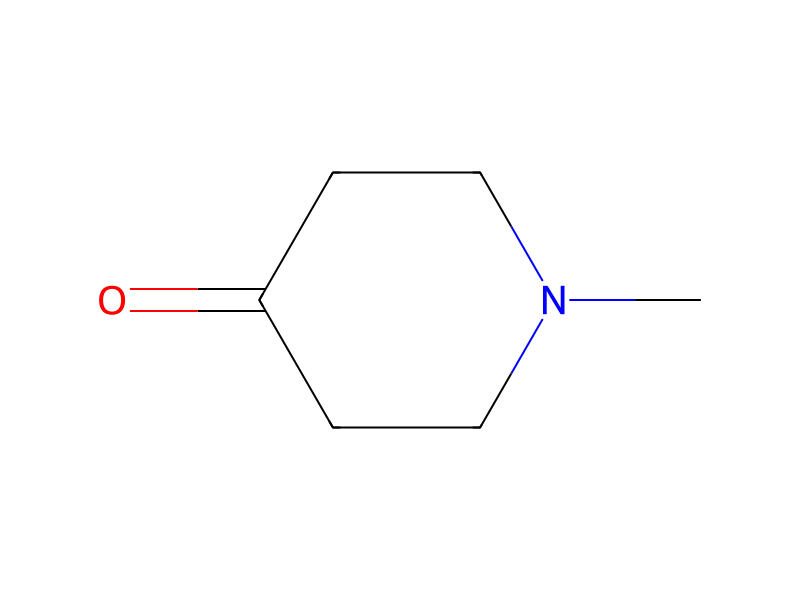
HCID 176Acetic AcidHCID 740491-Methyl-4-piperidoneHCID 5049666Sodium triacetoxyborohydrideHCID 16775600N-(3-Aminophenyl)-2-chloro-4-fluorobenzamide

Produkt 1

HCID 112127052-Chloro-4-fluoro-N-(3-(1-methylpiperidin-4-ylamino)phenyl)benzamide dihydrochlorideAusbeute 218,1 %

Reagenzien, Katalysatoren, Lösungsmittel

1
HCID 6344DichloromethaneLösungsmittel2×

Versuchsvorschrift

Combine 2-chloro-4-fluoro-N-(3-aminophenyl)benzamide (Preparation 1, 200 mg, 0.756 mmol), 1-methylpiperidin-4-one (0.093 mL, 0.756 mmol), sodium triacetoxyborohydride (208 mg, 0.982 mmol), acetic acid (0.043 mL, 0.756 mmol) and dichloromethane (8 mL). Stir at room temperature overnight. Dilute with dichloromethane (5 mL) and wash twice with sodium hydroxide (10 mL 1N aq.). Combine the organic layers and wash with saturated aqueous NaCl (10 mL). Dry over magnesium sulfate, filter under reduced pressure and concentrate to dryness. Purify by flash chromatography on a Biotage® silica cartridge eluting with a 20/1 mixture of dichloromethane and 2N ammonia in methanol to give the free base of the title compound (239 mg, 87%). Dissolve the residue in diethyl ether and treat with ethereal hydrogen chloride. Triturate the resulting gum with ether to give the title compound as a white solid (31 mg): mp 180° C.; mass spectrum (free base, ion spray): m/z=362.1 (M+1), 1H NMR (free base, CDCl3): 7.80-7.75 (m, 2H), 7.23 (bs, 1H), 7.19 (dd, J=2.4 Hz, 8.3 Hz, 1H), 7.13 (t, J=8.2 Hz, 1H), 7.08 (dd, J=2.4 Hz, 8.3 Hz, 1H), 6.67 (d, J=7.8 Hz, 1H), 6.41 (dd, J=2.0 Hz, 8.3 Hz, 1H), 3.68 (bd, J=7.9 Hz, 1H), 3.36 (bs, 1H), 2.92-2.81 (bm, 2H), 2.35 (s, 3H), 2.82-2.17 (bm, 2H), 2.10 (bd, J=13.0 Hz, 2H), 1.64-1.51 (bm, 2H). Analysis calc'd for C19H23Cl3FN3O: C, 51.95; H, 5.39; N, 9.57. Found: C, 52.03; H, 5.46; N, 9.17.


Aufarbeitung

  1. washwash twice with sodium hydroxide (10 mL 1N aq.)
  2. washCombine the organic layers and wash with saturated aqueous NaCl (10 mL)
  3. dry with materialDry over magnesium sulfate
  4. filtrationfilter under reduced pressure
  5. concentrationconcentrate to dryness
  6. customPurify by flash chromatography on a Biotage® silica cartridge
  7. washeluting with a 20/1 mixture of dichloromethane and 2N ammonia in methanol

Quellen und Nachweise

ORD-Eintrag
ord-3eb9b792cd7945de91fd7564b867104e
Quelldatensatz
uspto-grants-2010_09
DOI
10.6084/m9.figshare.5104873.v1
Patentnummer
US07803813B2

Notizen zur Reaktion

Auf dieser SeiteKomponentenVersuchsvorschriftAufarbeitungQuellen und NachweiseNotizen zur Reaktion