StartseiteMCPWorkbenchSkills
StartseiteWorkbenchBenachrichtigungenMein Bereich
llms.txt · MCP-AnleitungDatenschutz · Nutzungsbedingungen · Supportv1.8.3
  1. Startseite
  2. /Reaktion

Cesium carbonate → 2-methyl-6-(4-morpholinyl)-1-(1-naphthalenylmethyl)-4-(1H-pyrazol-5-yl)-1H-benzimidazole

HRID 1749580
Drucken

Reaktionsgleichung

Reaktionsgleichung von HRID 1749580
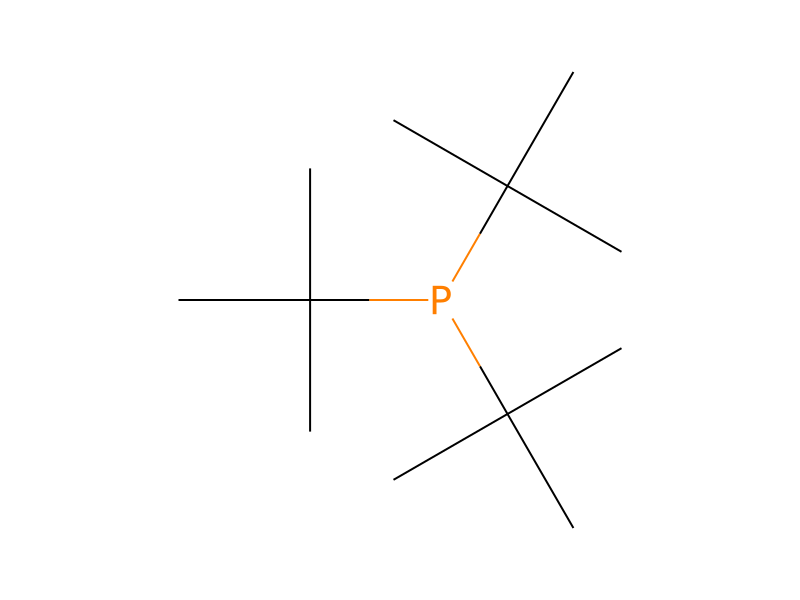
Br[C:2]1[C:10]2[N:9]=[C:8]([CH3:11])[N:7]([CH2:12][C:13]3[C:22]4[C:17](=[CH:18][CH:19]=[CH:20][CH:21]=4)[CH:16]=[CH:15][CH:14]=3)[C:6]=2[CH:5]=[C:4]([N:23]2[CH2:28][CH2:27][O:26][CH2:25][CH2:24]2)[CH:3]=1.[NH:29]1[C:33](B(O)O)=[CH:32][CH:31]=[N:30]1.C([O-])([O-])=O.[Cs+].[Cs+].P(C(C)(C)C)(C(C)(C)C)C(C)(C)C>O1CCOCC1.O.C1C=CC(/C=C/C(/C=C/C2C=CC=CC=2)=O)=CC=1.C1C=CC(/C=C/C(/C=C/C2C=CC=CC=2)=O)=CC=1.[Pd]>[CH3:11][C:8]1[N:7]([CH2:12][C:13]2[C:22]3[C:21](=[CH:20][CH:19]=[CH:18][CH:17]=3)[CH:16]=[CH:15][CH:14]=2)[C:6]2[CH:5]=[C:4]([N:23]3[CH2:28][CH2:27][O:26][CH2:25][CH2:24]3)[CH:3]=[C:2]([C:31]3[NH:30][N:29]=[CH:33][CH:32]=3)[C:10]=2[N:9]=1
KomponentenReaktionsbedingungenVersuchsvorschriftAufarbeitungQuellen und NachweiseNotizen zur Reaktion

Komponenten

8

Edukt 4

HCID 10796Cesium carbonateHCID 83681Tris(1,1-dimethylethyl)phosphineHCID 112519791H-Pyrazole-5-boronic acidHCID 669770504-bromo-2-methyl-6-(4-morpholinyl)-1-(1-naphthalenylmethyl)-1H-benzimidazole

Produkt 1

HCID 569595332-methyl-6-(4-morpholinyl)-1-(1-naphthalenylmethyl)-4-(1H-pyrazol-5-yl)-1H-benzimidazole

Reagenzien, Katalysatoren, Lösungsmittel 3

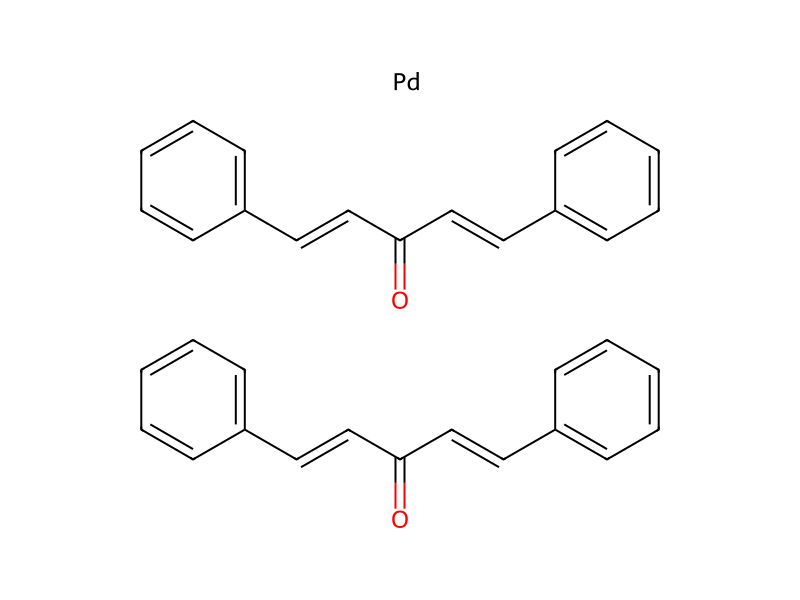
HCID 6505921(1E,4E)-1,5-diphenylpenta-1,4-dien-3-one; palladiumKatalysatorHCID 962WaterLösungsmittelHCID 312751,4-DioxaneLösungsmittel

Reaktionsbedingungen

Temperatur
100 °C

Versuchsvorschrift

A mixture of 4-bromo-2-methyl-6-(4-morpholinyl)-1-(1-naphthalenylmethyl)-1H-benzimidazole (200 mg, 0.46 mmol), 1H-pyrazol-5-ylboronic acid (100 mg, 0.92 mmol), Pd(dba)2 (40 mg, 0.046 mmol), Cs2CO3 (300 mg, 0.92 mmol) and P(t-Bu)3 (10 wt % in hexane, 20 mg, 0.092 mmol) in dioxane (20 mL) and water (10 mL), was stirred at 100° C. for 18 h under a nitrogen atmosphere. The reaction mixture was cooled and then concentrated. The resulting residue was purified by silica gel chromatography eluted with EtOAc to give the product (140 mg 72%), as a white solid. 1H NMR showed this compound is in a form of tautomeric mixture (major tautomer/minor tautomer=5/3)1H NMR of the major tautomer (300 MHz, DMSO-d6) δ ppm 2.45 (s, 3H), 3.08 (s, 4H), 3.71 (s, 4H), 6.00 (s, 2H), 6.37 (d, 1H, J=7.2 Hz), 6.96 (s, 1H), 7.24-7.72 (m, 6H), 7.83-7.87 (m, 1H), 8.01 (d, 1H, J=7.2 Hz), 8.25 (d, 1H, J=4.2 Hz), 13.24 (br s, 1H); LC-MS: m/e=424 [M+1]+

Aufarbeitung

  1. temperatureThe reaction mixture was cooled
  2. concentrationconcentrated
  3. customThe resulting residue was purified by silica gel chromatography
  4. washeluted with EtOAc
  5. customto give the product (140 mg 72%)

Quellen und Nachweise

ORD-Eintrag
ord-2e5f1dd5cd7f4f2e94035eafd53c4238
Quelldatensatz
uspto-grants-2015_10
DOI
10.6084/m9.figshare.5104873.v1
Patentnummer
US09156797B2

Notizen zur Reaktion

Auf dieser SeiteKomponentenReaktionsbedingungenVersuchsvorschriftAufarbeitungQuellen und NachweiseNotizen zur Reaktion