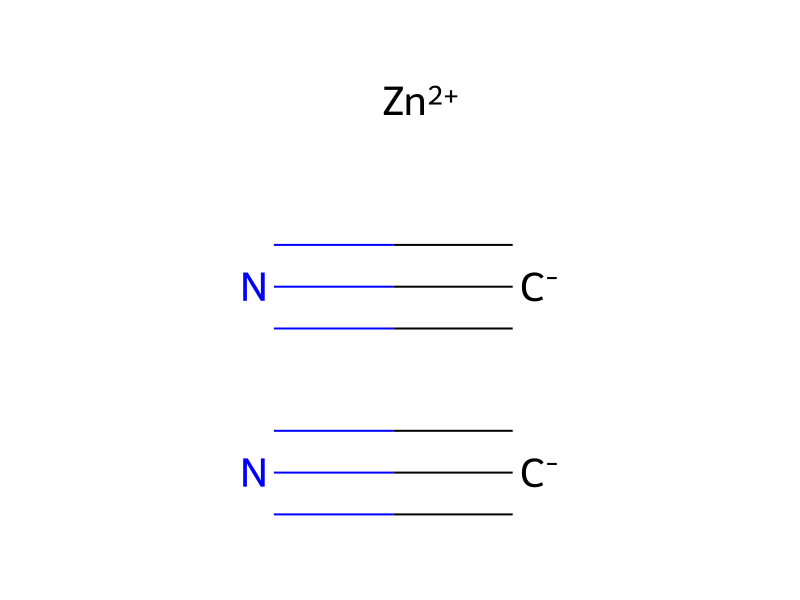
Cl[C:2]1[C:7]([Cl:8])=[CH:6][C:5]([O:9][CH2:10][F:11])=[CH:4][N:3]=1.O.[CH3:13][N:14](C=O)C>[C-]#N.[Zn+2].[C-]#N.[Zn].C1C=CC([P]([Pd]([P](C2C=CC=CC=2)(C2C=CC=CC=2)C2C=CC=CC=2)([P](C2C=CC=CC=2)(C2C=CC=CC=2)C2C=CC=CC=2)[P](C2C=CC=CC=2)(C2C=CC=CC=2)C2C=CC=CC=2)(C2C=CC=CC=2)C2C=CC=CC=2)=CC=1>[Cl:8][C:7]1[C:2]([C:13]#[N:14])=[N:3][CH:4]=[C:5]([O:9][CH2:10][F:11])[CH:6]=1To a solution of 2,3-dichloro-5-fluoromethoxy-pyridine (1.18 g, 6.02 mmol) in dry DMF (14.00 ml) were added Zinc cyanide (0.341 g, 2.90 mmol) and Zinc powder (3.94 mg, 0.060 mmol). The suspension was flushed with Argon (3×). Then tetrakis(triphenylphosphine)palladium(0) (0.570 g, 0.494 mmol) was added. The reaction was heated to 145° C. for 2 h. Water was added and the aqueous layer was extracted twice with Et2O. The combined organic layers were washed with brine, dried with Na2SO4, filtered and evaporated. The residue was purified by chromatography on silica gel (cyclohexane to cyclohexane/EtOAc 7:3) to provide the title compound as yellow oil (515 mg).
Wird geladen…