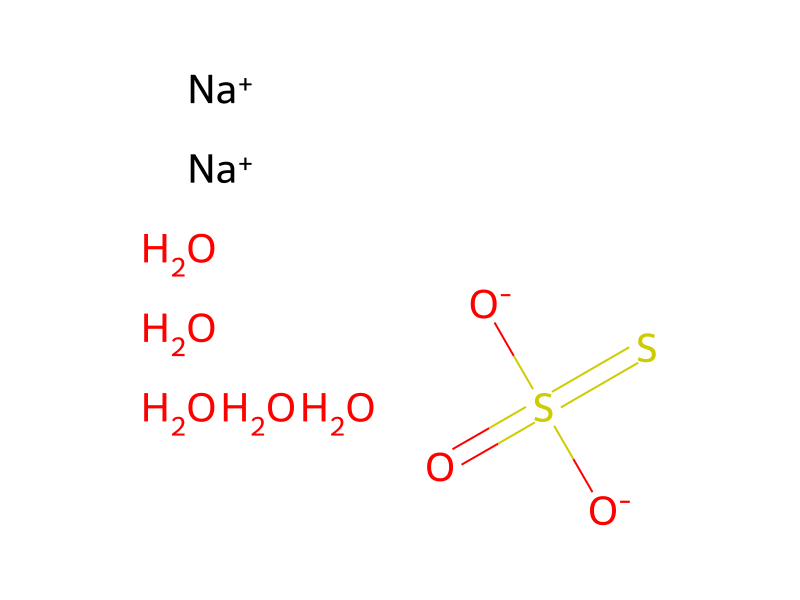
[C:1]1([S:7][C:8]2[CH:13]=[CH:12][C:11]([O:14][CH:15]3[CH2:19][CH2:18][CH2:17][CH2:16]3)=[CH:10][CH:9]=2)[CH:6]=[CH:5][CH:4]=[CH:3][CH:2]=1.[OH:20]O.C1(C)C=CC=CC=1>C(O)(=O)C.O.O.O.O.O.S([O-])([O-])(=O)=S.[Na+].[Na+].O.C(OCC)(=O)C>[C:1]1([S:7]([C:8]2[CH:9]=[CH:10][C:11]([O:14][CH:15]3[CH2:19][CH2:18][CH2:17][CH2:16]3)=[CH:12][CH:13]=2)=[O:20])[CH:6]=[CH:5][CH:4]=[CH:3][CH:2]=1In 100 g of acetic acid was dissolved 13.8 g of 4-cyclopentyloxyphenyl phenyl sulfide obtained in Synthesis Example 1-25. While the solution was maintained at an internal temperature of 30° C., 4.8 g of 35 wt % aqueous hydrogen peroxide was added dropwise. The reaction solution was aged at room temperature for 18 hours, after which under ice cooling, a mixture of 0.5 g sodium thiosulfate pentahydrate and 15 g water was added dropwise to quench the reaction. The solution was combined with 100 g of toluene, 50 g of ethyl acetate, and 50 g of water. The organic layer was separated, washed with water, and concentrated in vacuum. This was followed by crystallization from hexane, filtration and drying, obtaining 13.5 g of the target compound, 4-cyclopentyloxyphenyl phenyl sulfoxide as white crystals. Yield 96%.
Wird geladen…