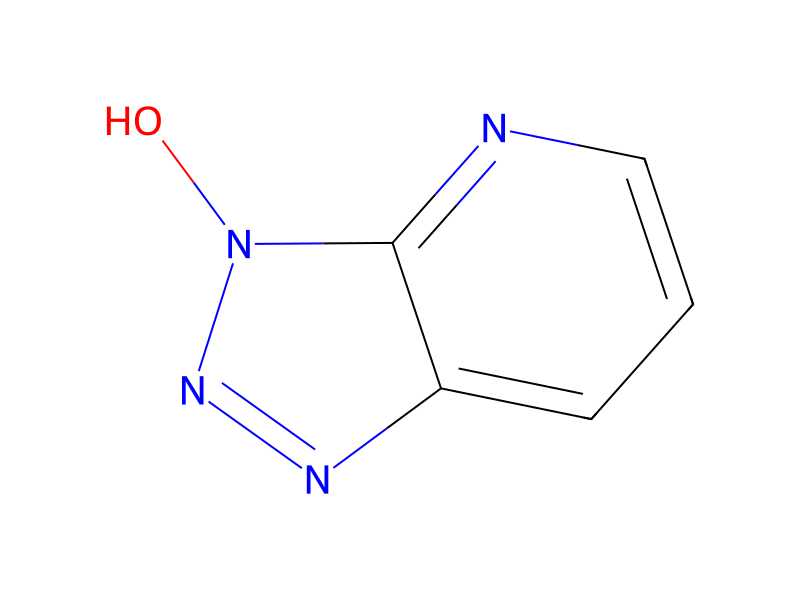
[Br:1][C:2]1[C:3]([CH3:9])=[C:4]([CH:6]=[CH:7][CH:8]=1)[NH2:5].[NH:10]1[CH:14]=[CH:13][N:12]=[C:11]1[C:15](O)=[O:16].C1C=NC2N(O)N=NC=2C=1.CCN(C(C)C)C(C)C>C(Cl)CCl.C(Cl)Cl.C1COCC1>[Br:1][C:2]1[C:3]([CH3:9])=[C:4]([NH:5][C:15]([C:11]2[NH:10][CH:14]=[CH:13][N:12]=2)=[O:16])[CH:6]=[CH:7][CH:8]=1Step 1 A solution of 3-bromo-2-methylaniline (0.63 g, 3.39 mmol), 1H-imidazole-2-carboxylic acid (0.455 g, 4.06 mmol), HOAT (0.830 g, 6.10 mmol), and EDC (1.298 g, 6.77 mmol) in 2:1 DCM-THF (100 mL) was treated with DIEA (1.774 mL, 10.16 mmol) and stirred at rt overnight. Additional 1H-imidazole-2-carboxylic acid (0.6 eq, 0.228 g), EDC (0.64 g), HOAT (0.41 g), and DIEA (0.8 mL) were added and the mixture was stirred at rt for 6 days. The mixture was partitioned between NaHCO3 (aq) and DCM, and the organic phase was washed with brine, dried and concentrated. The residue was purified by column chromatography (eluting with a gradient from DCM to 94:6 DCM-methanol) to provide N-(3-bromo-2-methylphenyl)-1H-imidazole-2-carboxamide as a solid (80% purity, 0.76 g, 64%). Mass spectrum m/z 280, 282 (M+H)+.