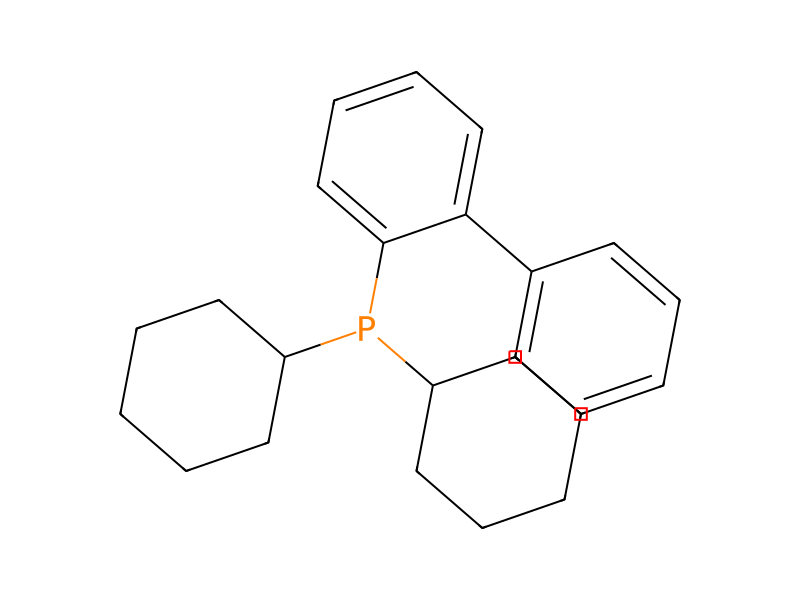
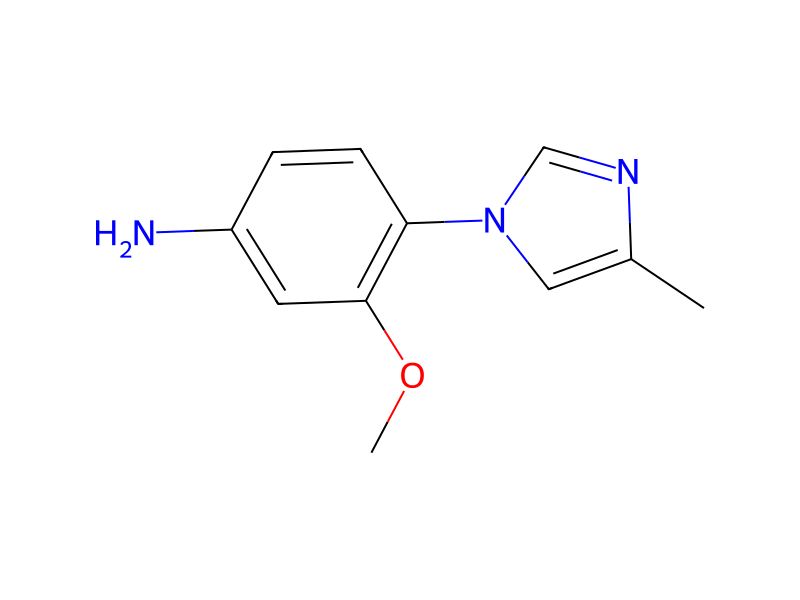
C1(P(C2CCCCC2)C2C=CC=CC=2C2C=CC=CC=2)CCCCC1.[CH3:26][O:27][C:28]1[CH:29]=[C:30]([NH2:40])[CH:31]=[CH:32][C:33]=1[N:34]1[CH:38]=[C:37]([CH3:39])[N:36]=[CH:35]1.[CH2:41]([C:48]1[CH:53]=[CH:52][N:51]=[C:50](Cl)[N:49]=1)[C:42]1[CH:47]=[CH:46][CH:45]=[CH:44][CH:43]=1.C(=O)([O-])[O-].[K+].[K+]>O1CCOCC1.C([O-])(=O)C.[Pd+2].C([O-])(=O)C>[CH2:41]([C:48]1[CH:53]=[CH:52][N:51]=[C:50]([NH:40][C:30]2[CH:31]=[CH:32][C:33]([N:34]3[CH:38]=[C:37]([CH3:39])[N:36]=[CH:35]3)=[C:28]([O:27][CH3:26])[CH:29]=2)[N:49]=1)[C:42]1[CH:43]=[CH:44][CH:45]=[CH:46][CH:47]=1Palladium acetate (2.7 mg, 0.012 mmol) and 2-(dicyclohexylphosphino)-biphenyl (8.7 mg, 0.024 mmol) were dissolved under an atmosphere of nitrogen in dioxane (1 mL) and stirred for 10 min at 20° C. This solution was added at 20° C. under an atmosphere of nitrogen to a microwave flask containing 3-methoxy-4-(4-methyl-imidazol-1-yl)-phenylamine (61 mg, 0.3 mmol), 4-benzyl-2-chloro-pyrimidine (68 mg, 0.3 mmol) and potassium carbonate (829 mg, 6.0 mmol). The mixture was diluted with dioxane (1.7 mL) and heated for 30 min to 200° C. in a microwave oven. The reaction was poured onto water and extracted twice with ethyl acetate. The combined organic solutions were washed with brine, dried over sodium sulfate, filtered and the residue was purified by column chromatography on silica gel using dichloromethane/methanol (19:1 v/v) as eluent to yield the title compound (50 mg, 45%) as a yellow solid.