StartseiteMCPWorkbenchSkills
StartseiteWorkbenchBenachrichtigungenMein Bereich
llms.txt · MCP-AnleitungDatenschutz · Nutzungsbedingungen · Supportv1.8.3
  1. Startseite
  2. /Reaktion

Phenylbutazone → 1,2-Diphenyl-4-butyl-5-(3'-carboxypyridyl)-4-pyrazolin-3-one

HRID 1863517
Drucken

Reaktionsgleichung

Reaktionsgleichung von HRID 1863517
[CH3:1][CH2:2][CH2:3][CH2:4][CH:5]1[C:10](=O)[N:9]([C:12]2[CH:13]=[CH:14][CH:15]=[CH:16][CH:17]=2)[N:8]([C:18]2[CH:19]=[CH:20][CH:21]=[CH:22][CH:23]=2)[C:6]1=[O:7].FC(F)(F)C(O[C:29](=O)[C:30](F)(F)F)=O.[C:37](=[O:40])(O)[O-:38].[Na+].[OH-].[Na+].S([O-])([O-])(=O)=O.[Na+].[Na+]>CC(C)=O.ClCCl>[C:12]1([N:9]2[C:10]([C:30]3[C:29]([C:37]([OH:38])=[O:40])=[CH:4][CH:5]=[CH:6][N:8]=3)=[C:5]([CH2:4][CH2:3][CH2:2][CH3:1])[C:6](=[O:7])[N:8]2[C:18]2[CH:23]=[CH:22][CH:21]=[CH:20][CH:19]=2)[CH:13]=[CH:14][CH:15]=[CH:16][CH:17]=1
KomponentenVersuchsvorschriftAufarbeitungQuellen und NachweiseNotizen zur Reaktion

Komponenten

8

Edukt 5

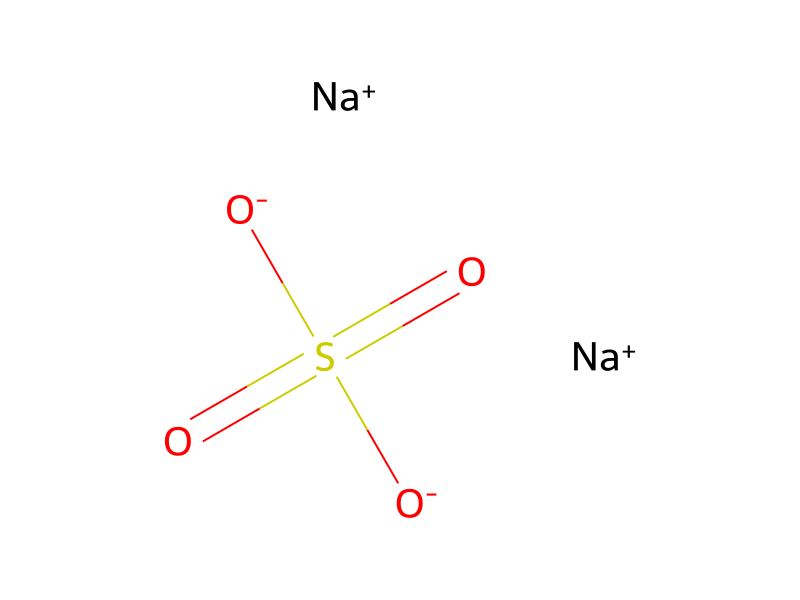
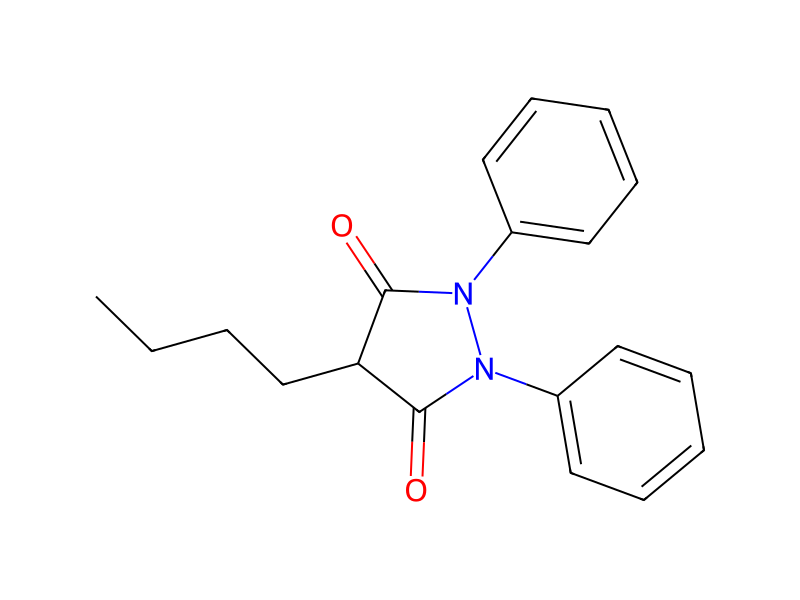
HCID 4781PhenylbutazoneHCID 9845Trifluoroacetic anhydrideHCID 14798Sodium HydroxideHCID 24436Sodium SulfateHCID 516892Sodium Bicarbonate

Produkt 1

HCID 203917051,2-Diphenyl-4-butyl-5-(3'-carboxypyridyl)-4-pyrazolin-3-one
Ausbeute 154,2 %

Reagenzien, Katalysatoren, Lösungsmittel 2

HCID 180AcetoneLösungsmittelHCID 6344DichloromethaneLösungsmittel

Versuchsvorschrift

Phenylbutazone (1,2-diphenyl-3,5-pyrazolidinedione; 11.00 g, 0.035 mole) was treated with 11.55 g (0.055 mole) of trifluoroacetic anhydride. The resulting solid suspension was shaken or mechanically stirred until a homogeneous solution was obtained, then it was stirred with a magnetic stirrer at room temperature in a tightly closed flask for one hour. The solution was concentrated in vacuo for one hour and the oily residue obtained was dissolved in 50 ml of acetone and allowed to react with 12.5 g (0.055 mole) of nicotini anhydride. The initial suspension became homogeneous after 0.25 hours with concomitant formation of a yellow color. After an additional one hour at room temperature, the yellow solution was concentrated in vacuo and the residue was dissolved in 200 ml of dichloromethane. The dichloromethane solution was extracted first with an aqueous sodium bicarbonate solution (12.2 g, 0.145 mole in 150 ml), then with an aqueous sodium hydroxide solution (28 g, 0.07 mole in 56 ml) and subsequently dried over sodium sulfate. The dichloromethane solution was concentrated in vacuo and the residue was crystallized from dichloromethane petroleum ether bp 30°-60° C. to give 11.16 g (mp 139°-141° C., 77.5% yield) of the title compound.

Aufarbeitung

  1. stirringmechanically stirred until a homogeneous solution
  2. customwas obtained
  3. stirringit was stirred with a magnetic stirrer at room temperature in a tightly closed flask for one hour
  4. concentrationThe solution was concentrated in vacuo for one hour
  5. customthe oily residue obtained
  6. concentrationthe yellow solution was concentrated in vacuo
  7. dissolutionthe residue was dissolved in 200 ml of dichloromethane
  8. concentrationThe dichloromethane solution was concentrated in vacuo
  9. customthe residue was crystallized from dichloromethane petroleum ether bp 30°-60° C.

Quellen und Nachweise

ORD-Eintrag
ord-6b2945b757854069a16a7df110dd3da2
Quelldatensatz
uspto-grants-1979_09
DOI
10.6084/m9.figshare.5104873.v1
Patentnummer
US04169147

Notizen zur Reaktion

Auf dieser SeiteKomponentenVersuchsvorschriftAufarbeitungQuellen und NachweiseNotizen zur Reaktion