StartseiteMCPWorkbenchSkills
StartseiteWorkbenchBenachrichtigungenMein Bereich
llms.txt · MCP-AnleitungDatenschutz · Nutzungsbedingungen · Supportv1.8.3
  1. Startseite
  2. /Reaktion

Dimethylformamide → 3-Chlorobicyclo[2.2.1]hept-2-ene-2-carbaldehyde

HRID 1919143
Drucken

Reaktionsgleichung

Reaktionsgleichung von HRID 1919143
CN([CH:4]=[O:5])C.P(Cl)(Cl)([Cl:8])=O.[CH:11]12[CH2:17][CH:14]([CH2:15][CH2:16]1)[CH2:13][C:12]2=O.P([O-])([O-])(O)=O.[K+].[K+]>ClCCCl.O>[Cl:8][C:12]1[CH:11]2[CH2:17][CH:14]([CH2:15][CH2:16]2)[C:13]=1[CH:4]=[O:5]
KomponentenReaktionsbedingungenVersuchsvorschriftAufarbeitungQuellen und NachweiseNotizen zur Reaktion

Komponenten

7

Edukt 4

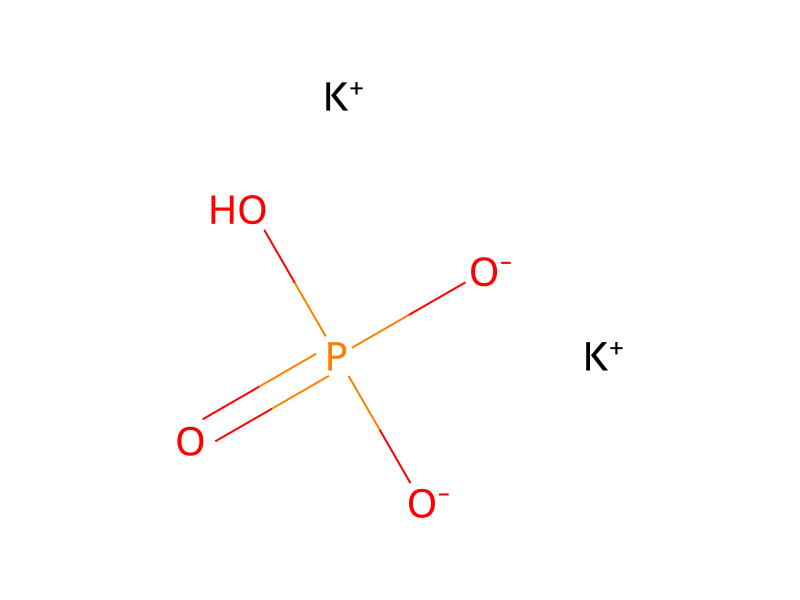
HCID 6228DimethylformamideHCID 10345Bicyclo(2.2.1)heptan-2-oneHCID 24450Potassium Phosphate, DibasicHCID 24813Phosphorus oxychloride

Produkt 1

HCID 580440113-Chlorobicyclo[2.2.1]hept-2-ene-2-carbaldehydeAusbeute 28,1 %

Reagenzien, Katalysatoren, Lösungsmittel 2

HCID 11
1,2-Dichloroethane
Lösungsmittel
2×
HCID 962WaterLösungsmittel

Reaktionsbedingungen

Temperatur
0 °C

Versuchsvorschrift

A 250-mL three-neck round-bottomed flask equipped with a magnetic stirrer and reflux condenser was purged with nitrogen and charged with anhydrous 1,2-dichloroethane (24 mL) and anhydrous DMF (9.12 g, 125 mmol). The reaction mixture was cooled to 0° C., and phosphorus oxychloride (15.3 g, 100 mmol) was added over a period of 5 minutes, while maintaining the reaction temperature between 0 and 10° C. The cooling bath was removed, and the reaction was stirred at room temperature for 30 minutes. A solution of bicyclo[2.2.1]heptan-2-one (5.50 g, 50.0 mmol) in 1,2-dichloroethane (10 mL) was added and the resulting mixture was heated at 80° C. for overnight. After this time, the reaction was poured into a solution of potassium monohydrogenphosphate (43.5 g, 250 mmol) in water (200 mL) and stirred for 15 minutes. The organic layer was separated and concentrated under reduced pressure. The residue was dissolved in methylene chloride (300 mL) and washed with water (2×50 mL). The methylene chloride layer was dried over sodium sulfate, filtered, and concentrated under reduced pressure. The residue was purified by column chromatography eluting with 1:100 ethyl acetate/petroleum ether to give 334a as a yellow oil (2.2 g, 28%). MS: [M+H]+ 157. 1H NMR (500 MHz, CDCl3) δ 9.80 (s, 1H), 3.42 (s, 1H), 3.07 (d, J=1.7 Hz, 1H,), 1.95-1.77 (m, 2H), 1.67 (t, J=8.9 Hz, 1H), 1.41-1.17 (m, 3H).


Aufarbeitung

  1. customA 250-mL three-neck round-bottomed flask equipped with a magnetic stirrer
  2. temperaturereflux condenser
  3. customwas purged with nitrogen
  4. temperaturewhile maintaining the reaction temperature between 0 and 10° C
  5. customThe cooling bath was removed
  6. temperaturethe resulting mixture was heated at 80° C. for overnight
  7. stirringstirred for 15 minutes
  8. customThe organic layer was separated
  9. concentrationconcentrated under reduced pressure
  10. dissolutionThe residue was dissolved in methylene chloride (300 mL)
  11. washwashed with water (2×50 mL)
  12. dry with materialThe methylene chloride layer was dried over sodium sulfate
  13. filtrationfiltered
  14. concentrationconcentrated under reduced pressure
  15. customThe residue was purified by column chromatography
  16. washeluting with 1:100 ethyl acetate/petroleum ether

Quellen und Nachweise

ORD-Eintrag
ord-b3665b56e4944b769827c121febc879e
Quelldatensatz
uspto-grants-2013_12
DOI
10.6084/m9.figshare.5104873.v1
Patentnummer
US08618107B2

Notizen zur Reaktion

Auf dieser SeiteKomponentenReaktionsbedingungenVersuchsvorschriftAufarbeitungQuellen und NachweiseNotizen zur Reaktion