StartseiteMCPWorkbenchSkills
StartseiteWorkbenchBenachrichtigungenMein Bereich
llms.txt · MCP-AnleitungDatenschutz · Nutzungsbedingungen · Supportv1.8.3
  1. Startseite
  2. /Reaktion

Propionic Acid → 2,6-Dimethyl-8-ethyl-1-deazapurine

HRID 1938808
Drucken

Reaktionsgleichung

Reaktionsgleichung von HRID 1938808
[H][H].[NH2:3][C:4]1[C:9]([NH2:10])=[C:8]([CH3:11])[CH:7]=[C:6]([CH3:12])[N:5]=1.Br[C:14]1[C:15](C)=C(N)C(N)=N[C:19]=1C.NC1C([N+]([O-])=O)=C(C)C(Br)=C(C)N=1.C(O)(=O)CC.[OH-].[NH4+]>O>[CH3:12][C:6]1[N:5]=[C:4]2[N:3]=[C:19]([CH2:14][CH3:15])[NH:10][C:9]2=[C:8]([CH3:11])[CH:7]=1
KomponentenReaktionsbedingungenVersuchsvorschriftAufarbeitungQuellen und NachweiseNotizen zur Reaktion

Komponenten

8

Edukt 6

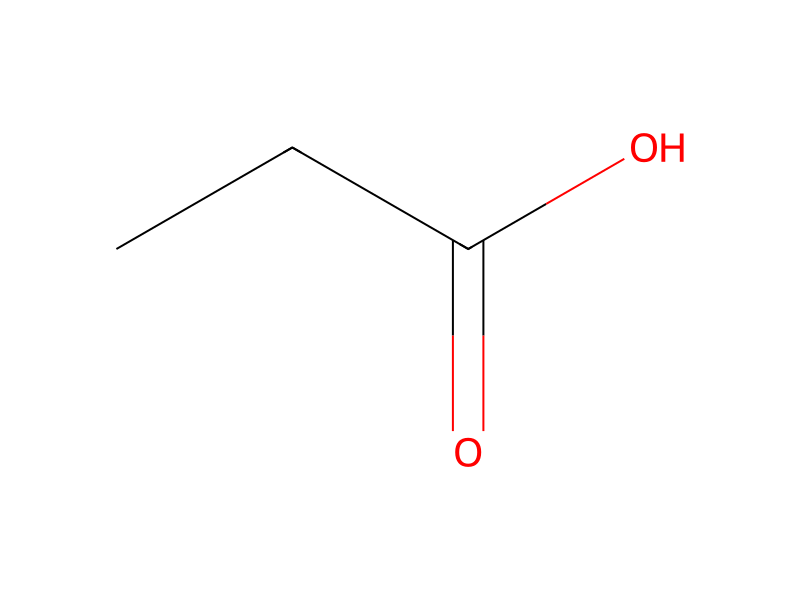
HCID 1032Propionic Acid2×HCID 14923Ammonium HydroxideHCID 36499475-Bromo-4,6-dimethyl-3-nitro-2-pyridinylamineHCID 110299024,6-Dimethylpyridine-2,3-diamineHCID 158277935-Bromo-4,6-dimethylpyridine-2,3-diamineHCID 178418361HCID 178418361, Verbindung

Produkt

1
HCID 98153742,6-Dimethyl-8-ethyl-1-deazapurineAusbeute 78 %

Reagenzien, Katalysatoren, Lösungsmittel 1

HCID 962WaterLösungsmittel

Reaktionsbedingungen

Temperatur
40 °C

Versuchsvorschrift

2-Amino-5-bromo-3-nitro-4,6-lutidine (5, 57.2 g at 87% purity, 0.204 mole) is charged to a vessel containing 4% aqueous sodium hydroxide (500 ml, 0.5 mole) and THF (100 mL). 5% Palladium on carbon (1.0 g) is added and the slurry is hydrogenated in a glass bottle on a Parr shaker at 40 psi hydrogen at 25° C. until the theoretical amount of hydrogen is consumed. Addition of the bromo-nitro-lutidine (5) should be made after the THF and aqueous NaOH have been premixed. This prevents the formation of lumps and aids in the wetting of the solid. 3 Moles of hydrogen are required. Use of excess catalyst (>2 wt %) results in a rapid hydrogen uptake and an exotherm difficult to control by external cooling. The end point is marked by complete cessation of hydrogen uptake. Analysis by gas chromatography confirms complete reaction. Typically, <1% of the bromo-diamino intermediate remains. G.C. conditions: DB-5 (25 m×0.22 mm), flow--1.0 mL/minutes helium, constant flow mode, inj. temp--250°, det. temp. 300° C., ramp from 110° C. (2 minutes) to 280° C. at 10° C./minutes. Retention times: 2,3-diamino-4,6-lutidine, 8.8 minutes; 5-bromo-2,3-diamino-4,6-lutidine, 12.7 minutes; and 2-amino-5-bromo-3-nitro-4,6-lutidine (5), 12.4 minutes. Propionic acid (500 mL) is added to the mixture and the catalyst is removed by filtration through a pad of solka-foc (1 g). The filter cake is washed with propionic acid (100 mL). The combined filtrates are concentrated by distillation at atmospheric pressure to one-half volume. Propionic acid (200 mL) is added and distillation continued until the batch temperature reaches 147°-149° C. The mixture is heated under reflux for 5 hours at a reaction temperature of 147°-149° C. Periodic distillation to remove water (a reaction by-product) is required to maintain this reaction temperature. A batch temperature of >145° C. is required for complete cyclization. The reaction is considered complete when <3% of the 2,3-diaminolutidine+monoacyl-2,3-diaminolutidine remains by G.C., retention times--12.4 minutes and 13.4 minutes respectively. The final reaction volume is adjusted to 350 mL by addition of propionic acid or further concentration. The homogeneous solution is cooled to 40° C. and water (250 mL) is added. The pH is adjusted to 9.0-9.5 by the addition of concentrated ammonium hydroxide (270 mL) maintaining the temperature at 30°-50° C. The solution is cooled to 15° C. and the slurry is aged for 1 hour. The slurry is aged at -5° C. for 1 hour. The slurry is filtered and washed well with cold water (2° C., 300 mL) and dried under vacuum with a nitrogen purge at 30° C. to yield 27.6 g of the imidazolutidine (7) at a purity of 100% (HPLC wt %) for a yield of 78%.

Aufarbeitung

  1. customreaction
  2. custom-250°, det
  3. custom300° C.
  4. customramp from 110° C.
  5. custom(2 minutes)
  6. customto 280° C.
  7. customthe catalyst is removed by filtration through a pad of solka-foc (1 g)
  8. washThe filter cake is washed with propionic acid (100 mL)
  9. concentrationThe combined filtrates are concentrated by distillation at atmospheric pressure to one-half volume
  10. additionPropionic acid (200 mL) is added
  11. distillationdistillation
  12. customreaches 147°-149° C
  13. temperatureThe mixture is heated
  14. temperatureunder reflux for 5 hours at a reaction temperature of 147°-149° C
  15. distillationPeriodic distillation
  16. customto remove water (a reaction by-product)
  17. temperatureto maintain this reaction temperature
  18. customA batch temperature of >145° C.
  19. customretention times--12.4 minutes and 13.4 minutes
  20. customThe final reaction volume
  21. temperaturemaintaining the temperature at 30°-50° C
  22. temperatureThe solution is cooled to 15° C.
  23. waitThe slurry is aged at -5° C. for 1 hour
  24. filtrationThe slurry is filtered
  25. washwashed well with cold water (2° C., 300 mL)
  26. customdried under vacuum with a nitrogen
  27. custompurge at 30° C.

Quellen und Nachweise

ORD-Eintrag
ord-da1cd36c3b16485ab86a1d56fe351dad
Quelldatensatz
uspto-grants-1997_12
DOI
10.6084/m9.figshare.5104873.v1
Patentnummer
US05693812

Notizen zur Reaktion

Auf dieser SeiteKomponentenReaktionsbedingungenVersuchsvorschriftAufarbeitungQuellen und NachweiseNotizen zur Reaktion


