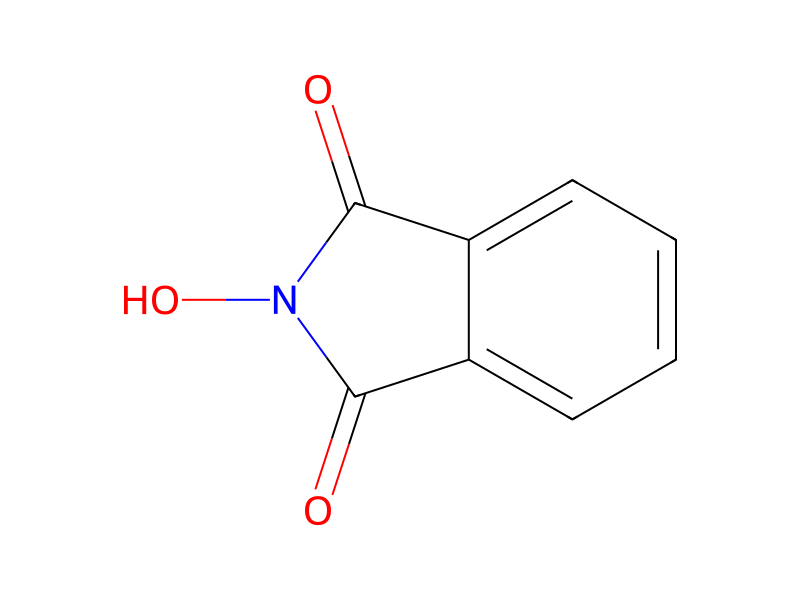
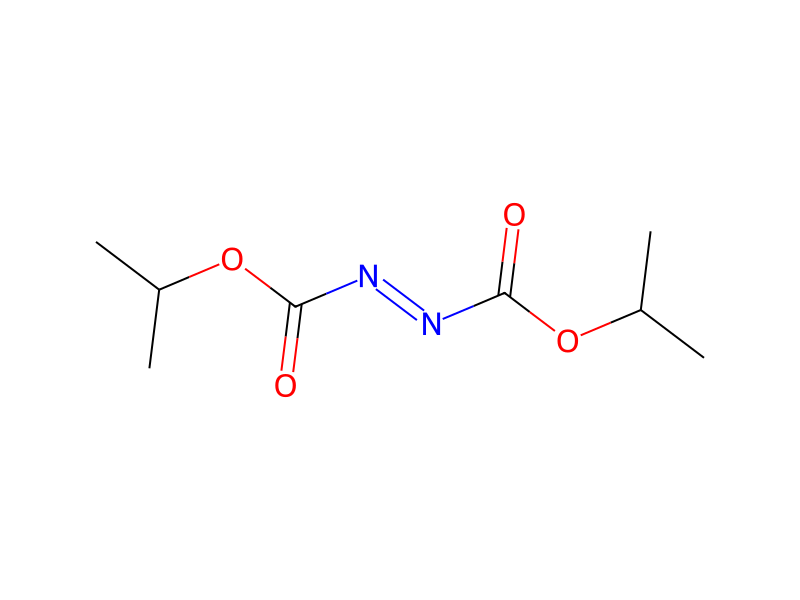
[CH2:1]([C:4]1[N:5]([CH2:17][CH2:18][CH2:19][OH:20])[C:6]2[C:15]3[CH:14]=[CH:13][CH:12]=[CH:11][C:10]=3[N:9]=[CH:8][C:7]=2[N:16]=1)[CH2:2][CH3:3].C1(P(C2C=CC=CC=2)C2C=CC=CC=2)C=CC=CC=1.O[N:41]1[C:45](=[O:46])[C:44]2=[CH:47][CH:48]=[CH:49][CH:50]=[C:43]2[C:42]1=[O:51].N(C(OC(C)C)=O)=NC(OC(C)C)=O.C(=O)(O)[O-].[Na+]>O1CCCC1.O.C(Cl)(Cl)Cl>[CH2:1]([C:4]1[N:5]([CH2:17][CH2:18][CH2:19][O:20][N:41]2[C:45](=[O:46])[C:44]3[C:43](=[CH:50][CH:49]=[CH:48][CH:47]=3)[C:42]2=[O:51])[C:6]2[C:15]3[CH:14]=[CH:13][CH:12]=[CH:11][C:10]=3[N:9]=[CH:8][C:7]=2[N:16]=1)[CH2:2][CH3:3]A solution of 3-(2-propyl-1H-imidazo[4,5-c]quinolin-1-yl)propan-1-ol (20.0 grams (g), 74.3 millimoles (mmol)) in tetrahydrofuran (300 milliliters (mL)) was cooled to approximately 0° C.; triphenylphosphine (23.4 g, 89.1 mmol) and N-hydroxyphthalimide (14.5 g, 89.1 mmol) were then added. After five minutes of stirring, diisopropyl azodicarboxylate (17.5 mL, 89.1 mmol) was added dropwise over a period of 15 minutes. The reaction was allowed to warm to room temperature and stirred overnight. The solvent was removed under reduced pressure, and the residue was dissolved in chloroform (300 mL). A solution of hydrochloric acid (150 mL of 6 molar (M)) was then added, and approximately 50 mL of the solvent was removed under reduced pressure to provide a white precipitate, which was stirred for ten minutes and isolated by filtration. Additional salt eventually precipitated from the filtrate and was isolated by filtration. Chloroform (300 mL) and water (300 mL) were added to the salt, and solid sodium bicarbonate was added to the mixture to adjust to pH 8. The organic solution was then dried over magnesium sulfate, filtered, and concentrated under reduced pressure to provide 28.4 g of 2-[3-(2-propyl-1H-imidazo[4,5-c]quinolin-1-yl)propoxy]-1H-isoindole-1,3(2H)-dione as a white solid.