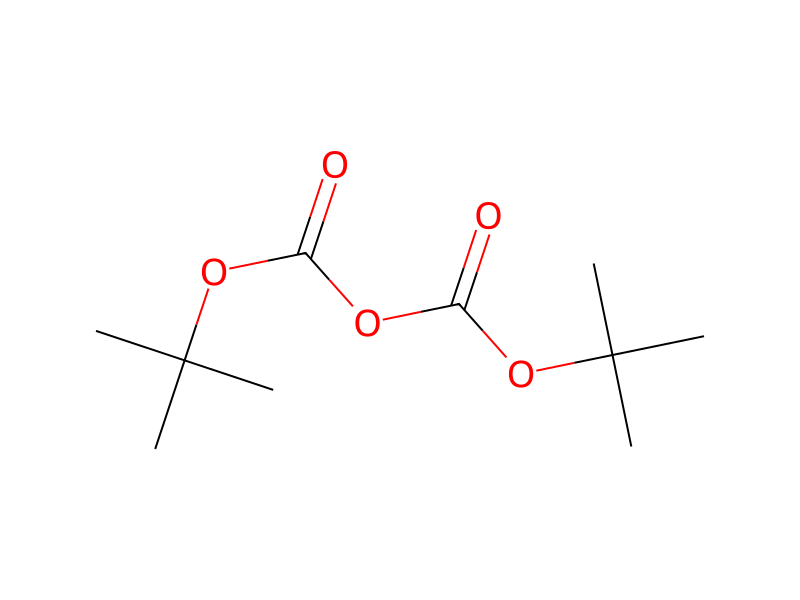
To a solution of commercially available (2S,3aS,6aS)-benzyl octahydrocyclopenta[b]pyrrole-2-carboxylate hydrochloride (4.70 g, 16.68 mmol) in methylene chloride (42 mL) was added Di-tert-butyl dicarbonate (7.28 g, 33.36 mmol), N,N-diisopropylethylamine (5.82 mL, 33.36 mmol) and 4-(Dimethylamino)pyridine (0.20 g, 1.67 mmol). The solution was stirred under air for 16 hours. Upon completion, the reaction was concentrated in vacuo, diluted in ethyl acetate, and washed with 1N HCl. The aqueous layers were backextracted twice with ethyl acetate and the combined organic layers were dried over sodium sulfate, filtered and concentrated. The resulting residue was purified by silica gel chromatography (5-40% ethyl acetate in hexanes) to afford (2S,3aS,6aS)-1-tert-butoxycarbonyl)octahydrocyclopenta[b]pyrrole-2-carboxylic acid which was used without further purification. MS (ESI) m/z 368.47 [M+Na]+.