StartseiteMCPWorkbenchSkills
StartseiteWorkbenchBenachrichtigungenMein Bereich
llms.txt · MCP-AnleitungDatenschutz · Nutzungsbedingungen · Supportv1.8.0
  1. Startseite
  2. /Reaktion

Sodium Carbonate → 2-[5-Amino-6-(5-phenyl-1,3,4-thiadiazol-2-yl)pyrazin-2-yl]-5-(1,4-diazepane-1-carbonyl)benzonitrile

HRID 2204892
Notizen
Druckvorschau

Reaktionsgleichung

Reaktionsgleichung von HRID 2204892
Br[C:2]1[CH:11]=[CH:10][C:5]([C:6]([O:8]C)=O)=[CH:4][C:3]=1[C:12]#[N:13].[C:14]([O-])(=O)[CH3:15].[K+].CC1(C)C(C)(C)OB(B2O[C:30]([CH3:33])(C)[C:29]([CH3:35])([CH3:34])O2)O1.[C:37]1(P(C2C=CC=CC=2)C2C=CC=CC=2)C=CC[CH:38]=1.C1(P(C2C=CC=CC=2)C2C=CC=CC=2)C=CC=CC=1.C(=O)([O-])[O-].[Na+].[Na+].Br[C:81]1[N:82]=[C:83]([C:88]2[S:89]C(C3C=CC=CC=3)=[N:91][N:92]=2)[C:84]([NH2:87])=[N:85][CH:86]=1.[NH:99]1[CH2:105]CC[NH:102][CH2:101][CH2:100]1.CN(C(ON1N=NC2C=CC=CC1=2)=[N+](C)C)C.[B-](F)(F)(F)F>O1CCOCC1.C(OCC)(=O)C.Cl[Pd]Cl.[Fe].[Pd].ClCCl>[NH2:87][C:84]1[N:85]=[CH:86][C:81]([C:2]2[CH:11]=[CH:10][C:5]([C:6]([N:102]3[CH2:15][CH2:14][CH2:105][NH:99][CH2:100][CH2:101]3)=[O:8])=[CH:4][C:3]=2[C:12]#[N:13])=[N:82][C:83]=1[C:88]1[S:89][C:35]([C:29]2[CH:30]=[CH:33][CH:38]=[CH:37][CH:34]=2)=[N:91][N:92]=1
KomponentenReaktionsbedingungenVersuchsvorschriftAufarbeitungQuellen und NachweiseNotizen zur Reaktion

Komponenten

16

Edukt 9

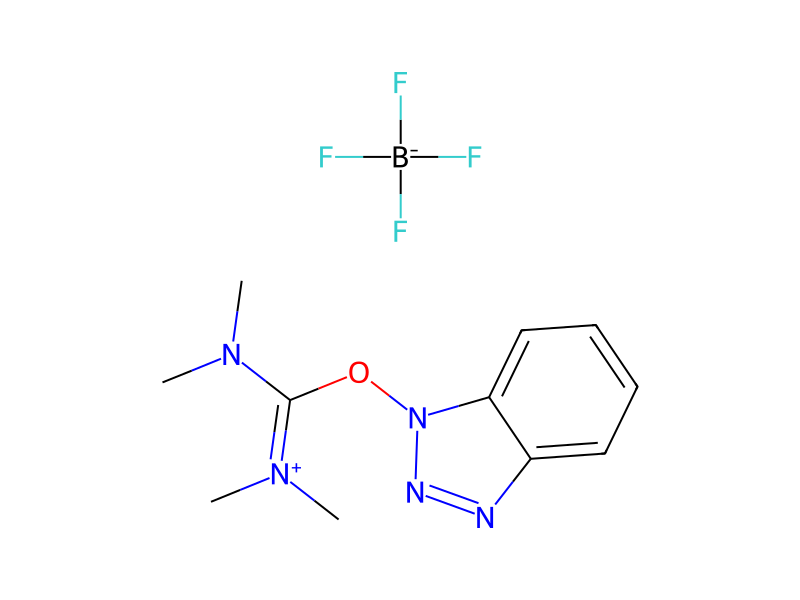
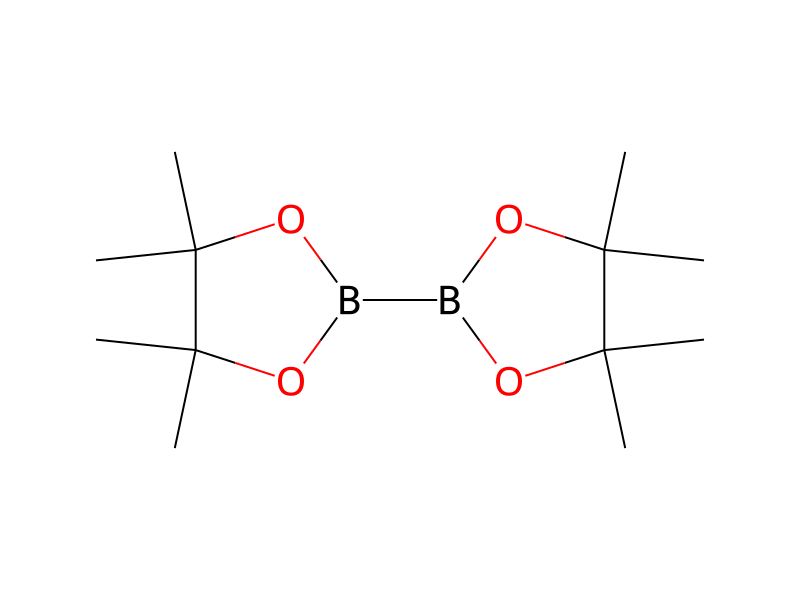
HCID 10340Sodium CarbonateHCID 11776TriphenylphosphineHCID 68163Hexahydro-1,4-diazepineHCID 517044Potassium AcetateHCID 2733207O-(Benzotriazol-1-yl)-N,N,N',N'-tetramethyluronium tetrafluoroborateHCID 2733548Bis(pinacolato)diborane
HCID 3524393
Cyclopenta-1,4-dien-1-yl(diphenyl)phosphane
HCID 594718915-Bromo-3-(5-phenyl-1,3,4-thiadiazol-2-yl)pyrazin-2-amine
HCID 67424845Methyl 4-bromo-3-cyanobenzoate

Produkt 1

HCID 594716512-[5-Amino-6-(5-phenyl-1,3,4-thiadiazol-2-yl)pyrazin-2-yl]-5-(1,4-diazepane-1-carbonyl)benzonitrileAusbeute 25 %

Reagenzien, Katalysatoren, Lösungsmittel 6

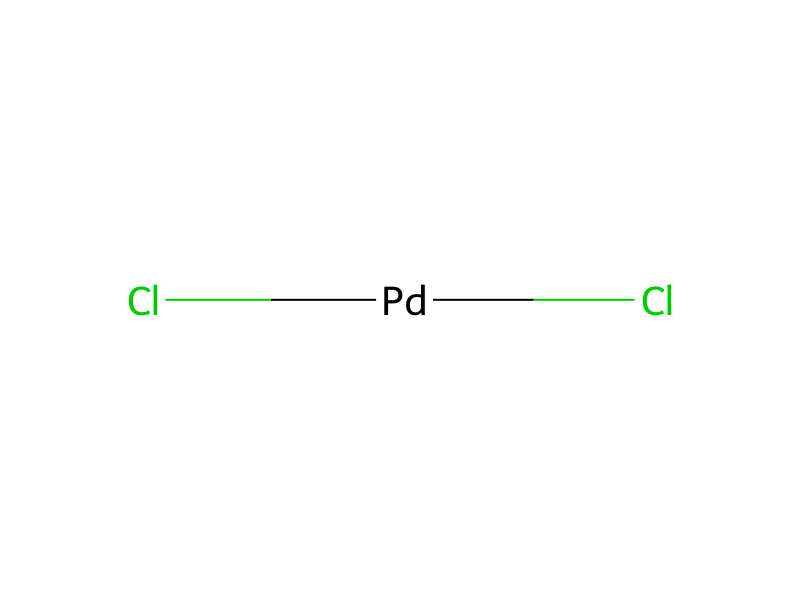
HCID 23925IronKatalysatorHCID 23938PalladiumKatalysatorHCID 24290Palladium ChlorideKatalysatorHCID 6344DichloromethaneLösungsmittelHCID 8857Ethyl AcetateLösungsmittelHCID 312751,4-DioxaneLösungsmittel

Reaktionsbedingungen

Temperatur
140 °C

Versuchsvorschrift

A mixture of methyl 4-bromo-3-cyano-benzoate (100 mg, 0.4166 mmol), potassium acetate (122.7 mg, 1.250 mmol), 4,4,5,5-tetramethyl-2-(4,4,5,5-tetramethyl-1,3,2-dioxaborolan-2-yl)-1,3,2-dioxaborolane (158.7 mg, 0.6249 mmol) and 1-cyclopenta-1,4-dienyl-diphenyl-phosphane; dichloromethane; dichloropalladium; iron (34.02 mg, 0.04166 mmol) was heated in dioxane (10 mL) at 80° C. for 2 h. After this time, the reaction mixture was cooled and palladium; triphenylphosphane (48.14 mg, 0.04166 mmol), sodium carbonate (625.0 μL of 2 M, 1.250 mmol) and 5-bromo-3-(5-phenyl-1,3,4-thiadiazol-2-yl)pyrazin-2-amine (139.2 mg, 0.4166 mmol) were added and heated at 140° C. under microwave conditions for 1 h. After cooling to room temperature, the resulting carboxylic acid was filtered off as brown solid. The solid was dissolved in DMF (3 mL) and 1,4-diazepane (208.3 mg, 2.083 mmol) and TBTU (267.5 mg, 0.8332 mmol) were added. The resulting mixture was stirred at room temperature for 2 h then diluted with ethyl acetate (5 mL), and the organic extract washed with water (1×5 mL) and brine (1×5 mL), dried over MgSO4 and concentrated in vacuo to a solid. This solid was purified by reverse phase preparative HPLC [Waters Sunfire C18, 10 μM, 100 Å column, gradient 10%-95% B (solvent A: 0.05% TFA in water; solvent B: CH3CN) over 16 minutes at 25 mL/min]. The product fractions were collected and lypholised to give the product as a yellow solid (60 mg, 25% yield); 1H NMR (400.0 MHz, DMSO) d 1.9-2.1 (m, 2H), 3.3-3.4 (m, 4H), 3.5-3.55 (m, 2H), 3.65-3.7 (m, 1H), 3.7-3.75 (m, 1H), 3.8-3.9 (m, 2H), 7.5-7.6 (m, 3H), 7.8 (d, 1H), 8.1-8.22 (m, 3H), 8.25 (br s, 1H), 8.75 (br s, 2H) and 8.8 (s, 1H) ppm; MS (ES+) 483.2


Aufarbeitung

  1. temperatureAfter this time, the reaction mixture was cooled
  2. temperatureAfter cooling to room temperature
  3. filtrationthe resulting carboxylic acid was filtered off as brown solid
  4. dissolutionThe solid was dissolved in DMF (3 mL)
  5. extractionthe organic extract
  6. washwashed with water (1×5 mL) and brine (1×5 mL)
  7. dry with materialdried over MgSO4
  8. concentrationconcentrated in vacuo to a solid
  9. customThis solid was purified by reverse phase preparative HPLC [Waters Sunfire C18, 10 μM, 100 Å column, gradient 10%-95% B (solvent A: 0.05% TFA in water; solvent B: CH3CN) over 16 minutes at 25 mL/min]
  10. customThe product fractions were collected

Quellen und Nachweise

ORD-Eintrag
ord-3908ba339a6747a5808615ebeaf9844c
Quelldatensatz
uspto-grants-2016_06
DOI
10.6084/m9.figshare.5104873.v1
Patentnummer
US09365557B2

Notizen zur Reaktion

Wird geladen…

Auf dieser SeiteKomponentenReaktionsbedingungenVersuchsvorschriftAufarbeitungQuellen und NachweiseNotizen zur Reaktion