StartseiteMCPWorkbenchSkills
StartseiteWorkbenchBenachrichtigungenMein Bereich
llms.txt · MCP-AnleitungDatenschutz · Nutzungsbedingungen · Supportv1.8.0
  1. Startseite
  2. /Reaktion

Diisopropylamine → HCID 67482163, Verbindung

HRID 2214103
Notizen
Druckvorschau

Reaktionsgleichung

Reaktionsgleichung von HRID 2214103
C(NC(C)C)(C)C.C([Li])CCC.[CH3:13][O:14][C:15](=[O:26])[CH2:16][C:17]1[CH:22]=[CH:21][C:20]([S:23][CH3:24])=[C:19]([Cl:25])[CH:18]=1.I[CH2:28][CH:29]1[CH2:33][CH2:32][C:31]2([O:38][CH2:37][CH2:36][CH2:35][O:34]2)[CH2:30]1>O1CCCC1.CN1CCCN(C)C1=O>[CH3:13][O:14][C:15](=[O:26])[CH:16]([C:17]1[CH:22]=[CH:21][C:20]([S:23][CH3:24])=[C:19]([Cl:25])[CH:18]=1)[CH2:28][CH:29]1[CH2:33][CH2:32][C:31]2([O:34][CH2:35][CH2:36][CH2:37][O:38]2)[CH2:30]1
KomponentenReaktionsbedingungenVersuchsvorschriftAufarbeitungQuellen und NachweiseNotizen zur Reaktion

Komponenten

7

Edukt 4

HCID 7912DiisopropylamineHCID 12067651HCID 12067651, VerbindungHCID 219589662-Iodomethyl-6,10-dioxa-spiro[4.5]decaneHCID 178418339Butyllithium

Produkt 1

HCID 67482163HCID 67482163, VerbindungAusbeute 56,2 %

Reagenzien, Katalysatoren, Lösungsmittel 2

HCID 8028
Tetrahydrofuran
Lösungsmittel
3×
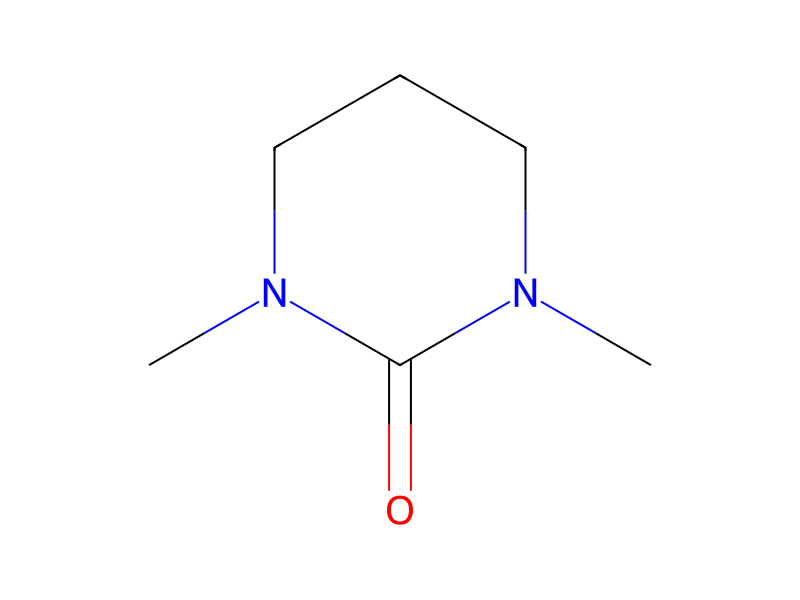
HCID 816462(1H)-Pyrimidinone, tetrahydro-1,3-dimethyl-Lösungsmittel3×

Reaktionsbedingungen

Temperatur
-78 °C

Versuchsvorschrift

A solution of diisopropylamine (1.9 mL, 13.64 mmol) in dry tetrahydrofuran (19.5 mL) and 1,3-dimethyl-3,4,5,6-tetrahydro-2(1H)-pyrimidinone (6.5 mL) cooled to −78° C. under nitrogen was treated with a 2.5M solution of n-butyllithium in hexanes (5.5 mL, 13.64 mmol). The reaction mixture was stirred at −78° C. for 45 min and then treated dropwise with a solution of (3-chloro-4-methylsulfanyl-phenyl)-acetic acid methyl ester (prepared as in Example 4, 2.42 g, 10.49 mmol) in dry tetrahydrofuran (19.5 mL) and 1,3-dimethyl-3,4,5,6-tetrahydro-2(1H)-pyrimidinone (6.5 mL). The reaction mixture turned bright yellow. The reaction mixture was allowed to stir at −78° C. for 15 min, then at 0° C. for an additional 30 min, and then re-cooled to −78° C. At this point, a solution of 2-iodomethyl-6,10-dioxa-spiro[4.5]decane (prepared as in Example 43, 3.85 g, 13.64 mmol) in dry tetrahydrofuran (10 mL) and 1,3-dimethyl-3,4,5,6-tetrahydro-2(1H)-pyrimidinone (3 mL) was added dropwise. The reaction mixture stirred at −78° C. for 30 min and was then allowed to warm to 25° C., where it was stirred for 24 h. The reaction mixture was concentrated in vacuo to remove tetrahydrofuran. The aqueous residue was diluted with ethyl acetate (200 mL), and the organic layer was washed with a saturated aqueous lithium chloride solution (2×200 mL), water (200 mL), and a saturated aqueous sodium chloride solution. The organic layer was dried over magnesium sulfate, filtered, and concentrated in vacuo. Flash chromatography (Merck Silica gel 60, 230–400 mesh, 25% ethyl acetate/hexanes) afforded the 2-(3-chloro-4-methylsulfanyl-phenyl)-3-(6,10-dioxa-spiro[4.5]dec-2-yl)-propionic acid methyl ester (2.27 g, 56%) as a yellow oil: EI-HRMS m/e calcd for C19H25ClO4S (M)+ 384.1162 found 384.1181.


Aufarbeitung

  1. stirringto stir at −78° C. for 15 min
  2. waitat 0° C. for an additional 30 min
  3. temperaturere-cooled to −78° C
  4. stirringThe reaction mixture stirred at −78° C. for 30 min
  5. temperatureto warm to 25° C.
  6. stirringwhere it was stirred for 24 h
  7. concentrationThe reaction mixture was concentrated in vacuo
  8. customto remove tetrahydrofuran
  9. additionThe aqueous residue was diluted with ethyl acetate (200 mL)
  10. washthe organic layer was washed with a saturated aqueous lithium chloride solution (2×200 mL), water (200 mL)
  11. dry with materialThe organic layer was dried over magnesium sulfate
  12. filtrationfiltered
  13. concentrationconcentrated in vacuo

Quellen und Nachweise

ORD-Eintrag
ord-fc4ba4c579504626a264ddec1e07ff6c
Quelldatensatz
uspto-grants-2006_09
DOI
10.6084/m9.figshare.5104873.v1
Patentnummer
US07105671B2

Notizen zur Reaktion

Wird geladen…

Auf dieser SeiteKomponentenReaktionsbedingungenVersuchsvorschriftAufarbeitungQuellen und NachweiseNotizen zur Reaktion