StartseiteMCPWorkbenchSkills
StartseiteWorkbenchBenachrichtigungenMein Bereich
llms.txt · MCP-AnleitungDatenschutz · Nutzungsbedingungen · Supportv1.8.0
  1. Startseite
  2. /Reaktion

Hydrochloric Acid → Valproic Acid

HRID 2248995
Notizen
Druckvorschau

Reaktionsgleichung

Reaktionsgleichung von HRID 2248995
[C:1]([O-:7])(=[O:6])[CH2:2][CH2:3][CH2:4][CH3:5].[Li+].[Cl-].[Mg+2].[Cl-].[CH:12](NC(C)C)([CH3:14])[CH3:13].C([Li])CCC.BrCCC.Cl>CCCCCCC.O.O1CCCC1>[CH2:3]([CH:2]([CH2:13][CH2:12][CH3:14])[C:1]([OH:7])=[O:6])[CH2:4][CH3:5]
KomponentenReaktionsbedingungenVersuchsvorschriftAufarbeitungQuellen und NachweiseNotizen zur Reaktion

Komponenten

10

Edukt 6

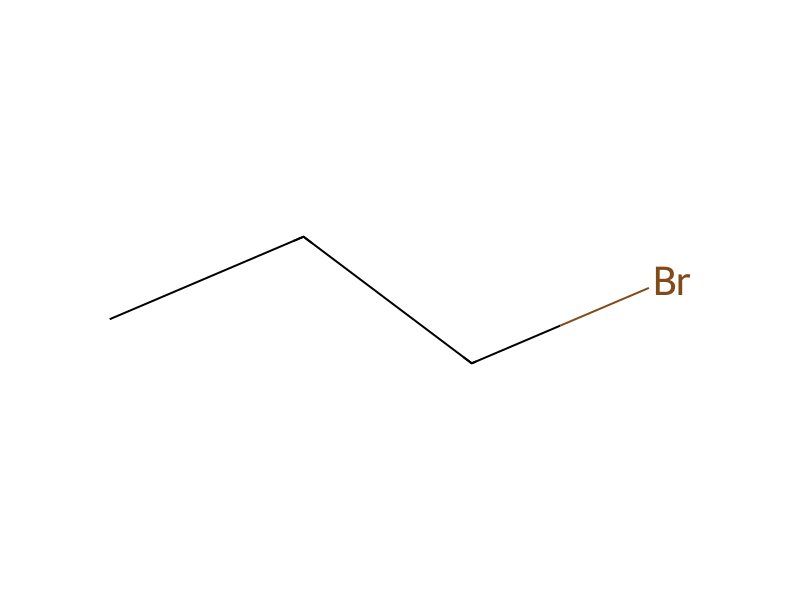
HCID 313Hydrochloric AcidHCID 78401-BromopropaneHCID 7912DiisopropylamineHCID 5360315Magnesium ChlorideHCID 23684800Lithium valerateHCID 178418339Butyllithium

Produkt 1

HCID 3121
Valproic Acid
Ausbeute 1.126,8 %

Reagenzien, Katalysatoren, Lösungsmittel 3

HCID 962WaterLösungsmittelHCID 8028TetrahydrofuranLösungsmittelHCID 8900HeptaneLösungsmittel

Reaktionsbedingungen

Temperatur
50 °C

Versuchsvorschrift

A 2-L flask is charged with 21.6 g (200 mmol) of lithium valerate, 9.5 g (100 mmol) of anhydrous magnesium chloride and 250 mL anhydrous tetrahydrofuran (freshly distilled from sodium, benzophenone). The stirred mixture is warmed to 50° C. allowing the metathetical exchange to occur and a homogeneous solution is produced within 5-15 minutes. The slightly hazy solution is cooled and 5.1 g (200/4 mmol) of diisopropylamine is added. Some precipitate forms and continued stirring fails to effect solution. Finally, 120 mL of a standard solution (1.67M; 200 mmol) of n-butyllithium in heptane is added in four portions at 15-minute intervals at 25°-30° C. After addition of the first portion, a homogeneous solution is produced but addition of the remaining portions yields a turbid mixture. After addition of the final portion, the mixture is permitted to stir for 2 hours at ambient temperature. Then the heterogeneous mixture is cooled to 0° C. and 24.6 g (200 mmol) of 1-bromopropane is added over 10 minutes. Finally, the mixture is warmed to 50° C. for 12 hours overnight. At the conclusion of the reaction period, the mixture is cooled and 200 mL of 6N hydrochloric acid solution is added at a temperature <15° C. followed by 100 mL of water. The phases are separated and the aqueous layer is back-extracted with 100 mL of diethyl ether. The organic layers are combined and the solution is washed with brine, dried (magnesium sulfate), evaporated and the residue is distilled through a 6" heated helices packed column to afford 6.5 g of 2 -propylpentanoic acid; bp 89°-92° C./2 mm.


Aufarbeitung

  1. distillationfreshly distilled from sodium, benzophenone)
  2. customa homogeneous solution is produced within 5-15 minutes
  3. temperatureThe slightly hazy solution is cooled
  4. additionAfter addition of the first portion
  5. customa homogeneous solution is produced
  6. additionaddition of the remaining portions
  7. customyields a turbid mixture
  8. additionAfter addition of the final portion
  9. stirringto stir for 2 hours at ambient temperature
  10. temperatureThen the heterogeneous mixture is cooled to 0° C.
  11. temperatureFinally, the mixture is warmed to 50° C. for 12 hours overnight
  12. customAt the conclusion of the reaction period
  13. temperaturethe mixture is cooled
  14. customThe phases are separated
  15. extractionthe aqueous layer is back-extracted with 100 mL of diethyl ether
  16. washthe solution is washed with brine
  17. dry with materialdried (magnesium sulfate)
  18. customevaporated
  19. distillationthe residue is distilled through a 6"
  20. temperatureheated helices

Quellen und Nachweise

ORD-Eintrag
ord-a9d0b860244340ce8cd0939d8347cb0a
Quelldatensatz
uspto-grants-1991_08
DOI
10.6084/m9.figshare.5104873.v1
Patentnummer
US05041640

Notizen zur Reaktion

Wird geladen…

Auf dieser SeiteKomponentenReaktionsbedingungenVersuchsvorschriftAufarbeitungQuellen und NachweiseNotizen zur Reaktion