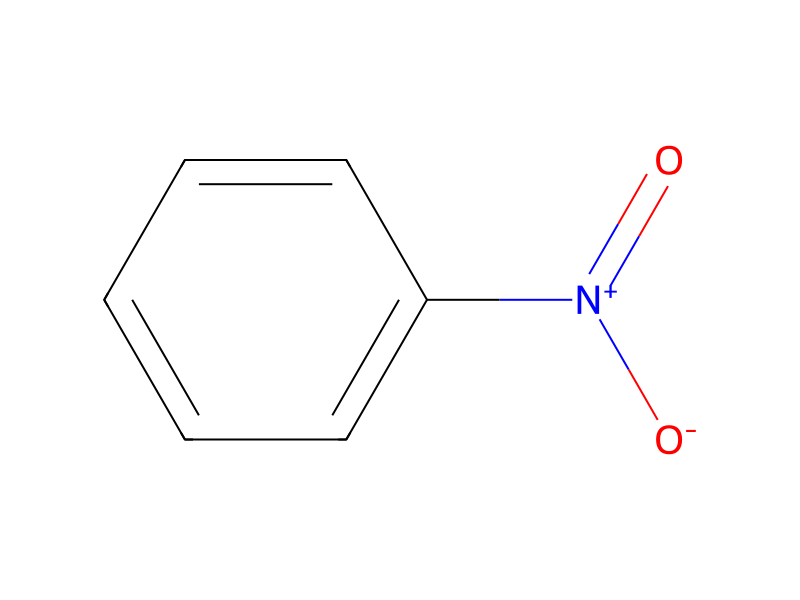
[N+:1]([C:4]1[CH:9]=[CH:8][CH:7]=[CH:6][CH:5]=1)([O-])=O.[C]=O.[C:12]1([N:18]=C=O)[CH:17]=[CH:16][CH:15]=[CH:14][CH:13]=1>C1(C2C3NC(=CC=3)C(C3C=CC=CC=3)=C3N=C(C=C3)C(C3C=CC=CC=3)=C3NC(C=C3)=C(C3C=CC=CC=3)C3=NC=2C=C3)C=CC=CC=1.[Pd].ClC1C=CC=CC=1Cl>[N:18]([C:12]1[CH:17]=[CH:16][CH:15]=[CH:14][CH:13]=1)=[N:1][C:4]1[CH:9]=[CH:8][CH:7]=[CH:6][CH:5]=1Into the autoclave previously described, 2 grams of palladium tetraphenylporphyrin and 30 grams of nitrobenzene are introduced and the total volume adjusted to 100 ml by means of orthodichlorobenzene. The reactor is closed and after scavenging with nitrogen, carbon monoxide is introduced until the pressure reaches 200 bars at 20° C. The autoclave is isolated and while maintaining an agitation is heated at 235° C. for 3 hours, then at 240° C. for 4 hours, 30 minutes. After cooling, the mixture is analyzed. The O.C.R. of the nitrobenzene is 94.7% and the selectivity for phenylisocyanate is 60.2%. No azobenzene is formed.