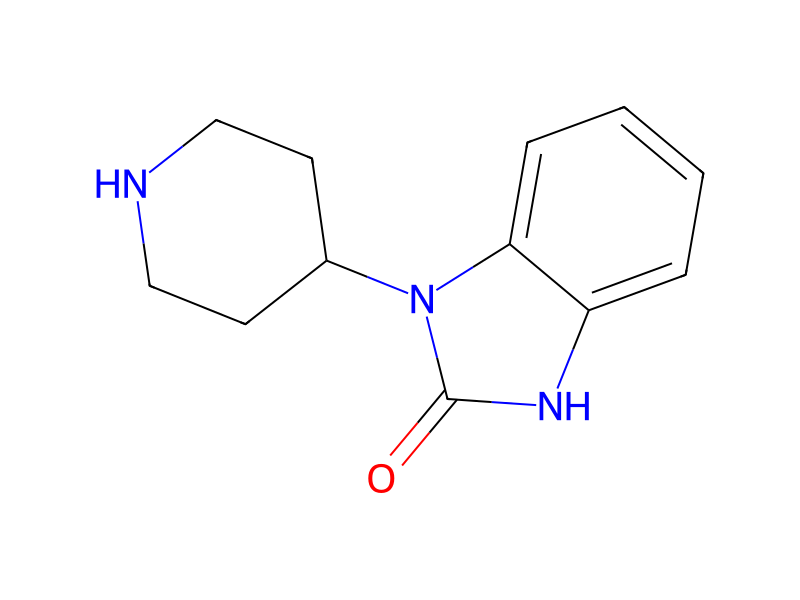
O=[C:2]1[CH2:7][CH2:6][CH:5]([C:8]([O:10][CH2:11][CH3:12])=[O:9])[CH2:4][CH2:3]1.[O:13]=[C:14]1[N:18]([CH:19]2[CH2:24][CH2:23][NH:22][CH2:21][CH2:20]2)[C:17]2[CH:25]=[CH:26][CH:27]=[CH:28][C:16]=2[NH:15]1.C(O[BH-](OC(=O)C)OC(=O)C)(=O)C.[Na+].C([O-])([O-])=O.[Na+].[Na+]>ClCCl.C(O)(=O)C.ClCCCl>[O:13]=[C:14]1[N:18]([CH:19]2[CH2:20][CH2:21][N:22]([CH:2]3[CH2:7][CH2:6][CH:5]([C:8]([O:10][CH2:11][CH3:12])=[O:9])[CH2:4][CH2:3]3)[CH2:23][CH2:24]2)[C:17]2[CH:25]=[CH:26][CH:27]=[CH:28][C:16]=2[NH:15]1A mixture of ethyl 4-oxocyclohexanecarboxylate (1.86 g), 4-(2-oxo-1-benzimidazolinyl)piperidine (1.98 g), 1,2-dichloroethane (40 mL), glacial acetic acid (0.52 mL) and sodium triacetoxyborohydride (3.47 g) was stirred at room temperature for 72 h. The reaction mixture was poured into dichloromethane (50 mL) and saturated Na2CO3 (50 mL) and the layers separated. The aqueous layer was extracted with 2×50 mL of dichloromethane and the combined organic layers dried over MgSO4 and concentrated to dryness under reduced pressure. The crude product was purified by flash column chromatography on silica, eluting with a gradient of ethyl acetate; 0-8% methanol to yield the cis and trans isomers of ethyl 1-[4-(2-keto-1-benzimidazolinyl)piperidin-1-yl]cyclohexane4-carboxylate as a colorless solid (2.23 g).