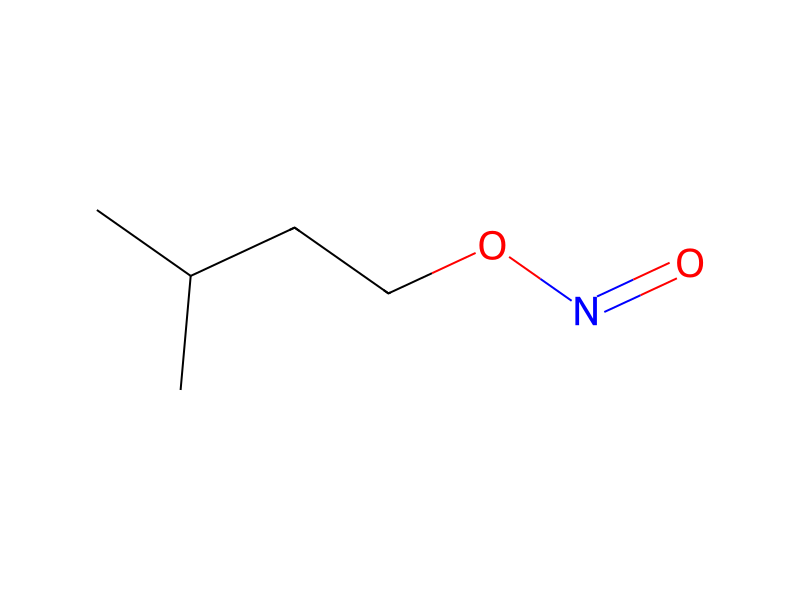
To a solution of 4,5-dichloro-2-methylaniline (1.69 g, 9.6 mmol) in CHCl3 (25 ml) at 0° C. was slowly added acetic anhydride (2.09 ml, 22.1 mmol). The reaction mixture was warmed to room temperature and stirred for 1 h. A thick white precipitate had gradually formed. Potassium acetate (283 mg, 2.88 mmol) was added followed by slow addition of isoamyl nitrite (2.78 ml, 20.6 mmol). The reaction mixture was heated at reflux overnight. The homogeneous deep orange reaction mixture was cooled to room temperature and concentrated. Water (10 mL) was added and the mixture was reconcentrated to an orange solid. This solid was suspended in conc. HCl (15 mL) and heated at 60° C. for 2 h then cooled to 0° C. and neutralized with 50% NaOH. Extracted with EtOAc, dried over MgSO4 and concentrated to an orange solid. This solid was dissolved in THF/MeOH (1:1, 25 mL) and 10% NaOH (3 mL) was added. The deep maroon reaction mixture was stirred at room temperature for 5 min then neutralized with 1.0 M HCl and diluted with water. The mixture was extracted with EtOAc (2×) then dried over MgSO4 and concentrated. The residue was absorbed onto silica gel and purified by chromatography with 30% to 50% EtOAc/hexanes to afford 1.50 g (84%) of 5,6-dichloro-1H-indazole as a light orange solid. 1H NMR (CDCl3, 300 MHz): δ (ppm) 8.04 (s, 1H), 7.89 (s, 1H), 7.68 (s, 1H).