Reaktionsgleichung

[CH:1](=[O:5])[CH2:2][CH2:3][CH3:4].[C:6]([OH:11])(=[O:10])[CH2:7][CH2:8][CH3:9].[CH2:12]([CH:14]([CH:17]([OH:21])[CH2:18][CH2:19][CH3:20])[CH2:15][OH:16])[CH3:13].[Sn]>[Sn].O>[CH:1](=[O:5])[CH2:2][CH2:3][CH3:4].[CH2:12]([C:14](=[CH:17][CH2:18][CH2:19][CH3:20])[CH:15]=[O:16])[CH3:13].[C:6]([OH:11])(=[O:10])[CH2:7][CH2:8][CH3:9].[CH2:12]([CH:14]([CH:17]([OH:21])[CH2:18][CH2:19][CH3:20])[CH2:15][OH:16])[CH3:13]Komponenten
Edukt 3
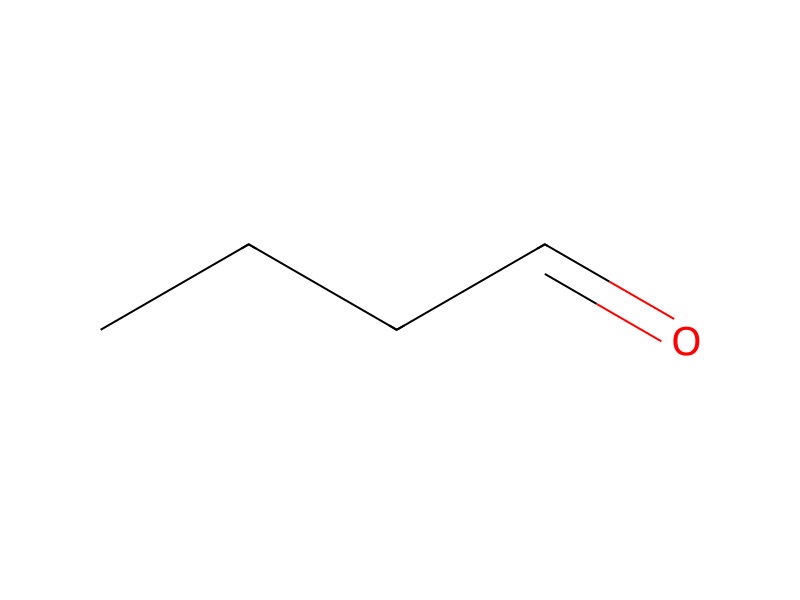


Produkt 3

Reagenzien, Katalysatoren, Lösungsmittel 2

Reaktionsbedingungen
- Temperatur
- 160 °C
Versuchsvorschrift
The purpose of this example is to demonstrate the use of tin metal as a catalyst for the conversion of n-butyraldehyde to 2-ethylhexane-1,3-diol monobutyrate. A 300 milliliter stainless steel autoclave is charged with 120 grams of n-butyraldehyde containing 2 weight percent water. Granular tin metal, 20 mesh (2.4 grams, 2.0 weight percent) is added. The autoclave is pressured to 100 psig nitrogen and heated to 160° C. with stirring for 2 hours. The autoclave is then cooled and vented. The liquid products recovered weigh 117 grams. The reactor contents contain 0.6 ppm soluble tin. Distillation of the reactor contents produces 66 grams of n-butyraldehyde (45 percent aldehyde conversion), 3 grams of water, 4.4 grams of 2-ethylhexenal (9 mole percent yield), 2 grams of n-butyraldol (boiling point 74° C.-78° C. per 1 mm), 39.6 grams of 2-ethylhexane-1,3-diol monobutyrate (88 mole percent yield) boiling point 105° C.-114° C. per 1 mm.
Aufarbeitung
- temperatureThe autoclave is then cooled
- customThe liquid products recovered
- distillationDistillation of the reactor contents
Quellen und Nachweise
- ORD-Eintrag
- ord-5efcd498e6654387b846234ead6bfab9
- Quelldatensatz
- uspto-grants-1980_09
- Patentnummer
- US04225726
Verknüpfte Notizen
Wird geladen…