StartseiteMCPWorkbenchSkills
StartseiteWorkbenchBenachrichtigungenMein Bereich
llms.txt · MCP-AnleitungDatenschutz · Nutzungsbedingungen · Supportv1.8.0
  1. Startseite
  2. /Reaktion

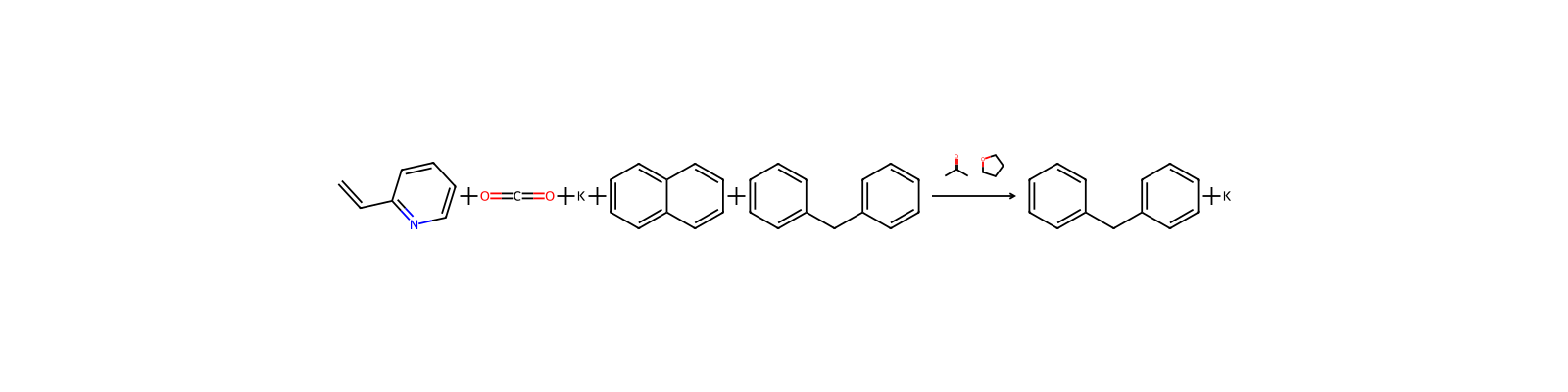
Carbon Dioxide → Potassium diphenylmethane

HRID 31360
Notizen
Druckvorschau

Reaktionsgleichung

Reaktionsgleichung von HRID 31360
C(C1C=CC=CN=1)=C.C(=O)=O.[K:12].C1C2C(=CC=CC=2)C=CC=1.[C:23]1([CH2:29][C:30]2[CH:35]=[CH:34][CH:33]=[CH:32][CH:31]=2)[CH:28]=[CH:27][CH:26]=[CH:25][CH:24]=1>CC(C)=O.C1COCC1>[C:23]1([CH2:29][C:30]2[CH:31]=[CH:32][CH:33]=[CH:34][CH:35]=2)[CH:28]=[CH:27][CH:26]=[CH:25][CH:24]=1.[K:12]
KomponentenReaktionsbedingungenVersuchsvorschriftAufarbeitungQuellen und NachweiseNotizen zur Reaktion

Komponenten

7

Edukt 4

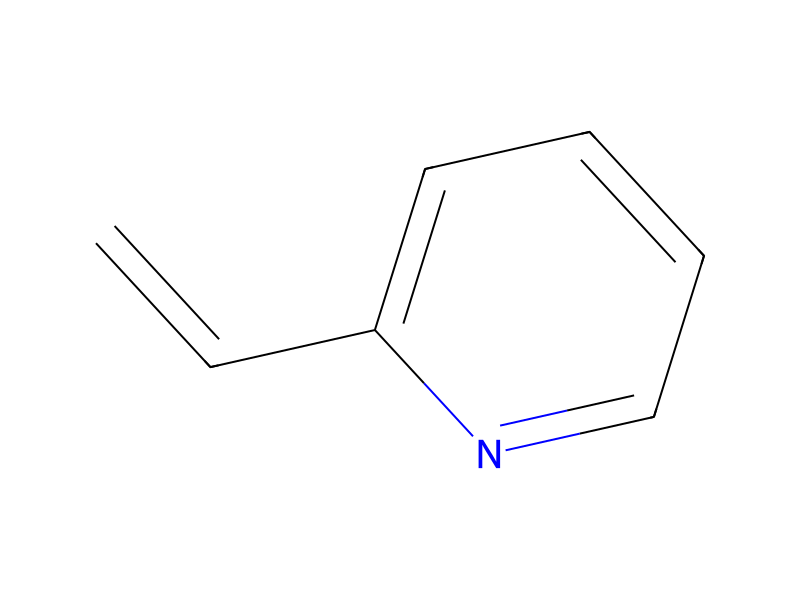
HCID 280Carbon DioxideHCID 75212-VinylpyridineHCID 7580DiphenylmethaneHCID 66602812Naphthalene potassium

Produkt 1

HCID 66720999Potassium diphenylmethane

Reagenzien, Katalysatoren, Lösungsmittel 2

HCID 180AcetoneLösungsmittel
HCID 8028
Tetrahydrofuran
Lösungsmittel

Reaktionsbedingungen

Temperatur
-78 °C

Versuchsvorschrift

First, poly(2-vinylpyridine) homopolymer was prepared by using 2-vinylpyridine (2VP) monomer at −78° C. and under high vacuum (10−6 torr) in the solvent of THF for 30 min. The temperature of −78° C. is maintained by adding dry ice in a constant-temperature bath with acetone, and measured with a thermometer for low temperature. The initiator of potassium diphenylmethane (DPM-K) was prepared by reacting potassium-naphthalene (K-NaPh) ion solution with diphenylmethane, and diluted to appropriate concentration using a distribution device connected to vacuum line. The initiator was divided into glass ampoules and stored in a low temperature refrigerator.

Aufarbeitung

  1. customat −78° C.
  2. additiondiluted
  3. concentrationconcentration

Quellen und Nachweise

ORD-Eintrag
ord-d0efe49e78ac475b9514f01985d6775d
Quelldatensatz
uspto-grants-2008_09
DOI
10.6084/m9.figshare.5104873.v1
Patentnummer
US07425593B2

Notizen zur Reaktion

Wird geladen…

Auf dieser SeiteKomponentenReaktionsbedingungenVersuchsvorschriftAufarbeitungQuellen und NachweiseNotizen zur Reaktion