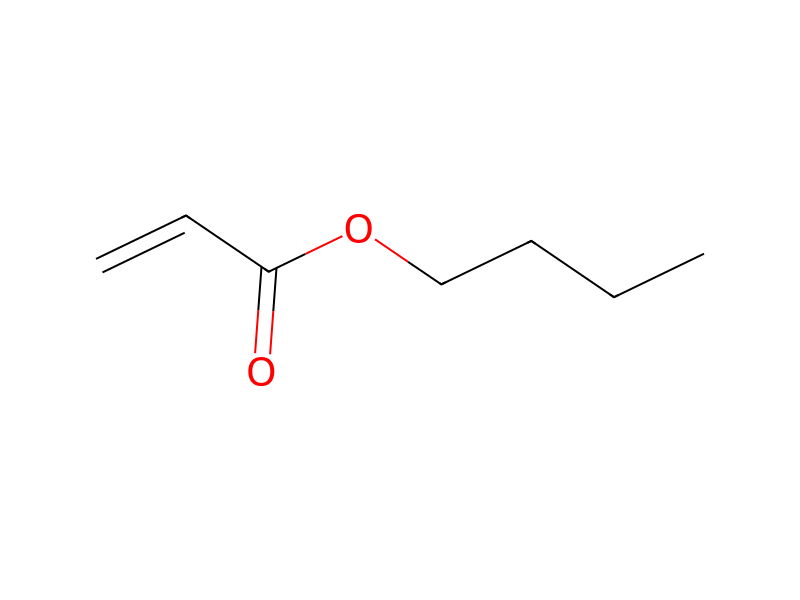
C(N(CC)CC)C.[C:8]([O:12][CH2:13][CH2:14][CH2:15][CH3:16])(=[O:11])[CH:9]=[CH2:10].C1(C)C(C(P(C(C2C(C)=CC=CC=2)=O)C(C2C(C)=CC=CC=2)=O)=O)=CC=CC=1.Br[C:46]1[C:47]([NH:55][CH3:56])=[N:48][CH:49]=[C:50]([N+:52]([O-:54])=[O:53])[CH:51]=1>C([O-])(=O)C.[Pd+2].C([O-])(=O)C.O.CN(C=O)C>[CH3:56][NH:55][C:47]1[C:46]([CH:10]=[CH:9][C:8]([O:12][CH2:13][CH2:14][CH2:15][CH3:16])=[O:11])=[CH:51][C:50]([N+:52]([O-:54])=[O:53])=[CH:49][N:48]=1Triethylamine (32 μl), n-butyl acrylate (33 μl), tri(o-toluoyl)phosphine (24 mg), and palladium acetate (5 mg) were added to a tube containing a DMF (3 ml) solution containing 3-bromo-N-methyl-5-nitropyridin-2-amine (45 mg) and the tube was sealed, followed by stirring at 100° C. for 8 hours. The reaction solution was adjusted to room temperature, and n-butyl acrylate (33 μl), tri(o-toluoyl)phosphine (24 mg), and palladium acetate (5 mg) were added again to the tube and the tube was sealed, followed by stirring at 100° C. for 9 hours. Further, the reaction solution was adjusted to room temperature, and water was added, followed by extraction with ethyl acetate. The resultant was washed with saturated saline and dried over anhydrous sodium sulfate. Subsequently, the solvent was distilled away under reduced pressure, the obtained residue was purified by silica gel chromatography (n-hexane:ethyl acetate=16:1 to 3:1), and a yellow solid of n-butyl 3-(2-(methylamino)-5-nitropyridin-3-yl)acrylate (44 mg) was thus obtained.
Wird geladen…