StartseiteMCPWorkbenchSkills
StartseiteWorkbenchBenachrichtigungenMein Bereich
llms.txt · MCP-AnleitungDatenschutz · Nutzungsbedingungen · Supportv1.8.3
  1. Startseite
  2. /Reaktion

4-Methylmorpholine → 3-[5-bromo-4-[(2,4-difluorobenzyl)oxy)-6-oxopyrimidin-1(6H)-yl]-4-methyl-N-{1-[(methylamino)carbonyl]methyl}benzamide

HRID 350945
Drucken

Reaktionsgleichung

Reaktionsgleichung von HRID 350945
[Br:1][C:2]1[C:7](=[O:8])[N:6]([C:9]2[CH:10]=[C:11]([CH:15]=[CH:16][C:17]=2[CH3:18])[C:12]([OH:14])=O)[CH:5]=[N:4][C:3]=1[O:19][CH2:20][C:21]1[CH:26]=[CH:25][C:24]([F:27])=[CH:23][C:22]=1[F:28].ClC(OCC(C)C)=O.CN1CCOCC1.Cl.[CH3:45][NH:46][C:47](=[O:50])[CH2:48][NH2:49]>CC(N(C)C)=O.CN(C1C=CN=CC=1)C.C(#N)C.O>[Br:1][C:2]1[C:7](=[O:8])[N:6]([C:9]2[CH:10]=[C:11]([CH:15]=[CH:16][C:17]=2[CH3:18])[C:12]([NH:49][CH2:48][C:47]([NH:46][CH3:45])=[O:50])=[O:14])[CH:5]=[N:4][C:3]=1[O:19][CH2:20][C:21]1[CH:26]=[CH:25][C:24]([F:27])=[CH:23][C:22]=1[F:28]
KomponentenReaktionsbedingungenVersuchsvorschriftAufarbeitungQuellen und NachweiseNotizen zur Reaktion

Komponenten

8

Edukt 4

HCID 79724-Methylmorpholine2×HCID 62365Isobutyl chloroformateHCID 138422022-amino-N-methylacetamide hydrochlorideHCID 210892753-[5-bromo-4-[(2,4-difluorobenzyl)oxy]-6-oxopyrimidin-1(6H)-yl]-4-methylbenzoic acid

Produkt 1

HCID 210889963-[5-bromo-4-[(2,4-difluorobenzyl)oxy)-6-oxopyrimidin-1(6H)-yl]-4-methyl-N-{1-[(methylamino)carbonyl]methyl}benzamide
Ausbeute 41,1 %

Reagenzien, Katalysatoren, Lösungsmittel 3

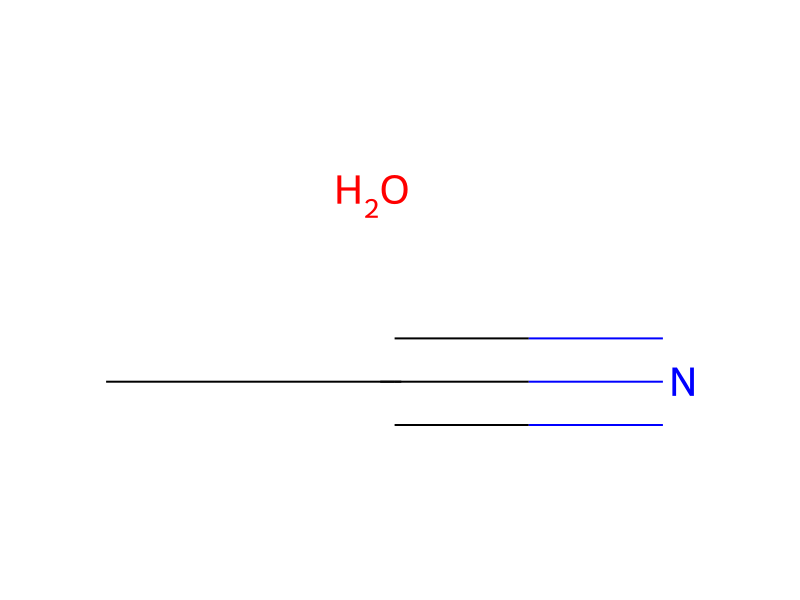
HCID 142844-(Dimethylamino)pyridineKatalysatorHCID 31374DimethylacetamideLösungsmittelHCID 18373917Acetonitrile--water (1/1)Lösungsmittel

Reaktionsbedingungen

Temperatur
0 °C

Versuchsvorschrift

To a cold solution of 3-[5-bromo-4-[(2,4-difluorobenzyl)oxy]-6-oxopyrimidin-1(6H)-yl]-4-methylbenzoic acid (0.8 g, 1.7 mmol) in anhydrous dimethylacetamide (3.2 mL) was added isobutyl chloroformate (0.23 mL, 1.7 mmol) followed by N-methylmorpholine (0.25 mL, 2.2 mmol). The reaction mixture stirred under argon atmosphere at 0° C. for 10 min and then at room temperature for 30 min. At which time another equivalent of N-methylmorpholine (0.29 mL, 2.5 mmol) was added to reaction mixture, followed by the addition of glycine methyl amide HCl (0.33 g, 2.5 mmol) and DMAP (ca.). The reaction mixture stirred for 2 h at room temperature and then diluted with acetonitrile/water (2:1 v/v) to be purified by reverse phase HPLC using a 10–90% acetonitrile in water containing 0.5% TFA (30 min) gradient at a 80 mL/min flow rate. The appropriate fractions (M+H m/z=521) were collected and concentrated to a reduced volume. The resulting suspension was diluted with dichloromethane (30 mL) and washed with 5% NaHCO3 (2×50 mL). The organic extracts were washed with water (2×25 mL) and dried over Na2SO4 (anhydrous). The organic extracts were concentrated under reduced pressure and dried in vacuo to afford the desired product (364.4 mg, 37%) as a white solid. 1H-NMR (CD3OD, 400 MHz) δ 8.32 (s, 1H), 7.96 (dd, 1H, J=2 Hz), 7.80 (d, 1H, J=2 Hz), 7.62 (m, 1H), 7.55 (d, 1H, J=8.4 Hz), 7.01 (m, 2H), 5.60 (q, 2H, J=12.4 Hz), 3.98 (s, 2H), 2.74 (s, 3H), 2.20 (s, 3H); ES-HRMS m/z 521.0650 (M+H C22H20BrF2N4O4 requires 521.0630).


Aufarbeitung

  1. waitat room temperature for 30 min
  2. stirringThe reaction mixture stirred for 2 h at room temperature
  3. customto be purified by reverse phase HPLC
  4. customa 10–90% acetonitrile in water containing 0.5% TFA (30 min) gradient
  5. customThe appropriate fractions (M+H m/z=521) were collected
  6. concentrationconcentrated to a reduced volume
  7. additionThe resulting suspension was diluted with dichloromethane (30 mL)
  8. washwashed with 5% NaHCO3 (2×50 mL)
  9. washThe organic extracts were washed with water (2×25 mL)
  10. dry with materialdried over Na2SO4 (anhydrous)
  11. concentrationThe organic extracts were concentrated under reduced pressure
  12. customdried in vacuo

Quellen und Nachweise

ORD-Eintrag
ord-5835808f130f49278a141fc8641232e7
Quelldatensatz
uspto-grants-2007_02
DOI
10.6084/m9.figshare.5104873.v1
Patentnummer
US07183287B2

Notizen zur Reaktion

Auf dieser SeiteKomponentenReaktionsbedingungenVersuchsvorschriftAufarbeitungQuellen und NachweiseNotizen zur Reaktion