StartseiteMCPWorkbenchSkills
StartseiteWorkbenchBenachrichtigungenMein Bereich
llms.txt · MCP-AnleitungDatenschutz · Nutzungsbedingungen · Supportv1.8.0
  1. Startseite
  2. /Reaktion

Ammonia → 2-(2,2,2-trifluoroethyl)-4-(4-fluoro-3-methylphenyl)-5-[4-(methylsulfonyl)phenyl]-3(2H)-pyridazinone

HRID 381911
Notizen
Druckvorschau

Reaktionsgleichung

Reaktionsgleichung von HRID 381911
B(O)O.[F:4][C:5]([F:26])([F:25])[CH2:6][N:7]1[C:12](=[O:13])[C:11](Cl)=[C:10]([C:15]2[CH:20]=[CH:19][C:18]([S:21]([CH3:24])(=[O:23])=[O:22])=[CH:17][CH:16]=2)[CH:9]=[N:8]1.[F-:27].[Cs+].N>COCCOC.[Pd].C1(P(C2C=CC=CC=2)C2C=CC=CC=2)C=CC=CC=1.C1(P(C2C=CC=CC=2)C2C=CC=CC=2)C=CC=CC=1.C1(P(C2C=CC=CC=2)C2C=CC=CC=2)C=CC=CC=1.C1(P(C2C=CC=CC=2)C2C=CC=CC=2)C=CC=CC=1.O>[F:4][C:5]([F:26])([F:25])[CH2:6][N:7]1[C:12](=[O:13])[C:11]([C:17]2[CH:18]=[CH:19][C:20]([F:27])=[C:15]([CH3:10])[CH:16]=2)=[C:10]([C:15]2[CH:20]=[CH:19][C:18]([S:21]([CH3:24])(=[O:23])=[O:22])=[CH:17][CH:16]=2)[CH:9]=[N:8]1
KomponentenVersuchsvorschriftAufarbeitungQuellen und NachweiseNotizen zur Reaktion

Komponenten

8

Edukt 4

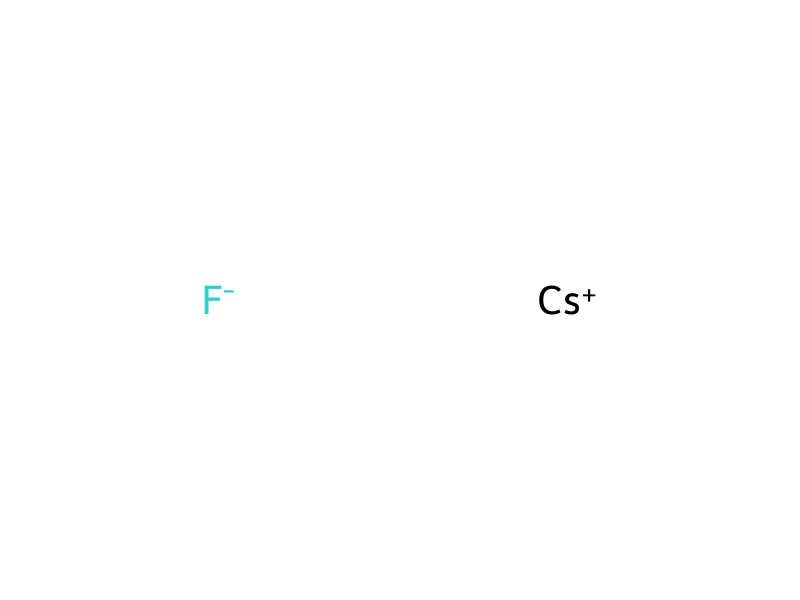
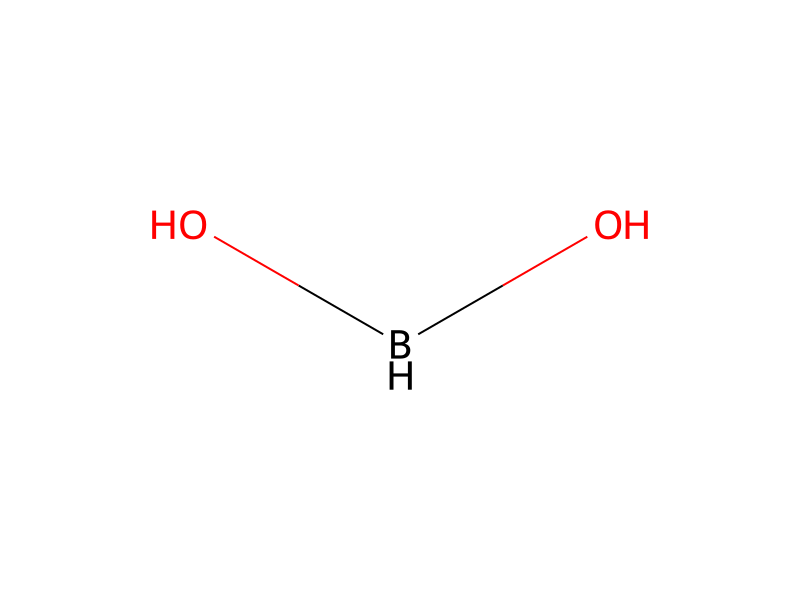
HCID 222AmmoniaHCID 25953Cesium fluorideHCID 61668Boronic AcidHCID 219343142-(2,2,2-trifluoroethyl)-4-chloro-5-[4-(methylsulfonyl)phenyl]-3(2H)-pyridazinone

Produkt 1

HCID 219340472-(2,2,2-trifluoroethyl)-4-(4-fluoro-3-methylphenyl)-5-[4-(methylsulfonyl)phenyl]-3(2H)-pyridazinone

Reagenzien, Katalysatoren, Lösungsmittel 3

HCID 11979704Tetrakis(triphenylphosphine)palladiumKatalysator
HCID 962WaterLösungsmittel
HCID 80711,2-DimethoxyethaneLösungsmittel

Versuchsvorschrift

The boronic acid (231 mg, 1.5 mmol), prepared in example 210A, 2-(2,2,2-trifluoroethyl)-4-chloro-5-[4-(methylsulfonyl)phenyl]-3(2H)-pyridazinone (500 mg, 1.36 mmol), tetrakis-(triphenylphosphine)-palladium(0) (47 mg, 0.041 mmol), and CsF (413 mg, 2.72 mmol) were stirred at reflux in DME (20 mL) under N2 for 5 hours. TLC (1:1 hexanes/ethyl acetate) indicated that all the starting material was consumed. Volatiles were removed in vacuo. The residue was partitioned between water and ethyl acetate. The organic layer was washed with brine, dried over MgSO4, and filtered. The filtrate was concentrated in vacuo. An off white powder was obtained (yield: 275 mg, 46%). mp 88-91° C.; 1H NMR (300 MHz, CDCl3, a mixture of rotamers) δ 2.2, 2.25 (2d, J=1.5 Hz, 3H) 3.05, 3.09 (2 s, 3H) 4.78-4.92 (m, 2H) 6.61-6.8 (m, 1H) 6.82-6.98 (m, 1H) 7.35 (d, J=9 Hz, 1H) 7.78 (d, J=9 Hz, 1H) 7.86-8.09 (m, 4H). MS (DCI/NH3), m/z 441 (M+H)+. Anal. calc. for C20H16F4N2O3S.0.5 H2O: C, 53.45; H, 3.81; N, 6.23. Found C, 53.17; H, 3.65; N, 5.88.

Aufarbeitung

  1. customwas consumed
  2. customVolatiles were removed in vacuo
  3. customThe residue was partitioned between water and ethyl acetate
  4. washThe organic layer was washed with brine
  5. dry with materialdried over MgSO4
  6. filtrationfiltered
  7. concentrationThe filtrate was concentrated in vacuo
  8. customAn off white powder was obtained (yield: 275 mg, 46%)

Quellen und Nachweise

ORD-Eintrag
ord-33825b0c4bce440b80909e1f077ef988
Quelldatensatz
uspto-grants-2001_10
DOI
10.6084/m9.figshare.5104873.v1
Patentnummer
US06307047B1

Notizen zur Reaktion

Wird geladen…

Auf dieser SeiteKomponentenVersuchsvorschriftAufarbeitungQuellen und NachweiseNotizen zur Reaktion