StartseiteMCPWorkbenchSkills
StartseiteWorkbenchBenachrichtigungenMein Bereich
llms.txt · MCP-AnleitungDatenschutz · Nutzungsbedingungen · Supportv1.8.1
  1. Startseite
  2. /Reaktion

Water → 6-Bromo-3,4-dimethoxybenzaldehyde

HRID 407120
Drucken

Reaktionsgleichung

Reaktionsgleichung von HRID 407120
[CH3:1][O:2][C:3]1[CH:4]=[C:5]([CH:8]=[CH:9][C:10]=1[O:11][CH3:12])[CH:6]=[O:7].[Br:13]Br.O>CO>[Br:13][C:8]1[C:5]([CH:6]=[O:7])=[CH:4][C:3]([O:2][CH3:1])=[C:10]([O:11][CH3:12])[CH:9]=1
KomponentenVersuchsvorschriftAufarbeitungQuellen und NachweiseNotizen zur Reaktion

Komponenten

5

Edukt 3

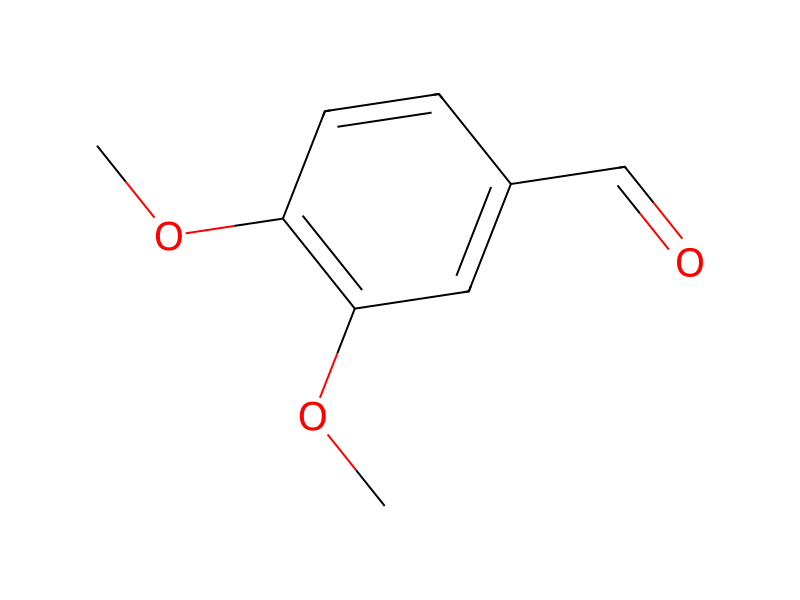
HCID 962WaterHCID 8419VeratraldehydeHCID 24408Bromine

Produkt 1

HCID 793516-Bromo-3,4-dimethoxybenzaldehydeAusbeute 98 %

Reagenzien, Katalysatoren, Lösungsmittel 1

HCID 887MethanolLösungsmittel

Versuchsvorschrift

To a solution of 500 g of 3,4-dimethoxybenzaldehyde in 2.5 L of methanol was added dropwise 529 g of bromine at room temperature (under cooling, if necessary) over 1 hour, and the mixture was stirred at the same temperature for 3 hours. To the reaction solution was added dropwise 2.5 L of water, and the crystals were precipitated. To the crystal suspension was added 20% aqueous sodium hydroxide solution at room temperature to adjust it to pH about 9 to 10, and then cooled. The precipitated crystals were collected by filtration and washed with water, and then dried at 50° C. for 12 hours to give 718.78 g of 6-bromo-3,4-dimethoxybenzaldehyde (yield: 98%).

Aufarbeitung

  1. temperature(under cooling, if necessary) over 1 hour
  2. customthe crystals were precipitated
  3. additionTo the crystal suspension was added 20% aqueous sodium hydroxide solution at room temperature
  4. temperaturecooled
  5. filtrationThe precipitated crystals were collected by filtration
  6. washwashed with water
  7. customdried at 50° C. for 12 hours

Quellen und Nachweise

ORD-Eintrag
ord-8abed474f4de4cbf94859ba33d902b02
Quelldatensatz
uspto-grants-2014_06
DOI
10.6084/m9.figshare.5104873.v1
Patentnummer
US08754221B2

Notizen zur Reaktion

Auf dieser SeiteKomponentenVersuchsvorschriftAufarbeitungQuellen und NachweiseNotizen zur Reaktion