StartseiteMCPWorkbenchSkills
StartseiteWorkbenchBenachrichtigungenMein Bereich
llms.txt · MCP-AnleitungDatenschutz · Nutzungsbedingungen · Supportv1.8.0
  1. Startseite
  2. /Reaktion

Diisopropylamine → 2-(3-Chloro-4-methylsulfanyl-phenyl)-3-cyclopentyl-propionic acid ethyl ester

HRID 430127
Notizen
Druckvorschau

Reaktionsgleichung

Reaktionsgleichung von HRID 430127
C(NC(C)C)(C)C.C([Li])CCC.[CH2:13]([O:15][C:16](=[O:27])[CH2:17][C:18]1[CH:23]=[CH:22][C:21]([S:24][CH3:25])=[C:20]([Cl:26])[CH:19]=1)[CH3:14].I[CH2:29][CH:30]1[CH2:34][CH2:33][CH2:32][CH2:31]1>O1CCCC1.CN1CCCN(C)C1=O>[CH2:13]([O:15][C:16](=[O:27])[CH:17]([C:18]1[CH:23]=[CH:22][C:21]([S:24][CH3:25])=[C:20]([Cl:26])[CH:19]=1)[CH2:29][CH:30]1[CH2:34][CH2:33][CH2:32][CH2:31]1)[CH3:14]
KomponentenReaktionsbedingungenVersuchsvorschriftAufarbeitungQuellen und NachweiseNotizen zur Reaktion

Komponenten

7

Edukt 4

HCID 7912DiisopropylamineHCID 2762531(Iodomethyl)cyclopentaneHCID 54095555(3-Chloro-4-methylsulfanyl-phenyl)-acetic acid ethyl esterHCID 178418339Butyllithium

Produkt 1

HCID 543204802-(3-Chloro-4-methylsulfanyl-phenyl)-3-cyclopentyl-propionic acid ethyl esterAusbeute 56 %

Reagenzien, Katalysatoren, Lösungsmittel 2

HCID 8028TetrahydrofuranLösungsmittel2×
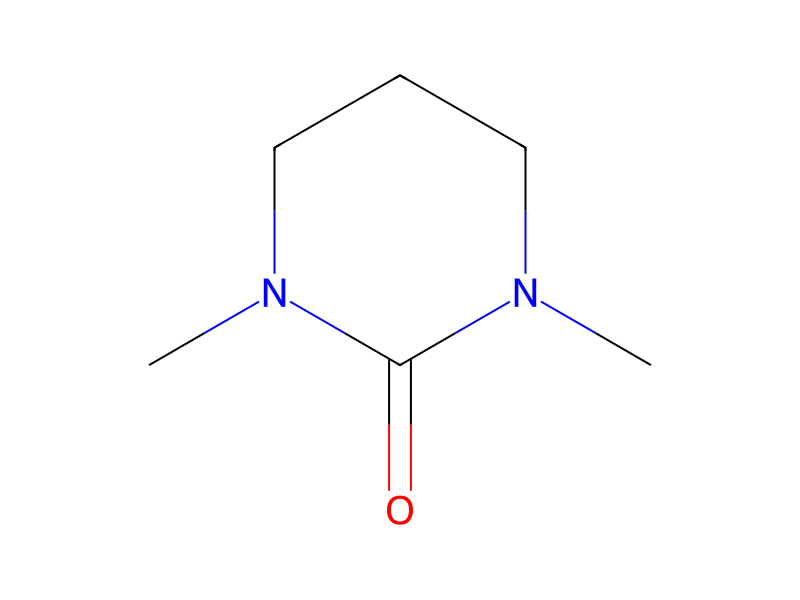
HCID 816462(1H)-Pyrimidinone, tetrahydro-1,3-dimethyl-Lösungsmittel

Reaktionsbedingungen

Temperatur
-78 °C

Versuchsvorschrift

A solution of diisopropylamine (457 μL, 3.26 mmol) in tetrahydrofuran (5 mL) was cooled to −78° C. under a nitrogen atmosphere and then treated with a 2.5 M solution of n-butyllithium in hexanes (1.3 mL, 3.26 mmol). The mixture was stirred at −78° C. for 30 min, at which time, a solution of (3-chloro-4-methylsulfanyl-phenyl)-acetic acid ethyl ester (0.67 g, 2.75 mmol) in tetrahydrofuran (8 mL) was slowly added to the reaction mixture. The reaction mixture turned deep yellow in color. The reaction mixture was then further stirred at −78° C. for 30 min, at which time, a solution of iodomethylcyclopentane (0.65 g, 3.09 mmol) in 1,3-dimethyl-3,4,5,6-tetrahydro-2(1H)-pyrimidone (1 mL) was added via syringe. The reaction mixture was then allowed to warm to 25° C., where it was stirred for 16 h. The reaction mixture turned red in color during this time period. The reaction mixture was quenched with a 6 N aqueous hydrochloric acid solution (5 mL) and further diluted with water (20 mL). The reaction mixture was then extracted with methylene chloride (3×20 mL). The combined organic layers were washed with a saturated aqueous sodium chloride solution (1×25 mL), dried over sodium sulfate, filtered, and concentrated in vacuo. Flash chromatography (Merck Silica gel 60, 230-400 mesh, 4/1 hexanes/ethyl acetate) afforded 2-(3-chloro-4-methylsulfanyl-phenyl)-3-cyclopentyl-propionic acid ethyl ester (0.50 g, 56%) as a light yellow oil.


Aufarbeitung

  1. stirringThe reaction mixture was then further stirred at −78° C. for 30 min, at which time
  2. temperatureto warm to 25° C.
  3. stirringwhere it was stirred for 16 h
  4. customThe reaction mixture was quenched with a 6 N aqueous hydrochloric acid solution (5 mL)
  5. additionfurther diluted with water (20 mL)
  6. extractionThe reaction mixture was then extracted with methylene chloride (3×20 mL)
  7. washThe combined organic layers were washed with a saturated aqueous sodium chloride solution (1×25 mL)
  8. dry with materialdried over sodium sulfate
  9. filtrationfiltered
  10. concentrationconcentrated in vacuo

Quellen und Nachweise

ORD-Eintrag
ord-2134facc037242e7b886bcbea50483b3
Quelldatensatz
uspto-grants-2001_11
DOI
10.6084/m9.figshare.5104873.v1
Patentnummer
US06320050B1

Notizen zur Reaktion

Wird geladen…

Auf dieser SeiteKomponentenReaktionsbedingungenVersuchsvorschriftAufarbeitungQuellen und NachweiseNotizen zur Reaktion