StartseiteMCPWorkbenchSkills
StartseiteWorkbenchBenachrichtigungenMein Bereich
llms.txt · MCP-AnleitungDatenschutz · Nutzungsbedingungen · Supportv1.8.3
  1. Startseite
  2. /Reaktion

Hydrochloric Acid → 3-(4-Methylphenyl)prop-2-yn-1-ol

HRID 549822
Drucken

Reaktionsgleichung

Reaktionsgleichung von HRID 549822
Br[C:2]1[CH:7]=[CH:6][C:5]([CH3:8])=[CH:4][CH:3]=1.N12CCCN=C1CCCCC2.[CH2:20]([OH:23])[C:21]#[CH:22].Cl>O1CCCC1.CCOCC.O.[Cu]I.C1C=CC([P]([Pd]([P](C2C=CC=CC=2)(C2C=CC=CC=2)C2C=CC=CC=2)([P](C2C=CC=CC=2)(C2C=CC=CC=2)C2C=CC=CC=2)[P](C2C=CC=CC=2)(C2C=CC=CC=2)C2C=CC=CC=2)(C2C=CC=CC=2)C2C=CC=CC=2)=CC=1>[CH3:8][C:5]1[CH:6]=[CH:7][C:2]([C:22]#[C:21][CH2:20][OH:23])=[CH:3][CH:4]=1
KomponentenReaktionsbedingungenVersuchsvorschriftAufarbeitungQuellen und NachweiseNotizen zur Reaktion

Komponenten

10

Edukt 4

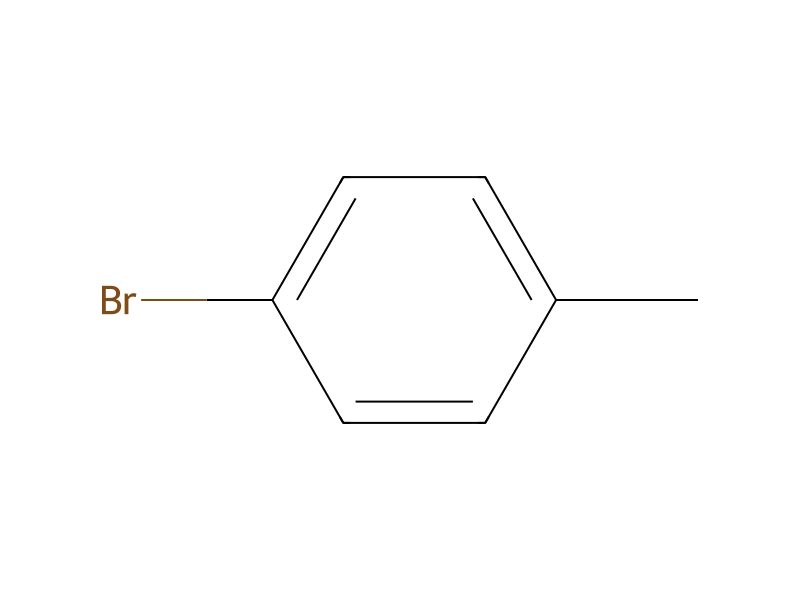
HCID 313Hydrochloric AcidHCID 78054-BromotolueneHCID 7859Propargyl alcoholHCID 811841,8-Diazabicyclo(5.4.0)undec-7-ene

Produkt 1

HCID 5897153-(4-Methylphenyl)prop-2-yn-1-ol

Reagenzien, Katalysatoren, Lösungsmittel 5

HCID 24350
Copper(1+) iodide; Copper(I) iodide; Cuprous iodide; Cuprous iodide (CuI)
Katalysator
HCID 178418397HCID 178418397, VerbindungKatalysator
HCID 962WaterLösungsmittel
HCID 3283Diethyl EtherLösungsmittel
HCID 8028TetrahydrofuranLösungsmittel2×

Reaktionsbedingungen

Temperatur
55 °C

Versuchsvorschrift

To a degassed solution of 4-bromotoluene (4.27 g, 25 mmol) in tetrahydrofuran (30 mL) was added in the following order: copper(I) iodide (143 mg, 0.75 mol), tetrakis(triphenylphosphine)palladium (0.85 g, 7.5 mmol), and 1,8-diazabicyclo[5.4.0]undec-7-ene (4.55 g, 30 mmol). The resulting mixture was degassed one more time, cooled in an ice bath and a solution of propargyl alcohol (1.68 g, 30 mmol) in tetrahydrofuran (5 mL) was added over period of 10 min. The reaction mixture was slowly heated up to 55° C. and then stirred at this temperature for 20 h. This mixture was then cooled to ambient temperature, diluted with ether (150 mL) and water (50 mL) and acidified with 5% hydrochloric acid. The ethereal layer was separated and the aqueous layer was extracted with ether (3×30 mL). The combined organic portions were washed with 5% hydrochloric acid (2×30 mL), saturated aqueous solution of sodium hydrogen carbonate (2×30 mL), dried with anhydrous magnesium sulfate and evaporated in vacuo. The residue was purified by flash column chromatography (silica gel Fluka 60, chloroform) affording 3-(4-methylphenyl)prop-2-yn-1-ol as oil.


Aufarbeitung

  1. customThe resulting mixture was degassed one more time
  2. temperaturecooled in an ice bath
  3. temperatureThis mixture was then cooled to ambient temperature
  4. customThe ethereal layer was separated
  5. extractionthe aqueous layer was extracted with ether (3×30 mL)
  6. washThe combined organic portions were washed with 5% hydrochloric acid (2×30 mL), saturated aqueous solution of sodium hydrogen carbonate (2×30 mL)
  7. dry with materialdried with anhydrous magnesium sulfate
  8. customevaporated in vacuo
  9. customThe residue was purified by flash column chromatography (silica gel Fluka 60, chloroform)

Quellen und Nachweise

ORD-Eintrag
ord-e40e643b54cf44cf84732c7357620de1
Quelldatensatz
uspto-grants-2011_05
DOI
10.6084/m9.figshare.5104873.v1
Patentnummer
US07943613B2

Notizen zur Reaktion

Auf dieser SeiteKomponentenReaktionsbedingungenVersuchsvorschriftAufarbeitungQuellen und NachweiseNotizen zur Reaktion