Hydrochloric Acid → Triethylammonium 1,1,2,2-tetrafluoro-4-hydroxy-butane-1-sulfinate
Reaktionsgleichung

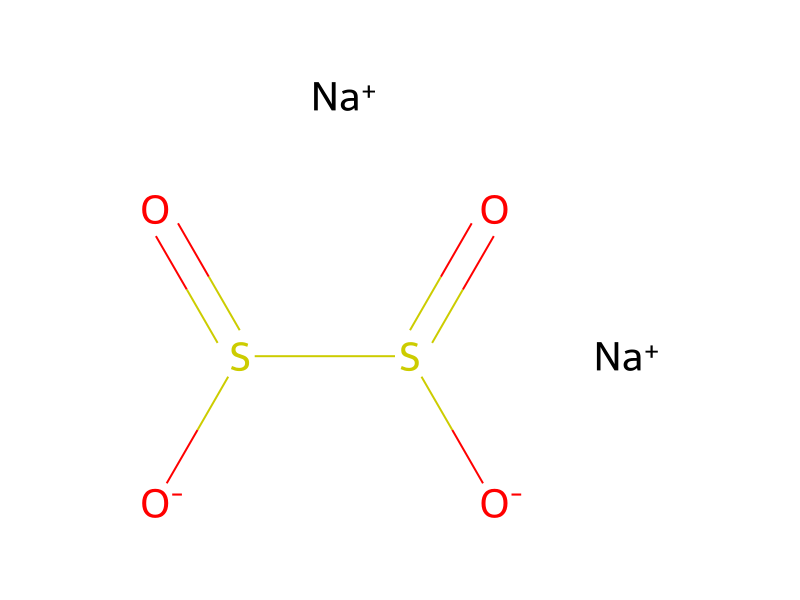
Br[C:2]([F:10])([F:9])[C:3]([F:8])([F:7])[CH2:4][CH2:5][OH:6].[S:11](S([O-])=O)([O-:13])=[O:12].[Na+].[Na+].[CH2:19]([N:21]([CH2:24][CH3:25])[CH2:22][CH3:23])[CH3:20].Cl>O.C(#N)C>[F:9][C:2]([F:10])([S:11]([O-:13])=[O:12])[C:3]([F:8])([F:7])[CH2:4][CH2:5][OH:6].[CH2:19]([NH+:21]([CH2:24][CH3:25])[CH2:22][CH3:23])[CH3:20]Komponenten
7
Edukt 4



Produkt 1

Reagenzien, Katalysatoren, Lösungsmittel 2


Reaktionsbedingungen
- Temperatur
- 60 °C
Versuchsvorschrift
A 1 L reactor was charged with 100.0 g (0.44 mole/1.0 equivalent) of 4-bromo-3,3,4,4-tetrafluorobutan-1-ol, 300 g of acetonitrile, 250 g of water, 108.2 g (0.62 mole/1.4 equivalent) of sodium dithionite and 53.4 g (0.52 mole/1.2 equivalents) of triethylamine, followed by 4 hours of stirring at 60° C. Upon confirming the termination of the reaction, the reaction liquid underwent cooling and 100 mL of 1N HCl was added thereto, followed by stirring. Subsequently, an organic layer was separated, and then the organic layer was subjected to distillation of the solvent, thereby obtaining 264 g of a target triethylammonium 1,1,2,2-tetrafluoro-4-hydroxy-butane-1-sulfinate. It exhibited a purity of 46% and a yield of 88% at this time.
Aufarbeitung
- customthe termination of the reaction
- customthe reaction liquid underwent
- temperaturecooling
- stirringby stirring
- customSubsequently, an organic layer was separated
- distillationthe organic layer was subjected to distillation of the solvent
Quellen und Nachweise
- ORD-Eintrag
- ord-96823f07e58c450b88a404b7464c34ba
- Quelldatensatz
- uspto-grants-2015_05
- Patentnummer
- US09024058B2
Notizen zur Reaktion
Wird geladen…