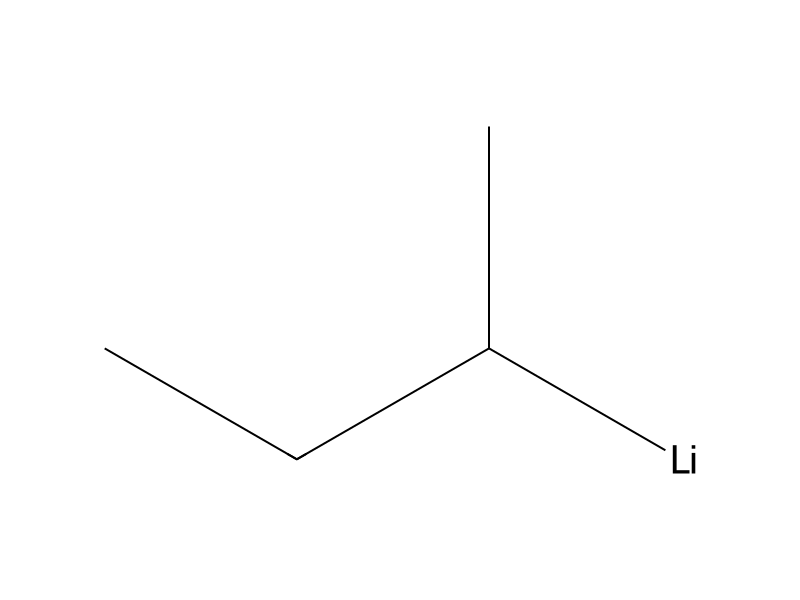
In a 250 mL round bottomed flask, 6-fluoro-1-(triisopropylsilyl)-1H-indole (5.12 g, 17.57 mmol) was treated with THF (35 mL), cooled to −75° C. and treated with sec-butyllithium, 1.4 M in cyclohexane (12.55 mL, 17.57 mmol) and stirred at −75° C. for 2 h. The reaction mixture was treated with crushed dry ice and was warmed to RT over 30 min. The reaction mixture was treated with 10 mL water and the organic layer was washed with 1 M citric acid (2×20 mL) in an extraction funnel. The organic layer was then concentrated under reduced pressure (rotary evaporator) and recrystallized from a 9:1 mixture of hexanes:Et2O (100 mL) overnight in the freezer affording 6-fluoro-1-(triisopropylsilyl)-1H-indole-5-carboxylic acid (4.36 g, 13.00 mmol, 74.0% yield) as a white crystalline solid. MS (ESI, pos. ion) m/z: 336.0 (M+H)+. 1H NMR (400 MHz, CDCl3) δ ppm 8.25 (1H, d, J=7.4 Hz), 7.26 (1H, d, J=3.1 Hz), 7.20 (1H, d, J=12.9 Hz), 6.65 (1H, d, J=2.9 Hz), 1.68 (3H, quin, J=7.5 Hz), 1.14 (18H, d, J=7.6 Hz).