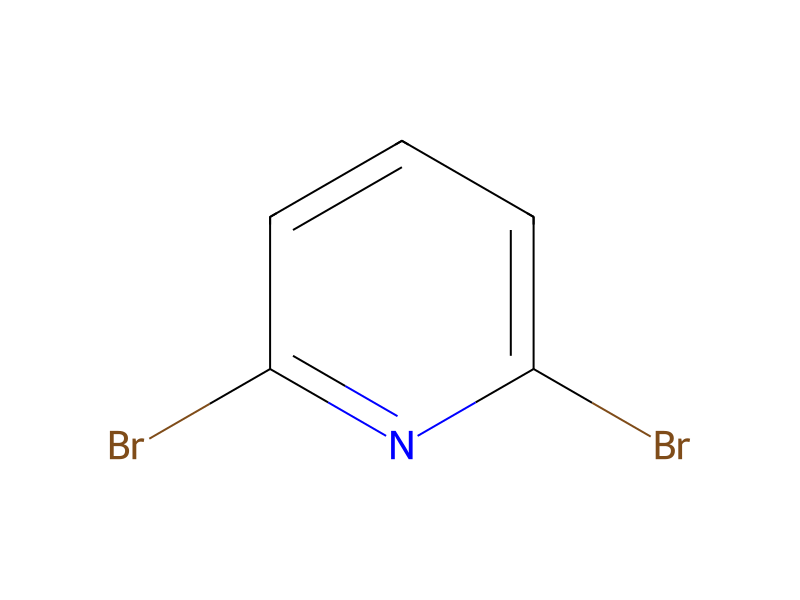
2,6-dibromo pyridine (79 g, 334 mmol) was dissolved in 800 ml of dry dichloromethane and cooled under nitrogen to 5° C. then urea hydrogen peroxide (104 g, 1.1 mol) was added in one portion. When the mixture had cooled again to 3° C., a solution of trifluoro acetic acid anhydride (140 mL, 1 mol) in 100 ml DCM was added via dropping funnel over 45 min, whilst keeping the temperature between 5-7° C. The mixture was allowed to warm to room temperature and stirred for 20 hours. The mixture was cooled in an ice bath to 10° C. and 10% aq. Na2SO3 (˜50 g/500 ml) was added dropwise over 60 minutes until test with starch iodide paper was negative. The resulting mixture was filtered to remove a quantity of fluffy solid and the layers were separated. The aqueous layer was extracted with dichloromethane (2×200 ml) and the combined extracts were dried over MgSO4 and concentrated under reduced pressure to give a light brown solid. Recrystallisation of crude product using 600ml of boiling acetone gave 48.47 g of the title compound.