Reaktionsgleichung
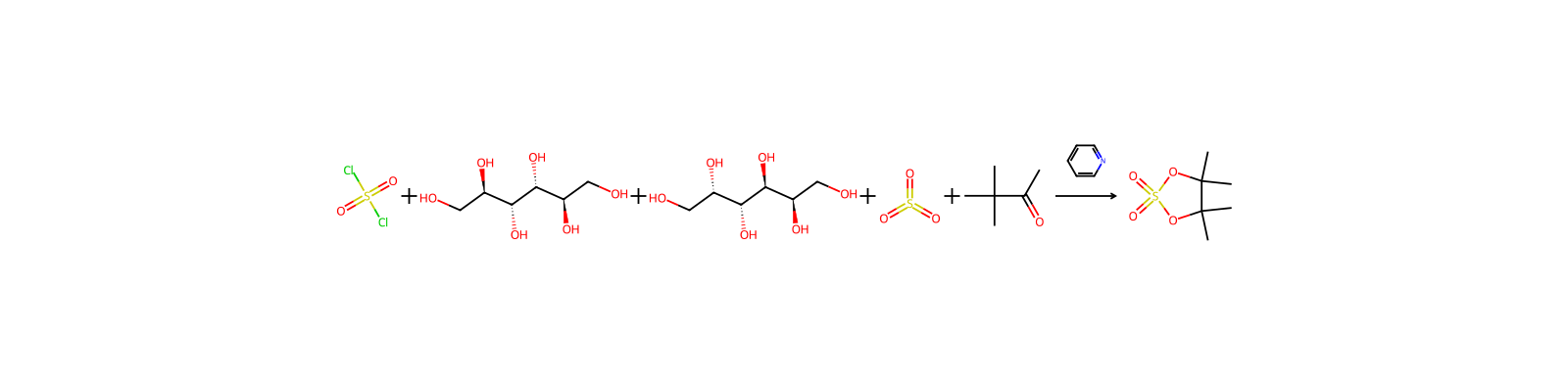
S(Cl)(Cl)(=O)=O.C(O)[C@H]([C@H]([C@@H]([C@@H](CO)O)O)O)O.[CH2:18](O)[C@@H](O)[C@H](O)[C@H](O)[C@@H](O)CO.[S:30](=[O:33])(=[O:32])=[O:31].[CH3:34][C:35](=[O:40])[C:36]([CH3:39])([CH3:38])C>N1C=CC=CC=1>[CH3:18][C:35]1([CH3:34])[C:36]([CH3:38])([CH3:39])[O:31][S:30](=[O:33])(=[O:32])[O:40]1Komponenten
Edukt 5
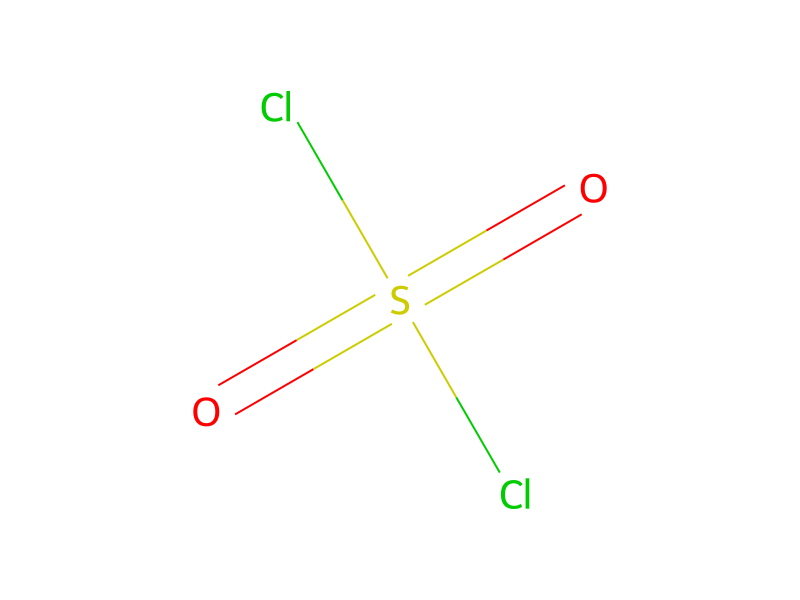
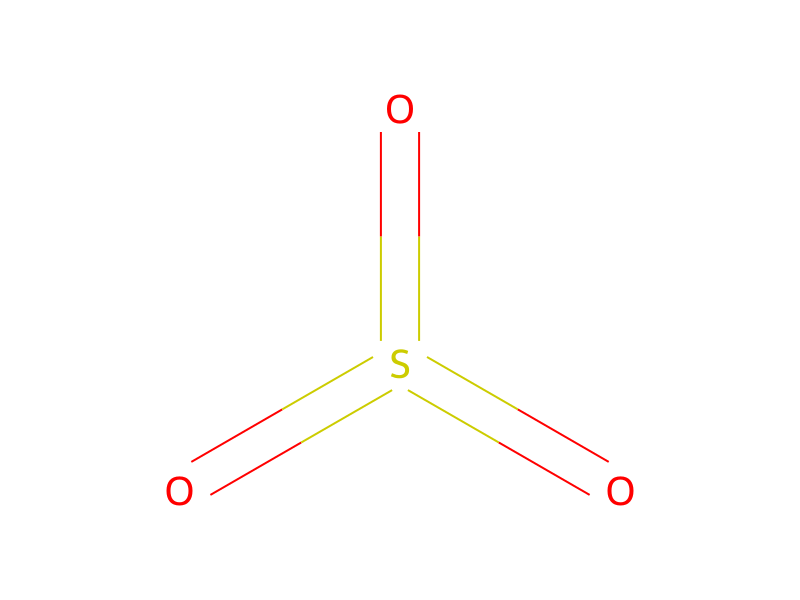
Produkt 1

Reagenzien, Katalysatoren, Lösungsmittel 1

Versuchsvorschrift
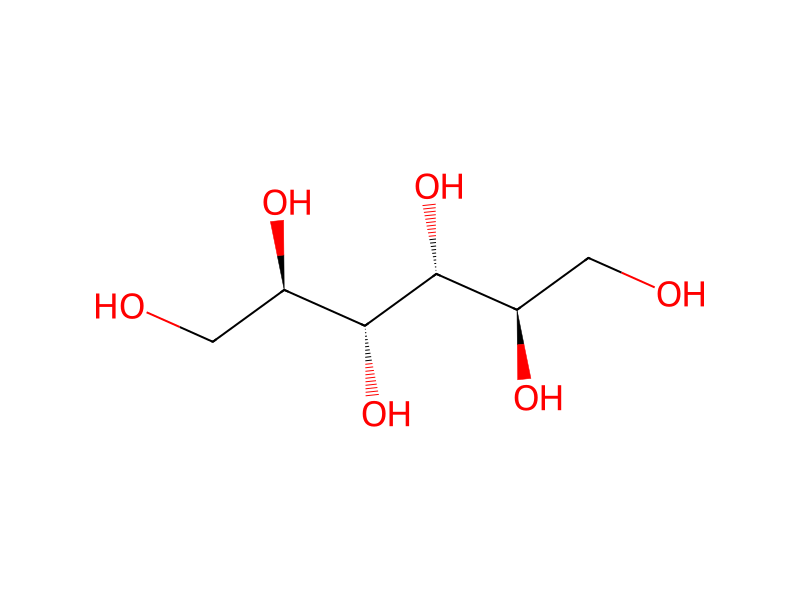
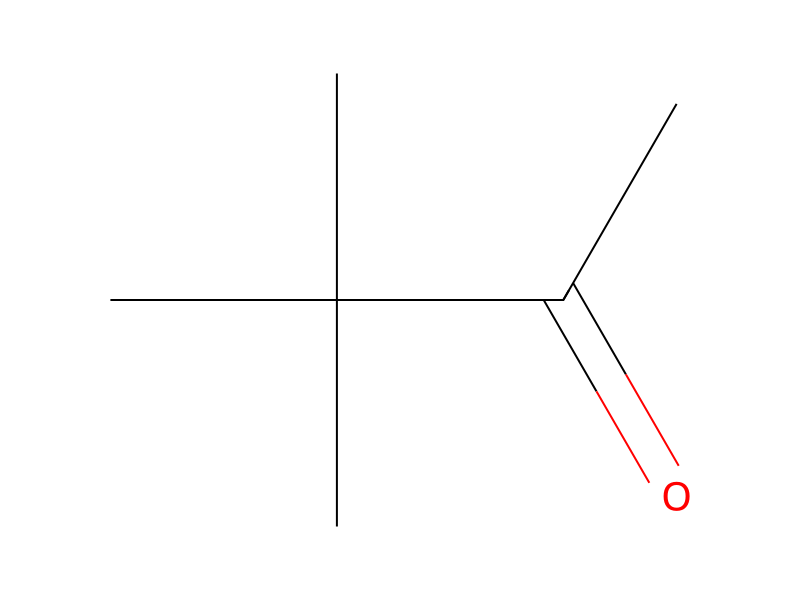
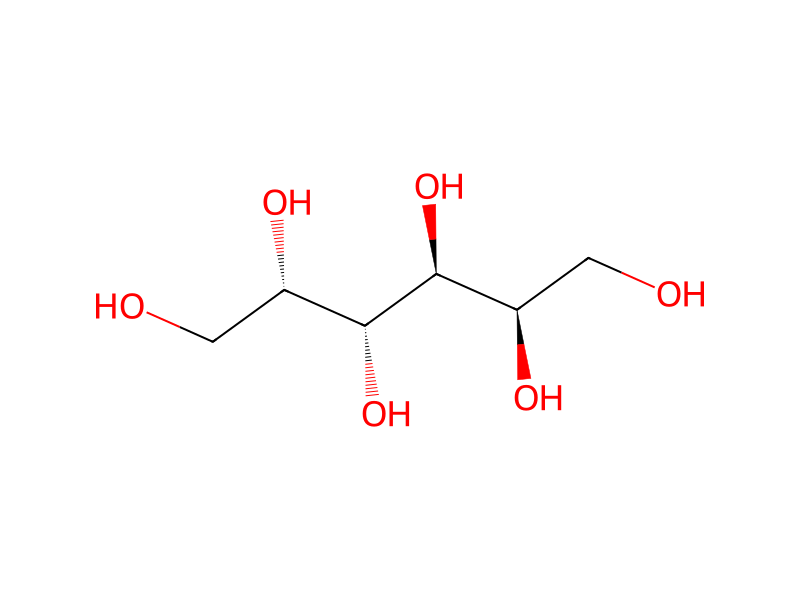
The parent compound 1,3,2-dioxathiolane 2,2-dioxide (ethylene cyclic sulfate) was prepared by Baker and Field from 1,2-dibromoethane and silver sulfate in 23% yield whereas the reaction failed with 1,2-dibromopropane (Baker, W., Field, F. B., J. Chem. Soc., 1932, 86). Alternatively, ethylene sulfate is obtained by the treatment of glycol diacetate with dimethyl sulfate (Breslow, D. S., Skolnik, H., In Heterocyclic Compounds Interscience: 1966, p1 and references cited therein). Unlike the synthesis of ethylene sulfite from ethylene glycol and thionyl chloride or ethylene oxide and sulfur dioxide (vide supra), the corresponding reaction with sulfuryl chloride or sulfur trioxide gave only low yields of ethylene sulfate. Thus, the treatment of ethylene glycol with sulfuryl chloride gave only 4% yield of ethylene sulfate (Pritchard, J. G.; Lauterbur, P. C., J. Am. Chem. Soc., 1961, 83, 2105). Several cyclic sulfates of sugars and other polyhydroxylated compounds have been prepared with sulfuryl chloride and pyridine (Bragg, P. D.; Jones, J. K. N.; Turner, J. C., Can. J. Chem., 1959, 37, 1412, and Jones, J. K. N.; Perry, M. B.; Turner, J. C., Can. J. Chem., 1960, 38, 1122), however, the reaction has never been clean and several side products were isolated. For example, D-mannitol and dulcitol yielded tetrachloro-substituted cyclic sulfates (Robertson, F. M.; Neish, A. C., Can. J Res. 1947, 25B, 491). This is apparently due to the chlorinating nature of sulfuryl chloride (Tewson, T. J., J. Org. Chem., 1983, 48, 3507, Tabushi, I.; Kitaguchi, H., In Synthetic Reagents, Pizey, J. S., Ed.; Ellis Horwood: Chichester, 1981, 4, 336). Similarly, the reaction of liquid sulfur trioxide with pinacolone gave only 36% yield of 4,4,5,5-tetramethyl-1,3,2-dioxathiolane 2,2-dioxide (Sheehan, J. C.; Zoller, U., J. Org. Chem., 1974, 39, 3415). Garner and Lucas prepared trans-4,5-dimethyl-1,3,2-dioxathiolane 2,2-dioxide by oxidizing the corresponding cyclic sulfite prepared from (R,R)-(-)-2,3-butanediol with calcium permanganate (Garner, H. K.; Lucas, H. J., J. Am. Chem. Soc., 1950, 72, 5497). The cis isomer was prepared using meso-2,3-butanediol (Robertson, F. M.; Neish, A. C., Can. J. Res., 1947, 25B,491, Lichtenberger, J.; Hinckey, J., Bull. Soc. Chim. Fr., 1961, 1495). Similarly, tetramethylene sulfate (Baker, W.; Burrow, B. F., J. Chem. Soc., 1961, 2257) and cyclohexane 1,2-cyclic sulfate (Brimacombe, J. S.; Foster, A. B.; Hanwek, E. B.; Overend, W. G.; Staceus, M., J. Chem. Soc., 1960, 201) were prepared by oxidizing the corresponding cyclic sulfites in moderate yield.
Aufarbeitung
- customseveral side products were isolated
Quellen und Nachweise
- ORD-Eintrag
- ord-3821f032c89441ad96bd74d26222f1c3
- Quelldatensatz
- uspto-grants-2001_08
- Patentnummer
- US06277982B1
Verknüpfte Notizen
Wird geladen…