StartseiteMCPWorkbenchSkills
StartseiteWorkbenchBenachrichtigungenMein Bereich
llms.txt · MCP-AnleitungDatenschutz · Nutzungsbedingungen · Supportv1.8.0
  1. Startseite
  2. /Reaktion

Nitrogen → 1-(2-Bromophenyl)naphthalene

HRID 78972
Notizen
Druckvorschau

Reaktionsgleichung

Reaktionsgleichung von HRID 78972
C(=O)([O-])[O-].[K+].[K+].[Br:7][C:8]1[CH:13]=[CH:12][CH:11]=[CH:10][C:9]=1B(O)O.Br[C:18]1[C:27]2[C:22](=[CH:23][CH:24]=[CH:25][CH:26]=2)[CH:21]=[CH:20][CH:19]=1.N#N.C1(P(C2C=CC=CC=2)C2C=CC=CC=2)C=CC=CC=1>C([O-])(=O)C.[Pd+2].C([O-])(=O)C.C(O)C.COCCOC.O>[Br:7][C:8]1[CH:13]=[CH:12][CH:11]=[CH:10][C:9]=1[C:26]1[C:27]2[C:22](=[CH:21][CH:20]=[CH:19][CH:18]=2)[CH:23]=[CH:24][CH:25]=1
KomponentenReaktionsbedingungenVersuchsvorschriftAufarbeitungQuellen und NachweiseNotizen zur Reaktion

Komponenten

10

Edukt 5

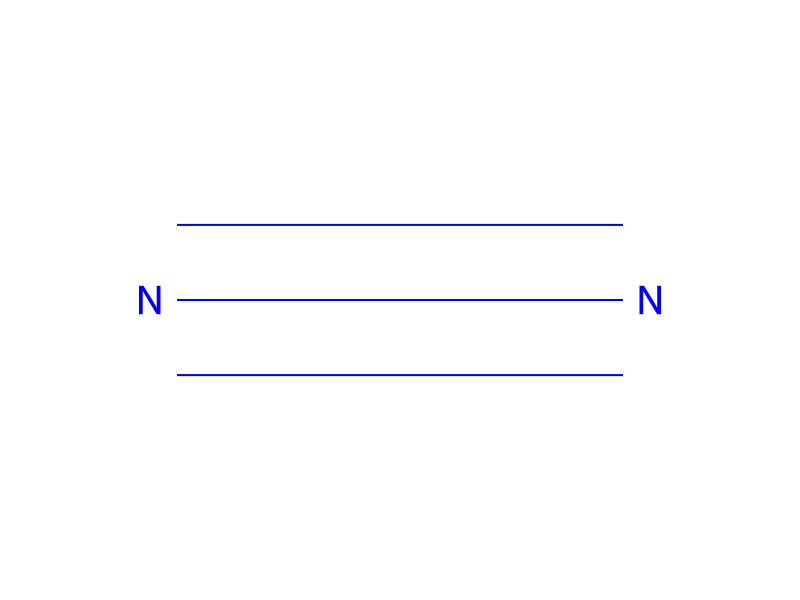
HCID 947NitrogenHCID 70011-BromonaphthaleneHCID 11430Potassium CarbonateHCID 11776TriphenylphosphineHCID 2773294(2-Bromophenyl)boronic acid

Produkt 1

HCID 118329071-(2-Bromophenyl)naphthaleneAusbeute 52,5 %

Reagenzien, Katalysatoren, Lösungsmittel

4
HCID 167845palladium(II) acetateKatalysatorHCID 702EthanolLösungsmittelHCID 962WaterLösungsmittelHCID 80711,2-DimethoxyethaneLösungsmittel

Reaktionsbedingungen

Temperatur
85 °C

Versuchsvorschrift

To a 250-mL round bottom flask equipped with a magnetic stir bar was added water (25 mL) and 1,2-dimethoxyethane (25 mL). The solution was sparged with nitrogen for 20 minutes, then potassium carbonate (6.67 g, 48.3 mmol, 3 equiv), 2-bromophenylboronic acid (3.80 g, 18.9 mmol, 0.98 equiv) and 1-bromonaphthalene (2.70 mL, 19.3 mmol, 1 equiv) were added. The flask was then purged with N2 for 10 minutes before finally adding palladium(II) acetate (87 mg, 0.39 mmol, 0.02 equiv) and triphenylphosphine (405 mg, 1.55 mmol, 0.08 equiv). The reaction mixture was heated to 85° C. under a positive pressure of nitrogen for 16 hours. After cooling to room temperature, the phases were partitioned and the organic layer was collected, and the aqueous layer was washed with ethyl acetate (3×20 mL). The combined organic fractions were washed with brine (50 mL), dried over sodium sulfate, filtered, and concentrated on a rotary evaporator. The crude material was purified by column chromatography on an Isco CombiFlash system (120-g column; gradient: ramp up from heptane to 99:1 heptane:ethyl acetate over 1.5 column volumes, hold at 99:1 for 1.5 column volumes, ramp up to 92:8 heptane:ethyl acetate over 6 column volumes, hold at 92:8 for 6 column volumes) and then recrystallization from 99:1 heptane:ethanol to afford the title compound as a white solid (2.81 g, 93 area % by HPLC, 51% yield). 1H NMR (400 MHz, CDCl3) δ ppm 7.91 (dd, J=8.3, 0.8 Hz, 2H), 7.74 (dd, J=8.0, 1.2 Hz, 1H), 7.57-7.29 (m, 8H)

Aufarbeitung

  1. customTo a 250-mL round bottom flask equipped with a magnetic stir bar
  2. customThe solution was sparged with nitrogen for 20 minutes
  3. temperatureAfter cooling to room temperature
  4. customthe phases were partitioned
  5. customthe organic layer was collected
  6. washthe aqueous layer was washed with ethyl acetate (3×20 mL)
  7. washThe combined organic fractions were washed with brine (50 mL)
  8. dry with materialdried over sodium sulfate
  9. filtrationfiltered
  10. concentrationconcentrated on a rotary evaporator
  11. customThe crude material was purified by column chromatography on an Isco CombiFlash system (120-g column
  12. customrecrystallization from 99:1 heptane

Quellen und Nachweise

ORD-Eintrag
ord-c56863cacd604f56b860020417afecee
Quelldatensatz
uspto-grants-2014_09
DOI
10.6084/m9.figshare.5104873.v1
Patentnummer
US08841487B2

Notizen zur Reaktion

Wird geladen…

Auf dieser SeiteKomponentenReaktionsbedingungenVersuchsvorschriftAufarbeitungQuellen und NachweiseNotizen zur Reaktion





