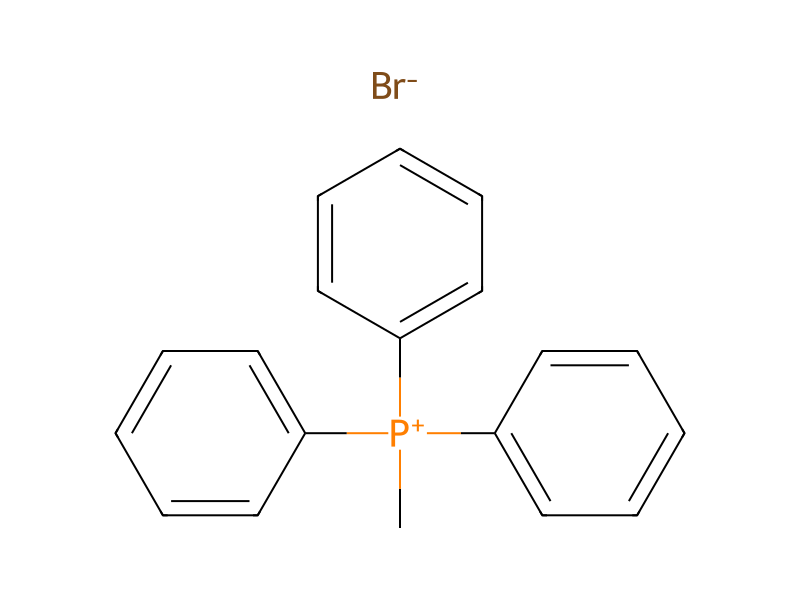
To a suspension of methyltriphenylphosphonium bromide (145 g; 0.405 mol, dried at 60° C.) in 1 L of ether was added at -20° C. n-butyllithium in hexane (2.5M, 162 ml; 0.405 mol) and the mixture was allowed to stir at room temperature for 1 h. To the above mixture was added 60 g (0.37 mol) of 1,1-di(3-furyl)ketone in 450 ml of DME/THF/DMPU (2:2:0.5) in 10 minutes and the mixture was stirred at room temperature for 1 h. To the above reaction mixture was added saturated ammonium chloride solution (250 ml), and the mixture was diluted with 500 ml of water. The organic layer was separated, washed with water (2×500 ml), dried, and concentrated in vacuo. The residue was purified by chromatography on silica (hexane, then 10% ether/hexane) to afford 51 g (86%) of 1,1-di(3-furyl)ethylene (Formula III: R2 =R3 =H;R4 =R5 =3-furanyl). This product was further distilled (b.p. 60°-63° C./0.01 mm).