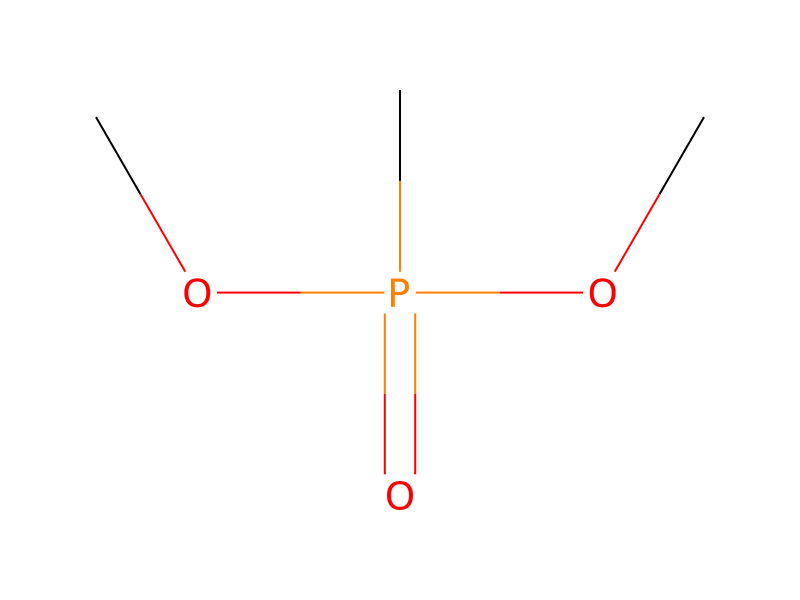
Dimethyl methylphosphonate (13.6 g, 0.11 mol) was dissolved in anhydrous THF (100 ml) under argon atmosphere. To the solution stirred at -78° C. was added dropwise n-butyl lithium (1.61N, 68.3 ml, 0.11 mol) over 30 minutes, and then a solution of commercially available methyl pivalate (5.0 g, 0.043 mol) in anhydrous THF (10 ml) was also added dropwise over 30 minutes. The reaction mixture was warmed to room temperature. Under ice cooling, acetic acid (7 ml) and water (10 ml) were added. After concentrating, water (20 ml) was added to the resulting residue. The mixture was extracted with ethyl acetate (50 ml×2), and the ethyl acetate layers were washed with water (20 ml×1) and with brine (20 ml×1), dried over anhydrous soldium sulfate, concentrated. Distillation of the residue gave dimethyl 3,3-dimethyl-2-oxo-butylphosphonate as a colorless clear oil (6.53 g, 0.031 mol, 72.6%, b.p.=90°-93° C./0.35 mmHg). The structure was identified by the following data.