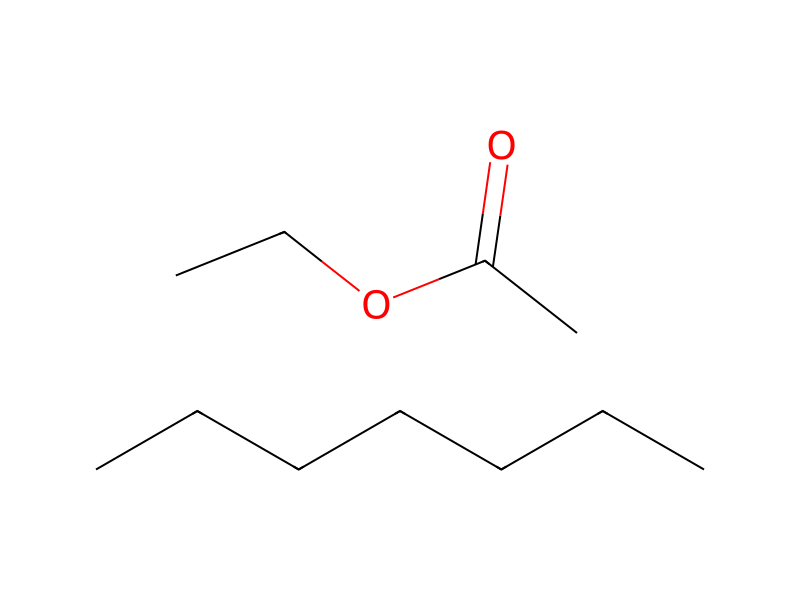
[CH:1](O)=[O:2].N1C=CN=C1.C(N(CC)CC)C.C(Cl)(=O)C(Cl)=O.Cl.[CH2:23]([O:25][C:26](=[O:48])[C@@H:27]([O:45][CH2:46][CH3:47])[CH2:28][C:29]1[CH:34]=[CH:33][C:32]([O:35][CH2:36][CH2:37][C:38]2[CH:43]=[CH:42][C:41]([NH2:44])=[CH:40][CH:39]=2)=[CH:31][CH:30]=1)[CH3:24]>ClCCl.C(OCC)(=O)C.CCCCCCC.O>[CH2:23]([O:25][C:26](=[O:48])[C@@H:27]([O:45][CH2:46][CH3:47])[CH2:28][C:29]1[CH:34]=[CH:33][C:32]([O:35][CH2:36][CH2:37][C:38]2[CH:39]=[CH:40][C:41]([NH:44][CH:1]=[O:2])=[CH:42][CH:43]=2)=[CH:31][CH:30]=1)[CH3:24]Formic acid (0.0585 g, 1.27 mmole) was dissolved in dichloromethane (2 ml). Imidazole (0.0874 g; 1.27 mmole) was added into the solution, followed by addition of triethylamine (0.353 ml, 2.54 mmole). The mixture was stirred for a little while and then oxalyl chloride (0.161 g; 1.27 mmole) in dichloromethane (2 ml) was added slowly. The resulting mixture was stirred for 30 minutes. A mixture of 3-{4-[2-(4-aminophenyl)ethoxy]phenyl}-(S)-2-ethoxypropanoic acid ethyl ester hydro chloride (described in Example 41b) (0.5 g, 1.27 mmole) and triethylamine (0.176 ml; 1.27 mmole) in dichloromethane (3 ml) was added into the reaction mixture. The reaction mixture was stirred at room temperature overnight. Water was added and the phases were separated. The organic phase was washed with water, dried with magnesium sulfate and the solvent was evaporated. Chromatography of the residue on silica gel (isolute, SI) using heptane, then ethyl acetate/heptane (5%), followed by ethyl acetate/heptane (10%) and then ethyl acetate/heptane (25%) as eluants gave 0.230 g (47% yield) of 2-(S)-ethoxy-3-(4-{2-[4-(formylamino)phenyl]ethoxy}-phenyl)propanoic acid ethyl ester.