Reaktionsgleichung

Cl[CH2:2][CH2:3]Cl.CC(CC(O)CO)C.C(=O)([O-])[O-].[K+].[K+].[C:19]([O:26][CH3:27])(=[O:25])[CH2:20][C:21]([O:23][CH3:24])=[O:22]>[Br-].C([N+](CCCC)(CCCC)CCCC)CCC.O>[C:20]1([C:19]([O:26][CH3:27])=[O:25])([C:21]([O:23][CH3:24])=[O:22])[CH2:3][CH2:2]1Komponenten
7
Edukt 4

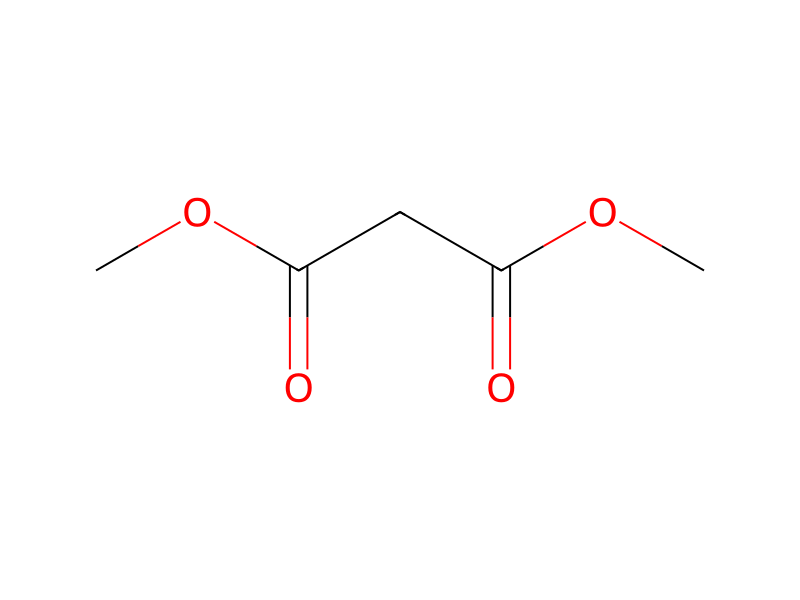


Produkt 1

Reagenzien, Katalysatoren, Lösungsmittel 2


Versuchsvorschrift
296.9 g of 1,2-dichloroethane (3 mol), 15 g of polyethylene glycol dimethyl ether (mean molar mass 500 g/mol) and 177.1 g of potassium carbonate (1.265 mol) were initially introduced, and the reaction mixture was heated until the 1,2-dichloroethane refluxes. 125.5 g of dimethyl malonate (0.95 mol) and 1.25 g of tetrabutylammonium bromide (3.88 mmol) were then added at the boil. The mixture was stirred using a paddle stirrer for 6 hours. Water formed during the reaction was removed by azeotropic distillation with 1,2-dichloroethane throughout the reaction. Further work-up was carried out analogously to Comparative Example 2. The yield was 95%.
Aufarbeitung
- customfor 6 hours
- customwas removed by azeotropic distillation with 1,2-dichloroethane throughout the reaction
Quellen und Nachweise
- ORD-Eintrag
- ord-52cac8cab06c43de8be40cf7c82cf8d9
- Quelldatensatz
- uspto-grants-2002_10
- Patentnummer
- US06462224B2
Verknüpfte Notizen
Wird geladen…