Aniline → 4-Nitrodiphenylamine
Reaction equation
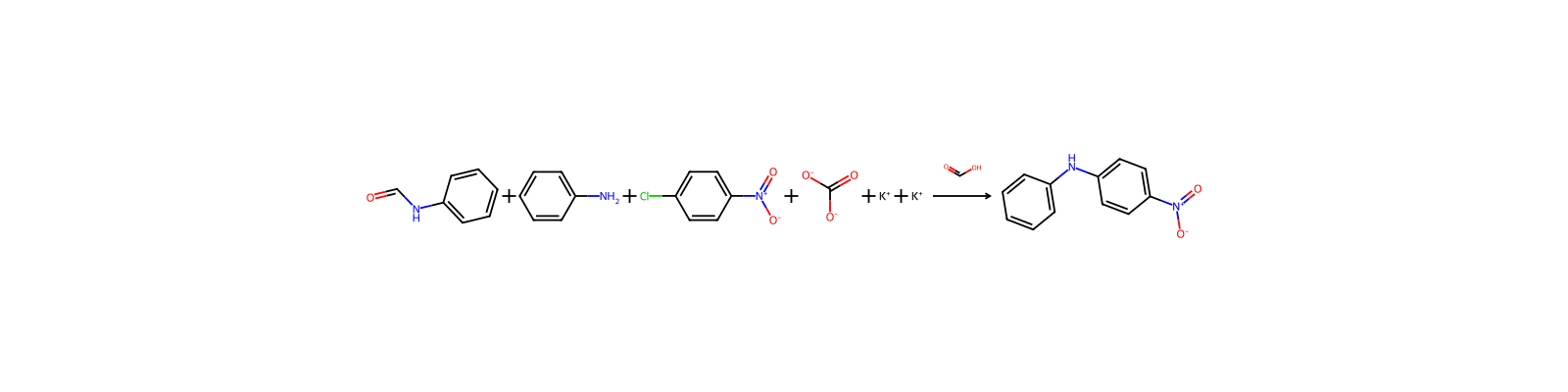
C(NC1C=CC=CC=1)=O.[NH2:10][C:11]1[CH:16]=[CH:15][CH:14]=[CH:13][CH:12]=1.[N+:17]([C:20]1[CH:25]=[CH:24][C:23](Cl)=[CH:22][CH:21]=1)([O-:19])=[O:18].C(=O)([O-])[O-].[K+].[K+]>C(O)=O>[CH:14]1[CH:15]=[CH:16][C:11]([NH:10][C:23]2[CH:24]=[CH:25][C:20]([N+:17]([O-:19])=[O:18])=[CH:21][CH:22]=2)=[CH:12][CH:13]=1Participants
6
Reactant 4


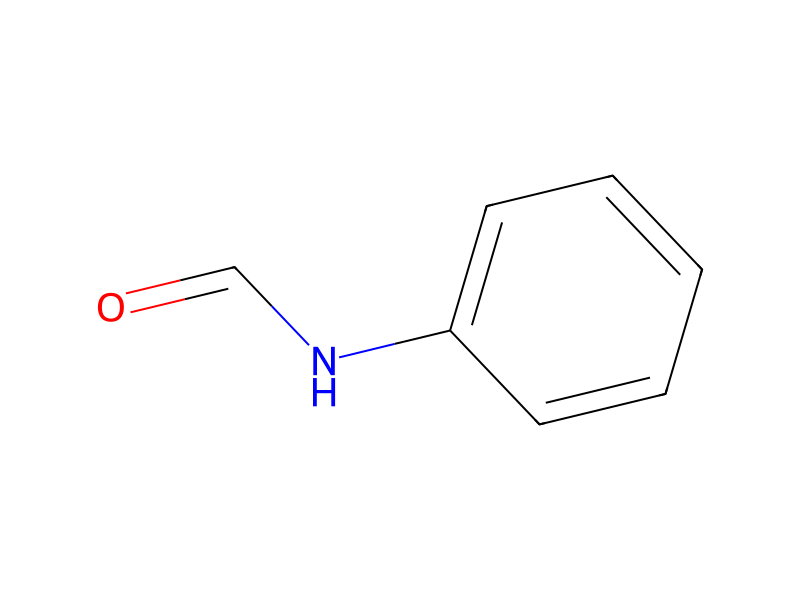

Product 1

Reagents, catalysts & solvents 1

Procedure
formanilide method, where formic acid and aniline are used as starting materials to prepare formanilide, which in turn reacts with p-nitro-chlorobenzene in the presence of an acid-binding agent such as potassium carbonate, to produce 4-nitrodiphenylamine, and then, 4-nitrodiphenylamine is reduced by sodium sulfide to form 4-aminodiphenylamine;
Sources & evidence
- ORD record
- ord-7a9eeef338d34ed09b7439bf73611b0e
- Source dataset
- uspto-grants-2006_08
- Patent number
- US07084302B2
Reaction notes
Loading…