
Cupric acetate monohydrate
Completing data — refresh the page later to see the latest

Basic information
- CAS
6046-93-1- Standard SMILES
CC(=O)[O-].CC(=O)[O-].O.[Cu+2]- InChIKey
NWFNSTOSIVLCJA-UHFFFAOYSA-L- Molecular formula
- C4H8CuO5
- Average molar mass
- 199.65 g/mol
- Monoisotopic mass
- 198.96677086
Overview
See also: Copper (II) acetate, monohydrate (annotation moved to); Copper di(acetate) hydrate (annotation moved to).
Names & identifiers
- Preferred name
- Cupric acetate monohydrate
- IUPAC
- copper;diacetate;hydrate
- English name
- Copper (II) acetate monohydrate
- Molecular formula
- C4H8CuO5
- Molecular weight
- 199.65
Names & synonyms
Copper(II) acetate monohydrateCupric acetate monohydrateCopper(2+) acetate, monohydrate39J9V52S86DTXSID90209202RefChem:580026DTXCID701316936046-93-1Copper(II) acetate hydratecopper acetate monohydrate66923-66-8Copper (II) Acetate Monohydrate
Show more names
COPPER ACETATECuAcCu(OAc)2·H2O205-553-3CopperdiacetatemonohydrateVERDIGRIS
Copper diacetate monohydrateAcetic acid, copper(2+) salt, monohydratecopper;diacetate;hydrateC4H8CuO5Copper(II) acetate xhydrateCopper (II) acetate hydrateCopper(II)acetate monohydratecopper acetate hydrate
Database identifiers
- CAS
6046-93-1- PubChem CID
- 165397
- DTXSID
DTXSID90209202- UNII
- 39J9V52S86
- EC Number
- 611-978-9
Properties
Computed structural propertiesFilling in
- Topological polar surface area
- 81.3 Ų
- Hydrogen bond donors
- 1
- Hydrogen bond acceptors
- 5
- Rotatable bonds
- 0
- Heavy atoms
- 10
- Formal charge
- 0
- Complexity
- 25.5
Experimental & physicochemical properties
Chemical ClassesMetals -> Organic Acids, Metal Salts
Melting Point115 °C
Physical DescriptionDark green solid; [Merck Index] Blue-green odorless powder; [Alfa Aesar MSDS]
Physicochemical properties
- Melting point
- 115 °C · 115 °C
- Boiling point
- 240 °C · 240 °C
- Density
- 1.88 · 1.88
- bulk density
- 1100 kg/m3 · 1100kg/m3
- vapor density
- 6.9 · 6.9 (vs air)
- storage temp.
- 5 °C · Store at +5°C to +30°C.
- solubility
- 72 g/l · 72g/l
- form
- Solid
- color
- Dark Green
- Specific Gravity
- 1.882 · 1.882
- PH
- 5.2 · 5.2-5.5 (20g/l, H2O, 20℃)
Safety & regulation
Safety information is for reference only and does not replace the supplier’s Safety Data Sheet (SDS), applicable regulations, or professional assessment.
GHS classification
GHS Classification
Danger
H302 (100%): Harmful if swallowed [Warning Acute toxicity, oral]
P260, P261, P264, P264+P265, P270, P271, P273, P280, P301+P317, P301+P330+P331, P302+P352, P302+P361+P354, P304+P340, P305+P351+P338, P305+P354+P338, P316, P317, P319, P321, P330, P332+P317, P337+P317, P362+P364, P363, P391, P403+P233, P405, and P501 (click each P-code to see the statement)
Aggregated GHS information provided per 235 reports by companies from 16 notifications to the ECHA C&L Inventory. Each notification may be associated with multiple companies.
Warning
H302: Harmful if swallowed [Warning Acute toxicity, oral]
Hazard information
Regulatory Information
Chemical: Acetic acid, copper(2+) salt, monohydrate
Regulation (EC) No 1831/2003 (amended)
Other Safety InformationIMAP assessments - Acetic acid, copper(2+) salt, monohydrate: Human health tier I assessment
Hazards SummaryA skin and strong eye irritant; Harmful by ingestion; [Alfa Aesar MSDS] See Copper(II) acetate.
Hazard Classes and Categories
Acute Tox. 4 (100%)
Acute toxicity (Oral) - Category 4
Safety & protection
Exposure Control and Personal Protection0.01 [mg/m3], respirable fraction (Cu, inorganic cmpnds)[German Research Foundation (DFG)]
Threshold Limit Values (TLV)
Chemistry & industry
Uses & manufacturing
Uses
Used to make Paris Green and Fehling's reagent, as a fungicide, catalyst, ceramic pigment, and in textile dyeing; [Merck Index]
Farming (Pesticides) [Category: Industry]
Applications
UsesCopper(II) acetate is used as a pigment for ceramics; in the manufacture of Paris green; in textile dyeing; as a fungicide; and as a catalyst.Copper(II) acetate monohydrate is used in DNA extraction in biochemical applications. It is also used as a catalyst or oxidizing agent in organic syntheses.Catalyst for activation of alcohols as greener alkylating reagents.Copper-Catalyzed Aerobic Oxidation of Amines to Imines under Neat Conditions with Low Catalyst Loading.
UsesCatalyst for activation of alcohols as greener alkylating reagentsCopper-Catalyzed Aerobic Oxidation of Amines to Imines under Neat Conditions with Low Catalyst Loading
UsesCopper(II) acetate monohydrate is used in formation of Cu chelates of -dicarbonyl compounds as a means of purification and in the eglinton (modified glaser) coupling of terminal alkynes. It is also used as a catalyst for the michael reaction giving increased yields and absence of side-reactions. It Promotes ullmann-type C-O and C-N coupling reactions of arylboronic acids with phenols, amines and various other nitrogen derivatives. It is also used in biochemical applications such as DNA extraction.
General DescriptionCopper (II) acetate monohydrate is soluble in water and slightly soluble in methanol, diethylether and acetone. It can be synthesized by reacting acetic acid with copper (II) carbonate or copper(II) hydroxide or copper (II) oxide. Large scale commercial production is undertaken by placing copper metal in the presence of air and refluxing acetic acid. As a transition metal acetate, it can be used to form oxide nanoparticles by sonochemical methods.
Preparation methods
PreparationCopper(II) acetate is prepared by treatment of copper(II) oxide, CuO, or copper(II) carbonate, CuCO3, with acetic acid, followed by crystallization: CuO + 2CH3COOH → (CH3COO)2Cu + H2O
Related reactions
144 records
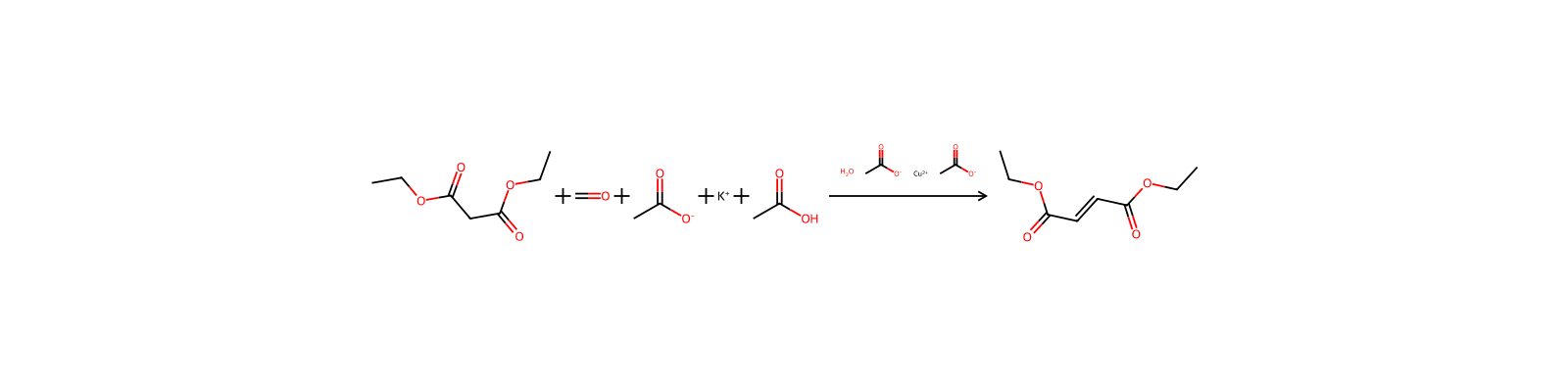


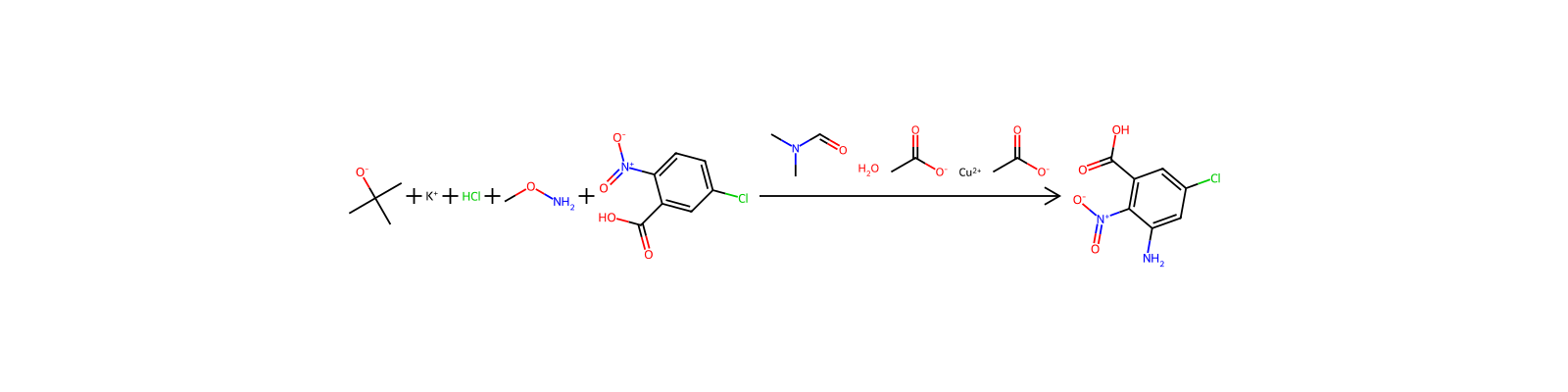


Compound notes
Loading…