Reaction equation
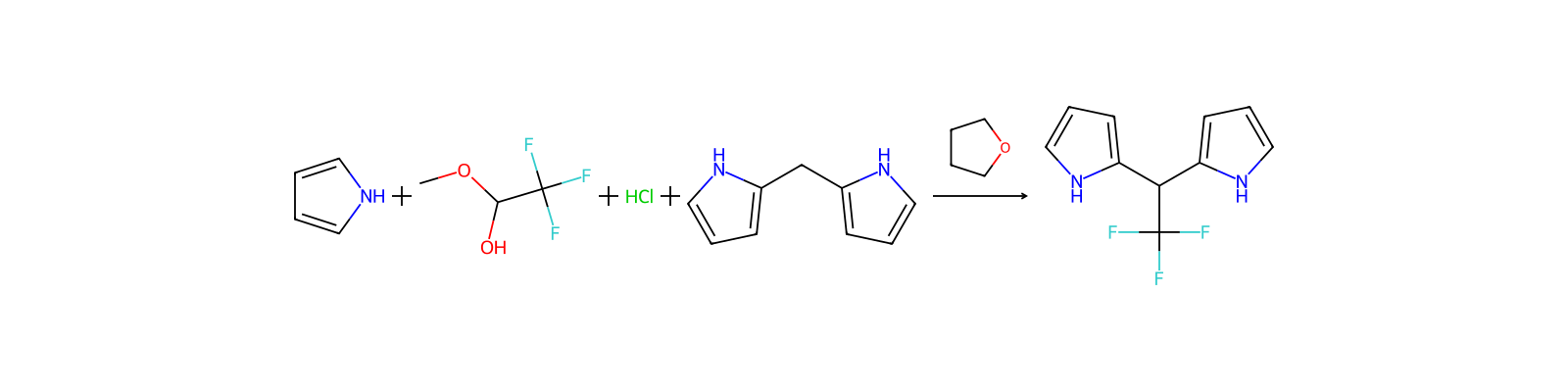
N1C=CC=C1.COC(O)[C:9]([F:12])([F:11])[F:10].Cl.[CH:15]1[CH:19]=[C:18]([CH2:20][C:21]2[NH:25][CH:24]=[CH:23][CH:22]=2)[NH:17][CH:16]=1>O1CCCC1>[NH:25]1[CH:24]=[CH:23][CH:22]=[C:21]1[CH:20]([C:18]1[NH:17][CH:16]=[CH:15][CH:19]=1)[C:9]([F:12])([F:11])[F:10]Participants
6
Reactant 4

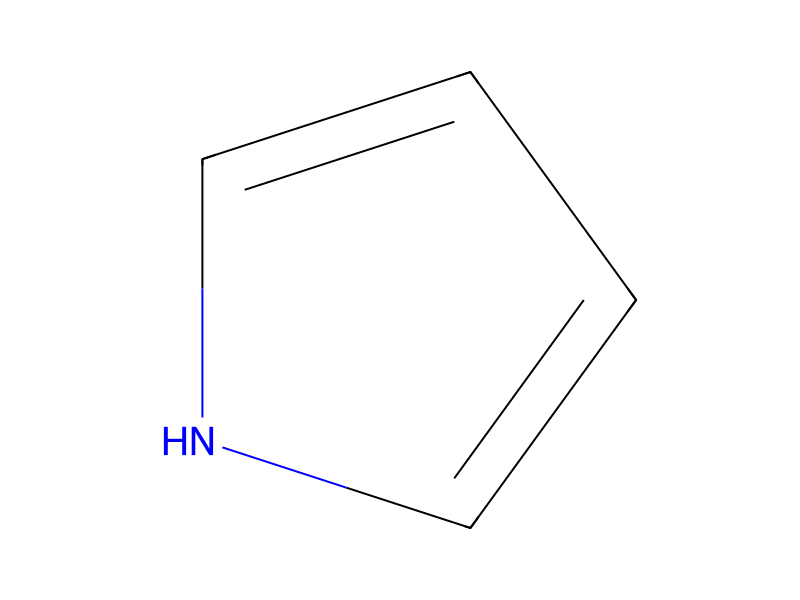


Product 1

Reagents, catalysts & solvents 1

Procedure
Pyrrole (150 mmol) and trifluoroacetaldehyde methyl hemiacetal (75 mmol) in tetrahydrofuran are heated at reflux with catalytic amounts of hydrochloric acid for 2 hours under an inert atmosphere. GC analysis of the reaction mixture indicated the presence of the desired dipyrromethane in greater than 80% yield. Neutralization of the acid followed by work up and chromatography gave the pure bis(pyrrol-2-yl)trifluoromethylmethane 3 (R3 =CF3)). MS: m/z=214. This preparation has been disclosed in Wijesekera U.S. patent application Ser. No. 08/143,261 filed on Oct. 26, 1993.
Sources & evidence
- ORD record
- ord-96051f14cb3b4b208319a04c297eb60a
- Source dataset
- uspto-grants-1998_03
- Patent number
- US05723677
Linked notes
Loading…