Reaction equation

[NH2:1][C:2]1[N:3]=[C:4](Br)[C:5]2[C:10]([CH:11]=1)=[CH:9][CH:8]=[CH:7][CH:6]=2.[CH2:13]([N:15]1[CH2:20][CH2:19][NH:18][CH2:17][CH2:16]1)[CH3:14].C(=O)([O-])[O-].[K+].[K+]>CN(C)C=O>[NH2:1][C:2]1[N:3]=[C:4]([N:18]2[CH2:19][CH2:20][N:15]([CH2:13][CH3:14])[CH2:16][CH2:17]2)[C:5]2[C:10]([CH:11]=1)=[CH:9][CH:8]=[CH:7][CH:6]=2Participants
5
Reactant 3

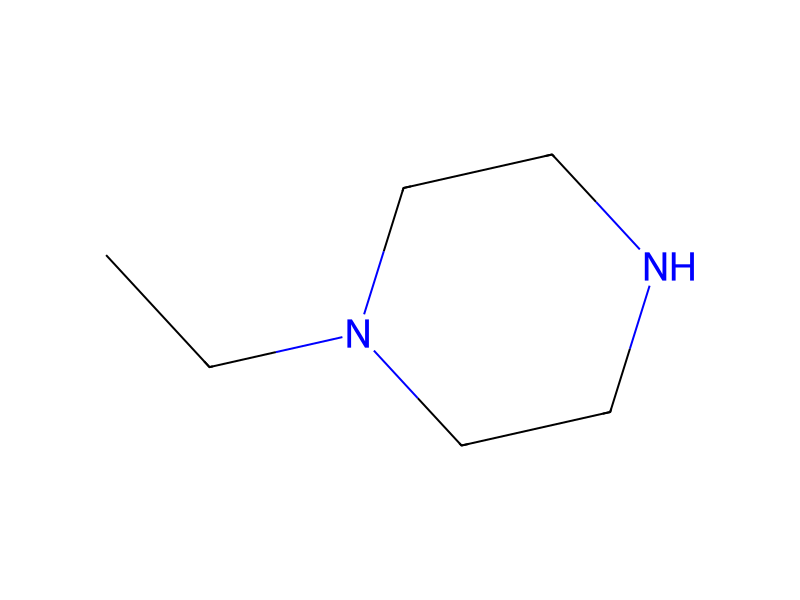

Product 1

Reagents, catalysts & solvents 1

Procedure
3-Amino-1-bromoisoquinoline (10.3 g) and 1-ethylpiperazine (10.5 g) were reacted in the presence of potassium carbonate (13.8 g) in N,N-dimethylformamide (80 ml) at room temperature for 3 days. The reaction solution was concentrated, followed by the addition of purified water (500 ml), and the resulting mixture was stirred under ice-cooling for 1 hr. The resulting ocherous precipitates were collected by filtration, washed with a small amount of ice-water and hexane, and then dried at 50° C. under reduced pressure, to give 3-amino-1-(4-ethylpiperazin-1-yl)isoquinoline (4.5 g).
Workup
- concentrationThe reaction solution was concentrated
- additionfollowed by the addition of purified water (500 ml)
- temperaturecooling for 1 hr
- customThe resulting ocherous precipitates
- filtrationwere collected by filtration
- washwashed with a small amount of ice-water and hexane
- customdried at 50° C. under reduced pressure
Sources & evidence
- ORD record
- ord-de5e780c5ea24a78b60fba4aae29c37e
- Source dataset
- uspto-grants-2004_09
- Patent number
- US06790844B2
Linked notes
Loading…