Reaction equation

[CH2:1]([NH:7][CH2:8][CH2:9][CH2:10][CH2:11][CH2:12][CH3:13])[CH2:2][CH2:3][CH2:4][CH2:5][CH3:6].[N:14]1[C:21]([Cl:22])=[N:20][C:18](Cl)=[N:17][C:15]=1[Cl:16].C(=O)([O-])[O-].[Na+].[Na+]>C(#N)C.C(OCC)(=O)C.O>[Cl:16][C:15]1[N:14]=[C:21]([Cl:22])[N:20]=[C:18]([N:7]([CH2:1][CH2:2][CH2:3][CH2:4][CH2:5][CH3:6])[CH2:8][CH2:9][CH2:10][CH2:11][CH2:12][CH3:13])[N:17]=1Participants
7
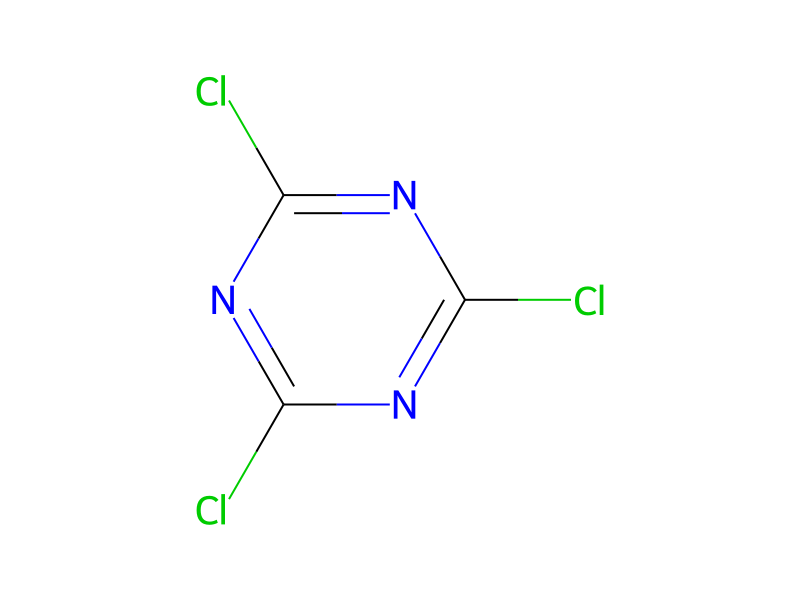






Procedure
Dihexylamine (6.3 mL, 27 mmol) was added to a mixture of cyanuric chloride (5.0 g, 27 mmol) and sodium carbonate (2.9 g, 27 mmol) in acetonitrile (50 mL). The reaction mixture was heated to reflux for 16 h and then allowed to cool to ambient temperature. The mixture was diluted with ethyl acetate and water. The phases were separated and the organic phase was washed with brine, dried over magnesium sulfate, and concentrated under reduced pressure. The crude material was purified by flash column chromatography through silica gel (elution with 3:1 hexanes:chloroform) to afford 2,4-dichloro-6-dihexylamino-1,3,5-triazine.
Workup
- temperatureThe reaction mixture was heated
- temperatureto reflux for 16 h
- customThe phases were separated
- washthe organic phase was washed with brine
- dry with materialdried over magnesium sulfate
- concentrationconcentrated under reduced pressure
- customThe crude material was purified by flash column chromatography through silica gel (elution with 3:1 hexanes:chloroform)
Sources & evidence
- ORD record
- ord-501e28e1e79d4fe4852c1b2dc4d03aba
- Source dataset
- uspto-grants-2002_11
- Patent number
- US06479492B1
Linked notes
Loading…