HomeMCPWorkbenchSkills
HomeWorkbenchNotificationsMe
llms.txt · MCP GuidePrivacy Policy · Terms of Service · Supportv1.8.3
  1. Home
  2. /Reaction

Potassium Phosphate, Tribasic → Ethyl 7-(4-(tert-butoxycarbonyl)-2-nitrophenoxy)-6-chloro-8-cyclopropylchroman-4-carboxylate

HRID 1021411
Print

Reaction equation

HRID 1021411 reaction equation
Br[C:2]1[C:3]([O:18][C:19]2[CH:24]=[CH:23][C:22]([C:25]([O:27][C:28]([CH3:31])([CH3:30])[CH3:29])=[O:26])=[CH:21][C:20]=2[N+:32]([O-:34])=[O:33])=[C:4]([Cl:17])[CH:5]=[C:6]2[C:11]=1[O:10][CH2:9][CH2:8][CH:7]2[C:12]([O:14][CH2:15][CH3:16])=[O:13].P([O-])([O-])([O-])=O.[K+].[K+].[K+].C1(P([CH:56]2[CH2:61][CH2:60]CCC2)C2CCCCC2)CCCCC1.C1(B(O)O)CC1>C1(C)C=CC=CC=1.C([O-])(=O)C.[Pd+2].C([O-])(=O)C.O>[C:28]([O:27][C:25]([C:22]1[CH:23]=[CH:24][C:19]([O:18][C:3]2[C:2]([CH:60]3[CH2:61][CH2:56]3)=[C:11]3[C:6]([CH:7]([C:12]([O:14][CH2:15][CH3:16])=[O:13])[CH2:8][CH2:9][O:10]3)=[CH:5][C:4]=2[Cl:17])=[C:20]([N+:32]([O-:34])=[O:33])[CH:21]=1)=[O:26])([CH3:31])([CH3:30])[CH3:29]
ParticipantsProcedureWorkupSources & evidenceReaction notes

Participants

8

Reactant 4

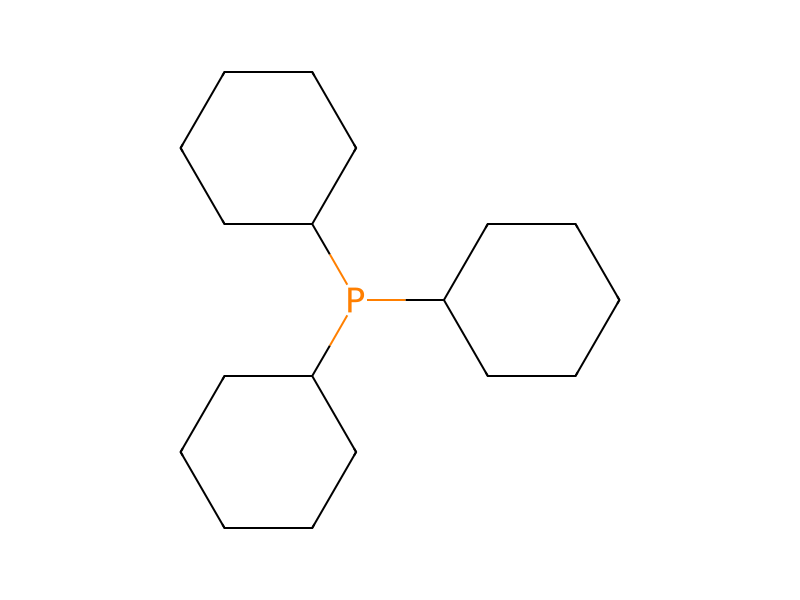
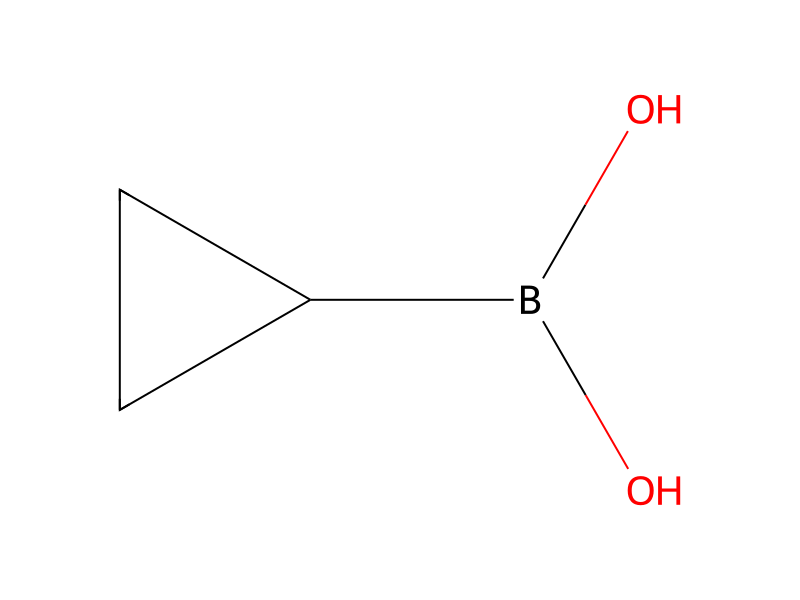
HCID 62657Potassium Phosphate, TribasicHCID 75806TricyclohexylphosphineHCID 2760897Cyclopropylboronic acidHCID 67080517Ethyl 8-bromo-7-(4-(tert-butoxycarbonyl)-2-nitrophenoxy)-6-chlorochroman-4-carboxylate

Product 1

HCID 67080456Ethyl 7-(4-(tert-butoxycarbonyl)-2-nitrophenoxy)-6-chloro-8-cyclopropylchroman-4-carboxylate
Yield 128.7%

Reagents, catalysts & solvents 3

HCID 167845palladium(II) acetateCatalystHCID 962WaterSolventHCID 1140TolueneSolvent

Procedure

To a stirred solution of ethyl 8-bromo-7-(4-(tert-butoxycarbonyl)-2-nitrophenoxy)-6-chlorochroman-4-carboxylate (0.59 g, 1.05 mmol) in toluene (6 mL) was added successively water (0.3 mL), potassium phosphate (0.67 g, 3.2 mmol), tricyclohexylphosphine (0.12 g, 0.42 mmol), and cyclopropylboronic acid (0.18 g, 2.1 mmol). The resulting mixture was stirred and a balloon of nitrogen with a three-way purge valve was attached, and the flask was evacuated and refilled five times with nitrogen. Palladium(II) acetate (0.047 g, 0.21 mmol) was added, and again the flask was evacuated and refilled five times with nitrogen. The mixture was stirred in an oil bath set to 100° C. under the nitrogen balloon for 1.5 hours. The mixture was cooled to ambient temperature, and diluted with ethyl acetate (25 mL) and water (15 mL). The organic layer was dried over sodium sulfate and concentrated. The residue was purified by chromatography on silica gel, eluting with 85/15 hexanes/ethyl acetate, to afford ethyl 7-(4-(tert-butoxycarbonyl)-2-nitrophenoxy)-6-chloro-8-cyclopropylchroman-4-carboxylate as a yellow oil (0.28 g, 51%).

Workup

  1. customa balloon of nitrogen with a three-way purge valve
  2. customthe flask was evacuated
  3. additionrefilled five times with nitrogen
  4. customagain the flask was evacuated
  5. additionrefilled five times with nitrogen
  6. stirringThe mixture was stirred in an oil bath
  7. additiondiluted with ethyl acetate (25 mL) and water (15 mL)
  8. dry with materialThe organic layer was dried over sodium sulfate
  9. concentrationconcentrated
  10. customThe residue was purified by chromatography on silica gel
  11. washeluting with 85/15 hexanes/ethyl acetate

Sources & evidence

ORD record
ord-13077108123440a6b698ff61ba5bb038
Source dataset
uspto-grants-2014_05
DOI
10.6084/m9.figshare.5104873.v1
Patent number
US08716498B2

Reaction notes

On this pageParticipantsProcedureWorkupSources & evidenceReaction notes