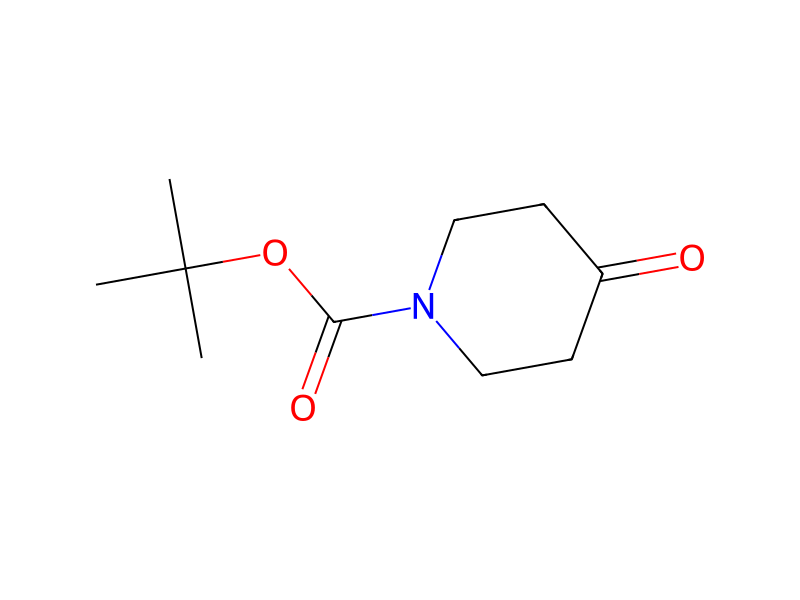
[NH2:1][C:2]1[C:3]([OH:9])=[N:4][CH:5]=[C:6]([CH3:8])[CH:7]=1.O=[C:11]1[CH2:16][CH2:15][N:14]([C:17]([O:19][C:20]([CH3:23])([CH3:22])[CH3:21])=[O:18])[CH2:13][CH2:12]1.C(O[BH-](OC(=O)C)OC(=O)C)(=O)C.[Na+].[OH-].[Na+]>O1CCCC1.ClCCCl.C(O)(=O)C>[OH:9][C:3]1[C:2]([NH:1][CH:11]2[CH2:16][CH2:15][N:14]([C:17]([O:19][C:20]([CH3:23])([CH3:22])[CH3:21])=[O:18])[CH2:13][CH2:12]2)=[CH:7][C:6]([CH3:8])=[CH:5][N:4]=1At room temperature, to a mixed solvent solution of 3-amino-5-methylpyridin-2-ol (4.03 g) in tetrahydrofuran (50 ml) and 1,2-dichloroethane (50 ml) were added tert-butyl 4-oxopiperidine-1-carboxylate (13.04 g), sodium triacetoxyborohydride (13.87 g) and acetic acid (3.75 ml), followed by heating at reflux for 16 hours. After the temperature was brought back to room temperature, 1 N aqueous sodium hydroxide solution was added, and extracted with chloroform. The organic layer was washed with saturated sodium chloride solution, dried over anhydrous sodium sulfate, and concentrated under reduced pressure to afford tert-butyl 4-[(2-hydroxy-5-methylpyridin-3-yl)amino]piperidine-1-carboxylate (7.6 g).