Reaction equation

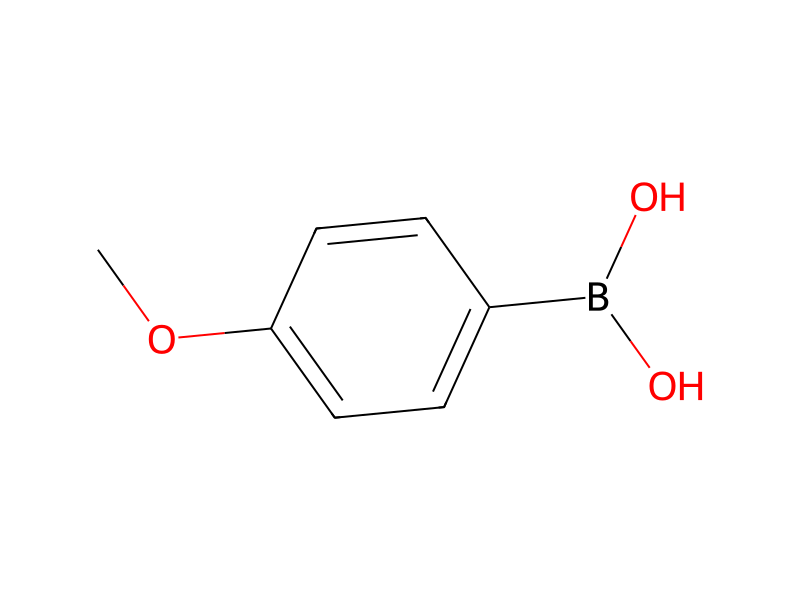
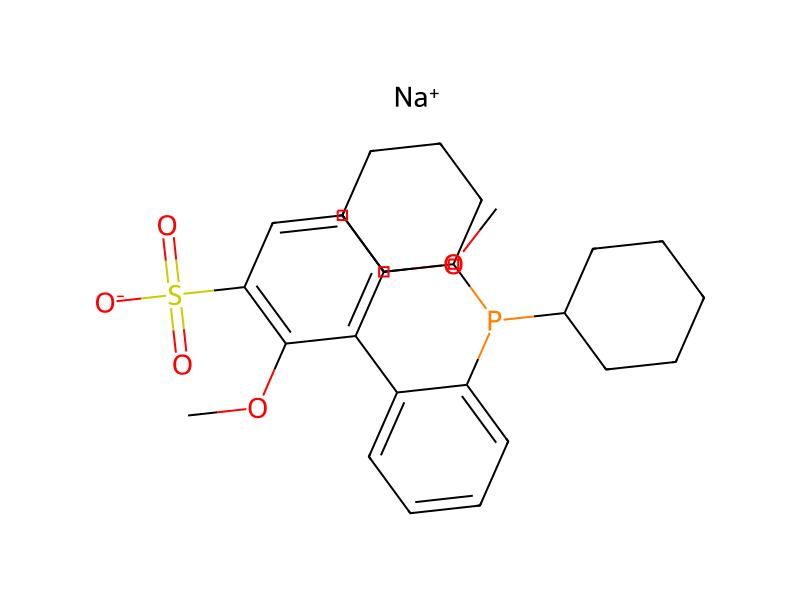
Cl[C:2]1[CH:3]=[C:4]2[C:8](=[CH:9][CH:10]=1)[NH:7][C:6]([C:11]([OH:13])=[O:12])=[CH:5]2.[CH3:14][O:15][C:16]1[CH:21]=[CH:20][C:19](B(O)O)=[CH:18][CH:17]=1.C([O-])([O-])=O.[K+].[K+]>CC([O-])=O.CC([O-])=O.[Pd+2].C1(P(C2CCCCC2)C2C=CC=CC=2C2C(OC)=CC=C(S([O-])(=O)=O)C=2OC)CCCCC1.[Na+].O>[CH3:14][O:15][C:16]1[CH:21]=[CH:20][C:19]([C:2]2[CH:3]=[C:4]3[C:8](=[CH:9][CH:10]=2)[NH:7][C:6]([C:11]([OH:13])=[O:12])=[CH:5]3)=[CH:18][CH:17]=1Participants
Reactant 3


Product 1

Reagents, catalysts & solvents 3


Procedure
The general procedure described in Example 3 was used with 5-chloro-1H-indole-2-carboxylic acid (194 mg, 1.00 mmol), 4-methoxyphenylboronic acid (207 mg, 1.50 mmol), Pd(OAc)2 (2.2 mg, 0.010 mmol, 1 mol %), sodium 2-dicyclohexylphosphino-2′,6′-dimethoxybiphenyl-3′-sulfonate (10.0 mg, 0.020 mmol, 2 mol %), K2CO3 (414 mg, 3.00 mmol), water (2.0 mL), 12 h, 80° C. The product was isolated as a light yellow solid (246 mg, 93%). Mp=>230° C. 1H NMR (400 MHz, d6-DMSO) δ: 11.81 (s, 1H), 7.84 (s, 1H), 7.58 (d, 2H, J=8.8 Hz), 7.49 (m, 2H), 7.13 (d, 1H, J=1.6 Hz), 6.99 (d, 2H, J=8.4 Hz), 3.78 (s, 3H). 13C NMR (125 MHz, d6-DMSO) δ: 162.7, 158.3, 136.3, 133.7, 132.2, 129.0, 127.7, 127.5, 123.7, 119.1, 114.3, 112.8, 107.7, 55.1. IR (neat, cm−1): 4320, 1700, 1183. Anal. Calcd for C16H13NO3: C, 71.90; H, 4.90. Found: C, 71.94; H, 4.93.
Sources & evidence
- ORD record
- ord-476cc6ccfc1442bc97770b758fdb09fd
- Source dataset
- uspto-grants-2014_05
- Patent number
- US08735630B2
Linked notes
Loading…