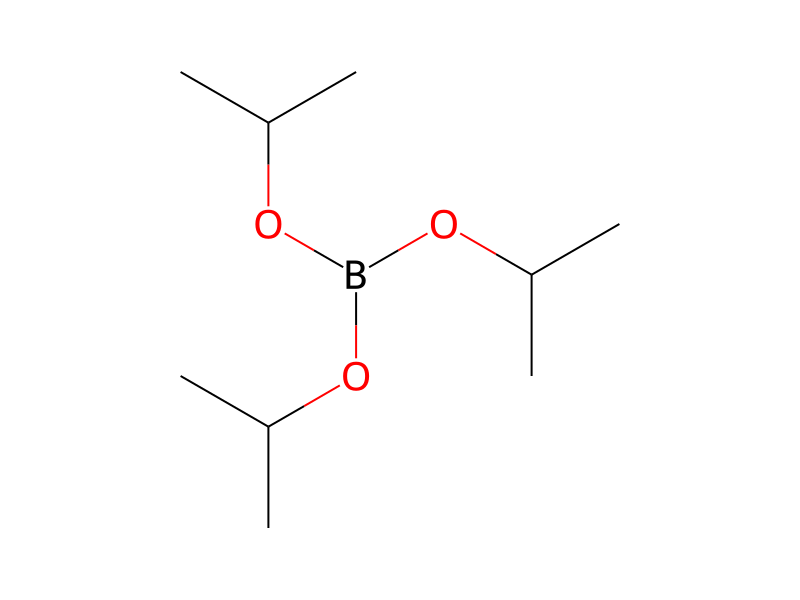
Under an argon gas atmosphere, a mixture of 200.0 g (706.3 mmol) of 1-(3-bromophenyl)naphthalene and 2.1 L of dehydrated THF was cooled down to minus 60 degree C. Then, 543 ml (847 mmol) of hexane solution of 1.56M n-butyllithium was dropped into the mixture while the mixture was being stirred. The reaction mixture was further stirred at minus 60 degrees for 2 hour. The reaction solution was again cooled down to minus 60 degrees C., and 398.5 g (2.119 mol) of triisopropylborate was dropped into the solution. Subsequently, the reaction mixture was warmed up to room temperature, and stirred for 17 hours. The reaction mixture was added with aqueous solution of hydrochloric acid and stirred at room temperature for 1 hour. After the reaction, the reaction mixture was added with toluene, and aqueous phase thereof was eliminated. Then, organic phase thereof was dried with magnesium sulfate, and the solvent was distilled away under reduced pressure. By recrystallizing the obtained solid by toluene, 126 g of 3-(1-naphthyl)phenylboronic acid was obtained at an yield of 67%.