HomeMCPSkillsWorkbenchOpenChem
HomeWorkbenchNotificationsMe
llms.txt · skill.md · MCP GuidePrivacy Policy · Terms of Service · Supportv1.8.5
  1. Home
  2. /Reaction

Potassium Carbonate → 2-[5-(1-cyclopropyl-6-fluoro-1H-benzimidazol-2-yl)pyridin-3-yl]-1,1,1-trifluoropropan-2-ol

HRID 1048945
Print

Reaction equation

[CH:1]1([NH:4][C:5]2[C:6]([NH2:12])=[CH:7][CH:8]=[C:9]([F:11])[CH:10]=2)[CH2:3][CH2:2]1.[F:13][C:14]([F:27])([F:26])[C:15]([C:18]1[CH:19]=[C:20]([CH:24]=O)[CH:21]=[N:22][CH:23]=1)([OH:17])[CH3:16].OOS([O-])=O.[K+].C(=O)([O-])[O-].[K+].[K+]>CN(C=O)C.O.C(OCC)(=O)C>[CH:1]1([N:4]2[C:5]3[CH:10]=[C:9]([F:11])[CH:8]=[CH:7][C:6]=3[N:12]=[C:24]2[C:20]2[CH:19]=[C:18]([C:15]([OH:17])([CH3:16])[C:14]([F:27])([F:13])[F:26])[CH:23]=[N:22][CH:21]=2)[CH2:3][CH2:2]1
ParticipantsProcedureWorkupSources & evidenceReaction notes

Participants

8

Reactant 4

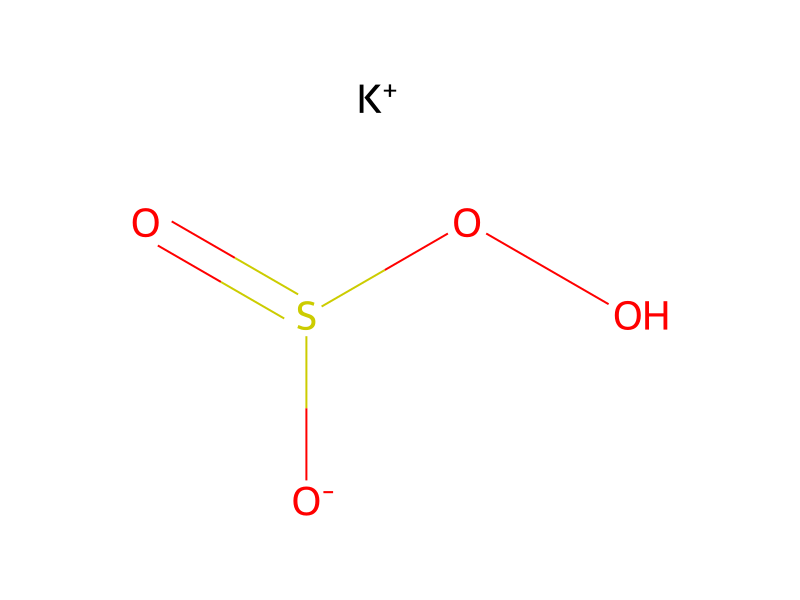
HCID 11430Potassium CarbonateHCID 23707502Potassium hydroxy sulfiteHCID 545925541-N-cyclopropyl-5-fluorobenzene-1,2-diamineHCID 867030845-(1,1,1-Trifluoro-2-hydroxypropan-2-yl)pyridine-3-carbaldehyde

Product 1

HCID 680535152-[5-(1-cyclopropyl-6-fluoro-1H-benzimidazol-2-yl)pyridin-3-yl]-1,1,1-trifluoropropan-2-ol

Reagents, catalysts & solvents 3

HCID 962WaterSolvent2×HCID 6228DimethylformamideSolventHCID 8857Ethyl AcetateSolvent2×

Procedure

To a solution of the title compound from Step E (0.058 g, 0.35 mmol) in DMF (1.68 mL) and water (0.06 mL) were added the title compound from Step C (0.076 g, 0.35 mmol) and OXONE® (0.139 g, 0.226 mmol). The resulting mixture was stirred at room temperature for 1 hour, then diluted with ethyl acetate and water. Solid potassium carbonate was added until the aqueous layer was basic (pH ˜9). Ethyl acetate was then added, and the organic layer was separated, washed with water and brine, dried over magnesium sulfate, filtered, and concentrated. Purification by flash column chromatography on silica gel (10% acetone in dichloromethane, then 30% acetone in dichloromethane) provided the title compound as a racemic mixture. That racemic mixture was then separated into two enantiomers by HPLC (ChiralCel AS column, 25% MeOH (0.2% DEA)/CO2, 70 mL/min, 100 bar, 35° C.). Data for EXAMPLE 6 (Enantiomer A): LCMS m/z 365.99 [M+H]+; 1 H NMR (500 MHz, CDCl3) δ 9.14 (s, 1 H), 8.85 (s, 1 H), 8.59 (s, 1 H), 7.76 (dd, J=8.8, 4.8 Hz, 1 H), 7.30 (dd, J=8.5, 2.1 Hz, 1 H), 7.11-7.07 (m, 1 H), 4.85 (br s, 1 H), 3.55-3.53 (m, 1 H), 1.79 (s, 3 H), 1.22-1.12 (m, 2 H), 0.80-0.72 (m, 2 H). Data for Example 7 (Enantiomer B): LCMS m/z 365.97 [M+H]+; 1H NMR (500 MHz, CDCl3) δ 9.16 (s, 1 H), 8.88 (s, 1 H), 8.57 (s, 1 H), 7.76 (dd, J=8.8, 4.8 Hz, 1 H), 7.30 (dd, J=8.5, 2.0 Hz, 1 H), 7.10-7.05 (m, 1 H), 3.91 (br s, 1 H), 3.56-3.55 (m, 1 H), 1.84 (s, 3 H), 1.18-1.15 (m, 2 H), 0.80-0.71 (m, 2 H).


Workup

  1. customthe organic layer was separated
  2. washwashed with water and brine
  3. dry with materialdried over magnesium sulfate
  4. filtrationfiltered
  5. concentrationconcentrated
  6. customPurification by flash column chromatography on silica gel (10% acetone in dichloromethane

Sources & evidence

ORD record
ord-b2cd77cc8a784845af4f77e2004a9892
Source dataset
uspto-grants-2016_07
DOI
10.6084/m9.figshare.5104873.v1
Patent number
US09382226B2

Reaction notes

On this pageParticipantsProcedureWorkupSources & evidenceReaction notes