HomeMCPWorkbenchSkills
HomeWorkbenchNotificationsMe
llms.txt · MCP GuidePrivacy Policy · Terms of Service · Supportv1.8.3
  1. Home
  2. /Reaction

Trichloroethylene → 4-((1,2-Dichlorovinyl)oxy)-1,1'-biphenyl

HRID 1053501
Print

Reaction equation

HRID 1053501 reaction equation
[H-].[K+].[C:3]1([C:9]2[CH:14]=[CH:13][C:12]([OH:15])=[CH:11][CH:10]=2)[CH:8]=[CH:7][CH:6]=[CH:5][CH:4]=1.[H][H].[Cl:18][CH:19]=[C:20](Cl)[Cl:21]>O1CCCC1.CCCCCC>[Cl:18][C:19]([O:15][C:12]1[CH:11]=[CH:10][C:9]([C:3]2[CH:4]=[CH:5][CH:6]=[CH:7][CH:8]=2)=[CH:14][CH:13]=1)=[CH:20][Cl:21]
ParticipantsConditionsProcedureWorkupSources & evidenceReaction notes

Participants

7

Reactant 4

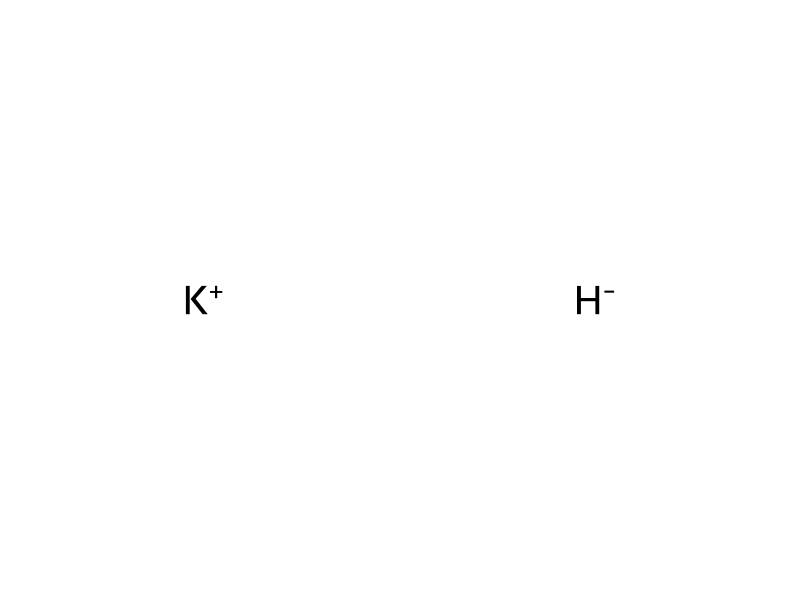
HCID 6575TrichloroethyleneHCID 71034-HydroxybiphenylHCID 82127Potassium hydrideHCID 178418361HCID 178418361, compound

Product 1

HCID 1237474984-((1,2-Dichlorovinyl)oxy)-1,1'-biphenylYield 107%

Reagents, catalysts & solvents 2

HCID 8028
Tetrahydrofuran
Solvent
3×
HCID 8058HexaneSolvent

Conditions

Temperature
-78 °C

Procedure

To a two-necked, round bottom flask (250 mL) equipped with a magnetic stirrer, pressure equalizing funnel and rubber septum was suspended oil free potassium hydride (2.23 g, 55 mmol, 1.5 eq) in tetrahydrofuran (THF, 25 mL). 4-Phenylphenol (6.30 g, 37 mmol, 1 eq) in THF (50 mL) was then added drop-wise with stirring for over 20 min via the funnel. After the evolution of hydrogen was complete, the orange-yellow slurry was cooled to −78° C., and then treated with drop-wise solution of trichloroethylene (5.8 g, 44 mmol, 1.2 eq) in THF (25 mL) for over 10 min. The cooling bath was removed and the reaction mixture was allowed to warm to room temperature (rt) and then maintained for overnight (12 h). To the dark brown mixture was carefully added water (10 mL) using a syringe and then partitioned between water (200 mL) and ethyl acetate (200 mL). The organic phase was then washed with brine (200 mL). Extraction of the combined aqueous layers was done using ethyl acetate (150 mL×3). The combined organic phases were dried over anhydrous magnesium sulfate, filtered and concentrated using the rotary evaporator to give yellowish brown oil. Silica gel (200 g) column chromatography was done using hexane as eluent to afford 2 (10.5 g, 85%) as colorless oil that later crystallized to white crystals: mp 52-55° C. 1H NMR (300 MHz, CDCl3): 7.62-7.54 (m, 4H, HAr), 7.48-7.41 (m, 2H, HAr), 7.39-7.32 (m, 1H, HAr), 7.18-7.12 (m, 2H, HAr), 6.00 (s, 1H, HC(Cl)═C(O)) ppm; 13C NMR (75 MHz, CDCl3): 153.3, 140.2, 137.8, 128.8, 128.5, 127.3, 127.0, 117.4, 103.9 ppm; IR (cm−1): 3105, 3031, 1898, 1658, 1630, 1603, 1585, 1543, 1310, 1203, 1184, 1107, 1074, 1008, 996, 915, 863, 840, 641, 547, 511; HRMS (ESI) Calculated for C14H10Cl2O [M−H]− 263.0031. Found 263.0030; Elemental analysis Calculated. for C14H20Cl2O.0.02H2O: C, 63.33; H, 3.81. found: C, 63.34; H, 3.79.

Workup

  1. customTo a two-necked, round bottom flask (250 mL) equipped with a magnetic stirrer
  2. customThe cooling bath was removed
  3. temperatureto warm to room temperature (rt)
  4. temperaturemaintained for overnight (12 h)
  5. custompartitioned between water (200 mL) and ethyl acetate (200 mL)
  6. washThe organic phase was then washed with brine (200 mL)
  7. extractionExtraction of the combined aqueous layers
  8. dry with materialThe combined organic phases were dried over anhydrous magnesium sulfate
  9. filtrationfiltered
  10. concentrationconcentrated
  11. customthe rotary evaporator
  12. customto give yellowish brown oil

Sources & evidence

ORD record
ord-57aab18fb46b435688a9216e66d61306
Source dataset
uspto-grants-2016_07
DOI
10.6084/m9.figshare.5104873.v1
Patent number
US09393306B2

Reaction notes

On this pageParticipantsConditionsProcedureWorkupSources & evidenceReaction notes