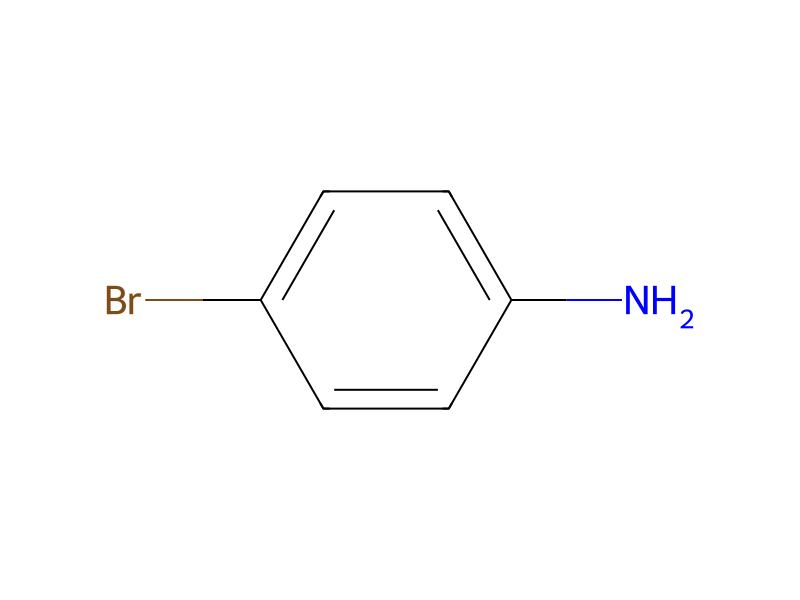
[Br:1][C:2]1[CH:8]=[CH:7][C:5]([NH2:6])=[CH:4][CH:3]=1.[H-].[Na+].[CH2:11](Br)[C:12]1[CH:17]=[CH:16][CH:15]=[CH:14][CH:13]=1.O>CN(C)C=O>[Br:1][C:2]1[CH:8]=[CH:7][C:5]([N:6]([CH2:11][C:12]2[CH:17]=[CH:16][CH:15]=[CH:14][CH:13]=2)[CH2:11][C:12]2[CH:17]=[CH:16][CH:15]=[CH:14][CH:13]=2)=[CH:4][CH:3]=1In an argon atmosphere, 4-bromoaniline (344 mg, 2.00 mmol) was dissolved in dimethylformamide (5 mL), and to the solution were added sodium hydride (200 mg, 5.00 mmol) and benzyl bromide (0.52 mL, 4.4 mmol) under ice-cooling, followed by stirring at room temperature for 11 hours. To the reaction solution was added water, and the mixture was extracted with ethyl acetate. The organic layer was washed with water and brine, and then dried over anhydrous sodium sulfate. The solvent was evaporated under reduced pressure, and the residue was recrystallized from ethyl acetate/hexane to obtain 4-bromo-N,N-dibenzylaniline (442 mg, 63%).